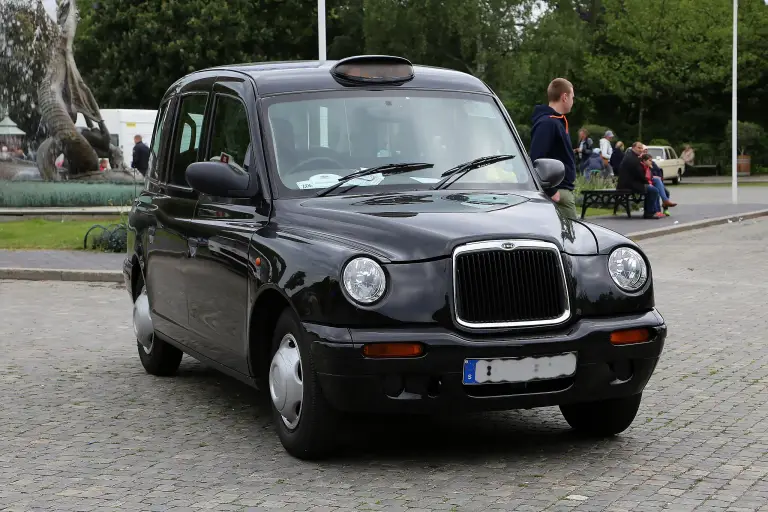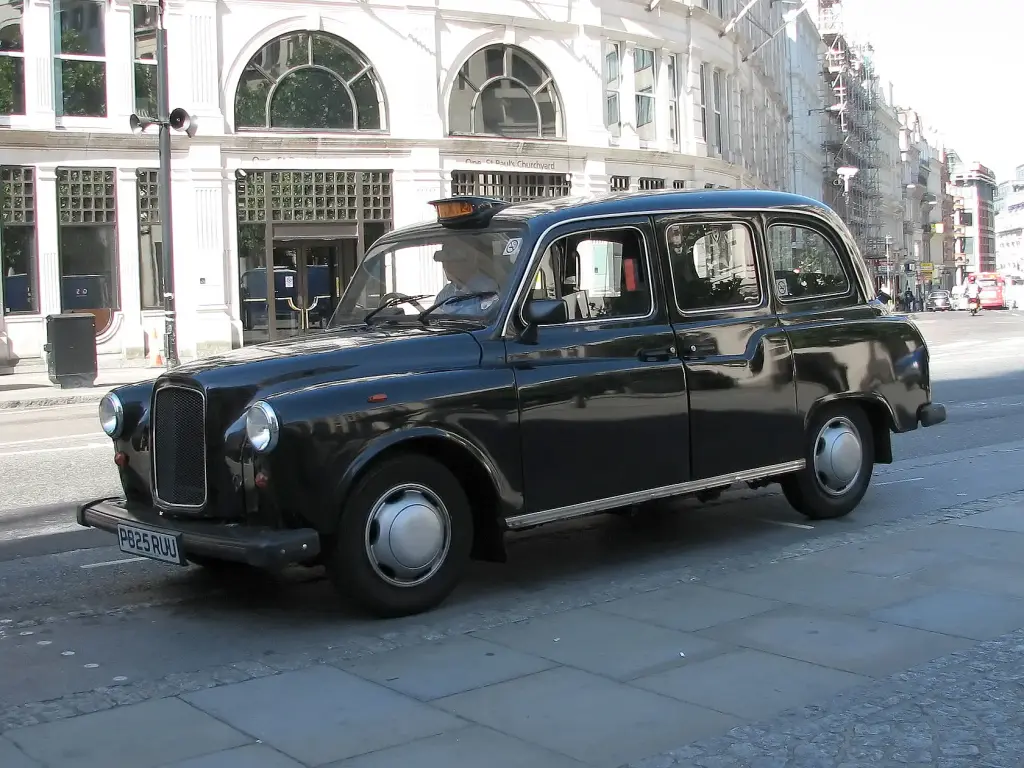
The LTI Fairway was the final development of the Austin FX4, the London black cab that had been in production since 1958. Introduced in February 1989 and built until October 1997, it replaced the FX4’s elderly engines with a modern Nissan diesel and made the cab fully wheelchair accessible.
LTI Fairway at a glance
| Maker | London Taxis International (LTI) |
|---|---|
| Production | February 1989 – October 1997 |
| Based on | Austin FX4 |
| Engine | 2,664 cc Nissan TD27 diesel; 2.5-litre Land Rover diesel at first |
| Wheelchair access | full, from launch |
| 1992 update | Fairway Driver with front disc brakes and new suspension |
| Turning circle | 7.6 m (25 ft), maintained with the new brakes |
| Last car | R1 PFX, built 1 October 1997 |
| Preserved at | National Motor Museum, Beaulieu |
| Replaced by | LTI TX1, late 1997 |
| FX4 total | more than 75,000 built, 1958–1997 |
The Fairway is described in a section of the English Wikipedia article on the Austin FX4, which is the only source used.
History of the LTI Fairway
A new engine for an old cab
By the late 1980s the FX4 was three decades old. Carbodies had taken over the intellectual rights in 1982, and London Taxis International took them on in 1984 and continued building the cab. In February 1989 the Fairway was introduced with a 2,664 cc Nissan TD27 diesel, although at the beginning buyers could still choose the old 2.5-litre Land Rover diesel. The new engine made the FX4 a faster and more reliable taxi.
Wheelchair access opens new markets
The Fairway had full wheelchair accessibility, in line with a new law that came into force in January 1989. That mattered commercially: it enabled LTI to sell to overseas markets and to move into provincial British markets it had not been able to tackle, largely because local authorities began insisting on wheelchair-accessible cabs in their areas.
The Fairway Driver
As part of a programme to develop a replacement model, AP Lockheed was commissioned to design and develop front disc brakes, and GKN designed a new suspension system that allowed the discs to be fitted while keeping the mandatory 7.6 m turning circle. These modifications went into the Fairway Driver, introduced in February 1992.
The last one
The very last Fairway, registration R1 PFX — read as “RIP FX” — was built on 1 October 1997 and presented to the National Motor Museum at Beaulieu. It carries a plaque bearing the name of Dave Burnham, who had started work at Carbodies’ Coventry factory when FX4 production began 46 years earlier. The Fairway was replaced in late 1997 by the all-new TX1.
Life after the TX1
The Fairway did not disappear when production ended. Transport for London ruled that by 2006 all licensed London taxis should meet Euro 3 emission rules; the Fairway and its successor the TX1 both used the Nissan engine, which met only Euro 2. Rather than replace reliable and economical Fairways, many proprietors paid almost £2,000 to have them converted with the STT Emtec Clean Cab turbocharger system or the Van Aaken exhaust gas recirculation system. About 80 Austin- and Rover-engined cabs were exempted because conversions were uneconomical for so few vehicles. In late 2009 only six of those earlier cabs remained in service, most having covered more than a million miles each.
Design and features
- Nissan TD27 diesel: a 2,664 cc engine that made the old FX4 faster and more dependable.
- Full wheelchair access: built in from launch to meet the British law that took effect in January 1989.
- Fairway Driver brakes: front discs and GKN suspension from 1992, without losing the 7.6 m turning circle.
- Long service life: Euro 2 engines were converted to satisfy London’s Euro 3 rules rather than scrapped.
LTI Fairway versions
- Fairway (1989–1992): the original model with the Nissan TD27 diesel and optional Land Rover diesel.
- Fairway Driver (1992–1997): the updated version with front disc brakes and revised suspension.
- Converted Fairways (to 2006): cabs fitted with STT Emtec or Van Aaken emission conversions to stay licensed.
- TX1 (from 1997): the clean-sheet replacement that ended FX4 production.
The Fairway was the last of the FX4 line and was replaced by the LTI TX1, followed by the LTI TXII and the LTI TX4. More cars are in the LTI collection.
Sources
- Austin FX4, English Wikipedia: Fairway section, Fairway Driver, last car, emissions conversions, FX4 production totals