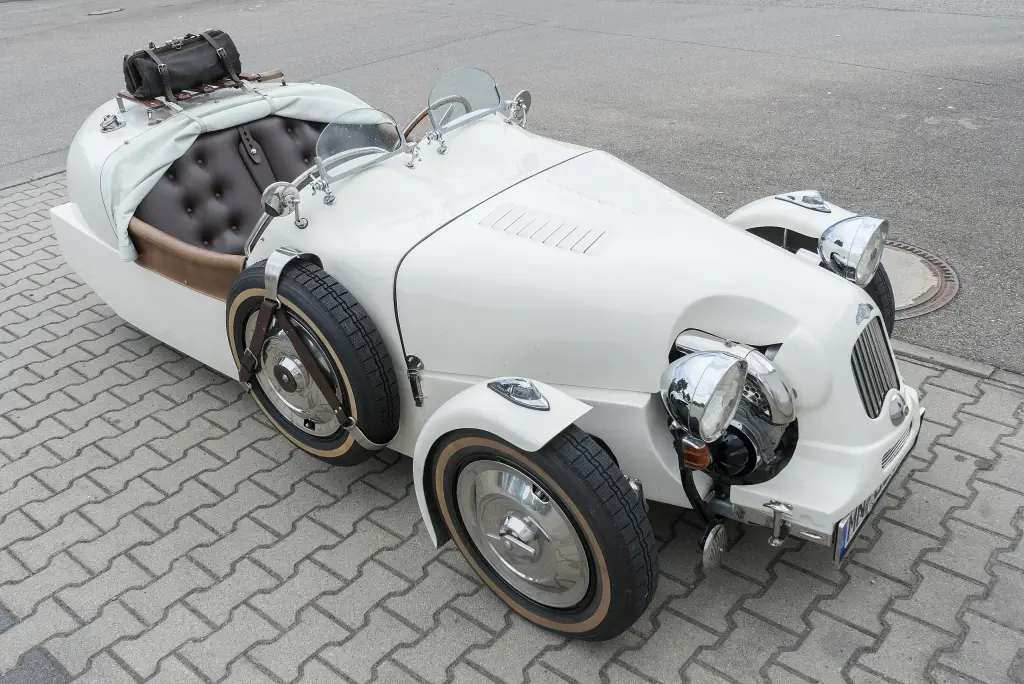

The Lomax 223 is a kit car built on the mechanicals of the Citroën 2CV. Its open two-seat body echoes the Morgan three-wheelers of the 1930s, and its name spells out the layout: two cylinders, two seats, three wheels.
Lomax 223 at a glance
| Maker | Lomax Motor Company, England |
|---|---|
| Type | kit car on a Citroën 2CV base |
| Layout | two cylinders, two seats, three wheels |
| Four-wheel version | Lomax 224 |
| Engine | 29 hp, from the Citroën 2CV |
| Weight | about 450 kg |
| Top speed | about 140 km/h |
| Fuel consumption | about 4–6 litres per 100 km |
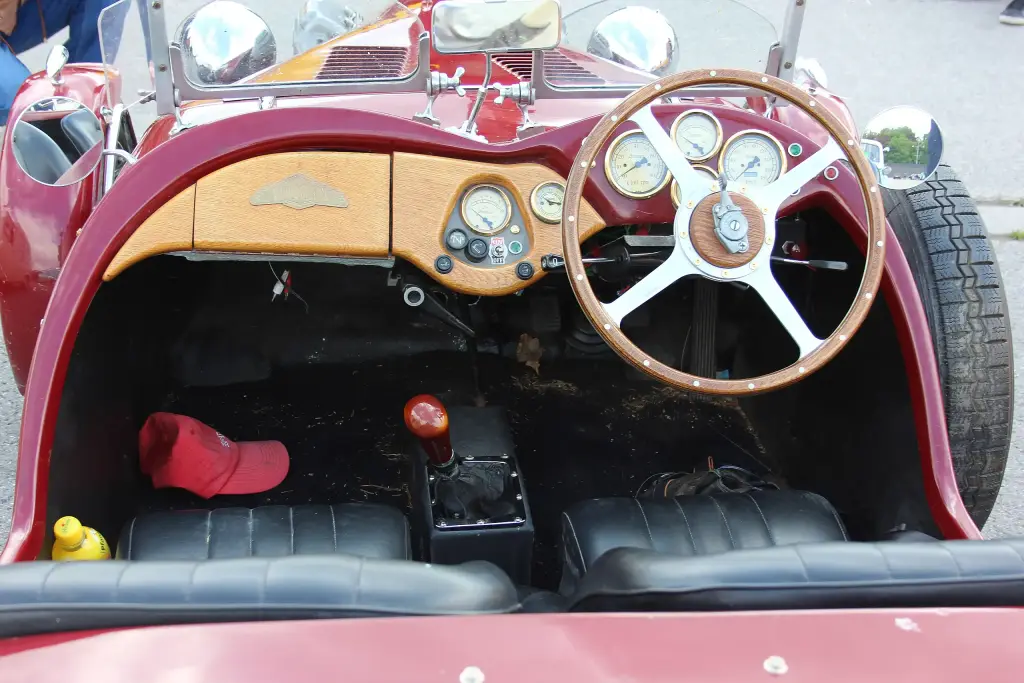
| Body | open roadster, normally driven without a roof |
| Last producer | Cradley Motor Works, East Sussex, closed 12 January 2019 |
based on one source: the German Wikipedia article on the Lomax Motor Company, which covers the marque and its 223 and 224 models.
History of the Lomax 223
Origins in England
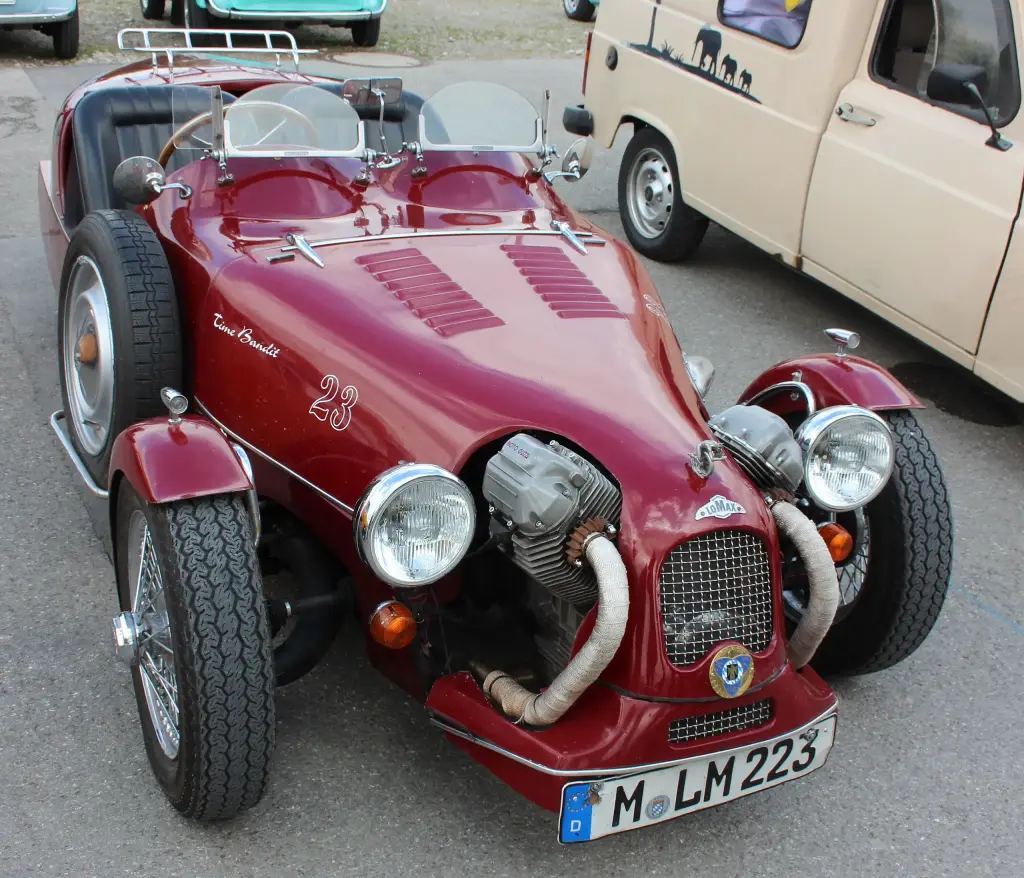

The Lomax kit was created in England in the early 1980s. The body of an old Citroën 2CV is removed and replaced with the parts of the kit, so the car keeps the mechanicals of the donor but wears a new open body whose design recalls the Morgan three-wheelers of the 1930s. A Lomax is normally an open roadster, driven entirely without a roof.
The 223 and the 224
The original Lomax was a three-wheeler with two wheels at the front and one at the back. A four-wheeled version was also offered. The model names explain the difference: 223 stands for two cylinders, two seats and three wheels, while 224 stands for two cylinders, two seats and four wheels. In Germany the three-wheeled 223 later became unavailable because of changes in the law, and the future of the four-wheeled 224 was described as unclear.
Engines and running gear
Most cars used the air-cooled flat-twin of the donor 2CV, rated at 29 hp. The engine’s cooling fan was removed, because a Lomax is cooled by the airflow as it drives. The result weighs about 450 kg, carries two people and reaches roughly 140 km/h, using about four to six litres of fuel per 100 km. Some examples were fitted with a Moto Guzzi motorcycle engine, and a few with the engine of a Honda ST1100 Pan European. A five-speed gearbox from a Swiss specialist, converted from the original Citroën unit, was available as an option.
From Britain to the continent
The kit passed through the hands of several British firms over the years. The last to build it was Cradley Motor Works of East Sussex, which closed on 12 January 2019. The car reached Germany through the Netherlands at the end of 1989, and in Germany it was sold by Der Franzose Automobiltechnik. In the Netherlands it was available from Auto Bouw Service. Owners still discuss in the German Lomax club whether the car should be called “der” or “die” Lomax.
Design and features
- 2CV mechanicals: the flat-twin engine, gearbox and suspension come from the Citroën 2CV.
- Morgan-style body: an open roadster with cycle-type front wheels, inspired by the three-wheelers of the 1930s.
- Light weight: about 450 kg and 29 hp give a top speed of around 140 km/h.
- Simple cooling: the engine fan is removed and the engine relies on airflow alone.

Lomax 223 versions
- 223: the three-wheeled original, two cylinders and two seats.
- 224: the four-wheeled version with the same two-cylinder engine.
- Motorcycle-engined cars: a few examples with a Moto Guzzi or Honda ST1100 engine.
- Five-speed cars: optional Swiss-converted gearbox in place of the Citroën four-speed.
The Lomax is built on the Citroën 2CV, and more of these cars are in the Lomax collection. Other small British makers are gathered under Citroën.
Sources
- Lomax Motor Company, German Wikipedia: history, models, specifications