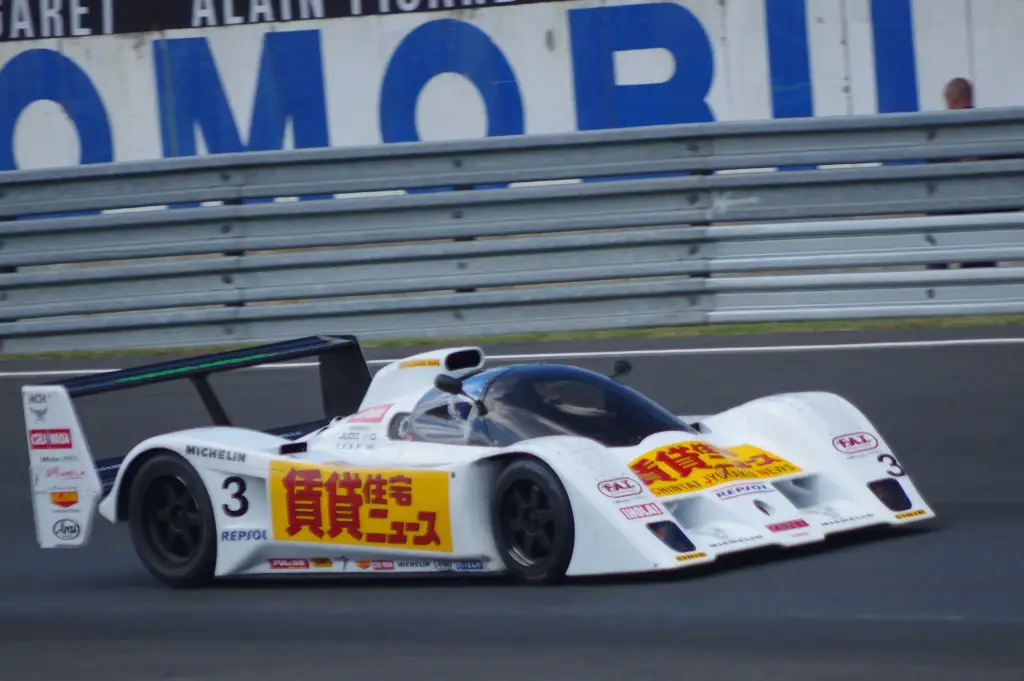
The Lola T92/10, briefly known as the Lola 981, was a Group C sports car developed by Lola Cars as a customer chassis for the 1992 World Sportscar Championship. It was the last sports car Lola built until 1998, and only three examples were completed.
Lola T92/10 at a glance
| Maker | Lola Cars, Britain |
|---|---|
| Year | 1992 |
| Series | World Sportscar Championship, Group C |
| Type | customer chassis |
| Chief designer | Wiet Huidekoper |
| Engine | Judd GV10, 3.5-litre V10 |
| Chassis built | three |
| First shown | 1991 430 km of Nürburgring, as a model |
| Main customer | Euro Racing |
| Last Lola sports car | until 1998 |
based on one source (English Wikipedia).
History of the Lola T92/10
After years of building prototypes for Chevrolet in IMSA GTP and for Nissan in the World Sportscar Championship and the All Japan Sports Prototype Championship, Lola ended 1991 without a major manufacturer behind its sports car programme. The company therefore set out to build a complete package that customers could buy, rather than a design dictated by a works partner.
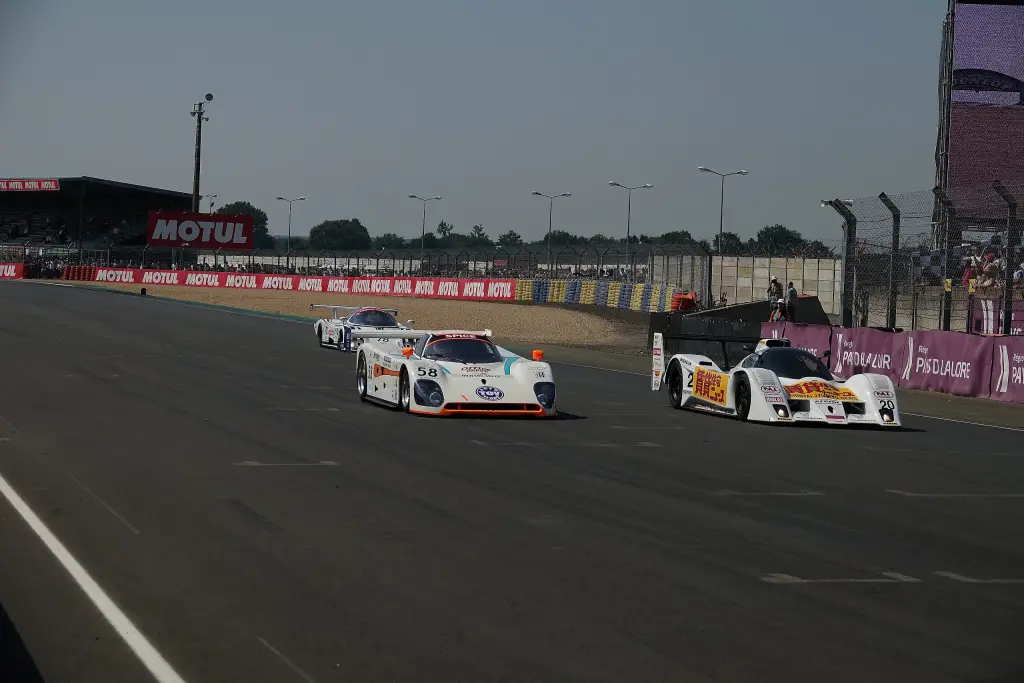
Chief designer Wiet Huidekoper started with a clean sheet. Extensive wind tunnel work with scale models produced very high downforce with modest drag, giving the car a high lift-to-drag ratio. The windscreen and cockpit roof were much smaller than on earlier Lola Group C cars. Two large air intakes on the nose fed engine and brake cooling and sat further back than before, which produced the small flat nose that gives the T92/10 its distinctive look; an engine inlet was added to the roof because the cars were normally aspirated. The sculpted sidepods departed from the norm, and the rear carried a tall wing instead of the single-element wing used before, with an exhaust-blown diffuser underneath.
For power Lola turned to Judd, whose Formula One V10 was adapted to the new 3.5-litre Group C rules as the GV10. Its compact design allowed tighter bodywork and enough power to take on the works teams. A model of the T92/10 was shown at the 1991 430 km of the Nürburgring. Only three cars were built, because the FIA cancelled Group C in April 1992, removing any prospect of further sales.
Charles Zwolsman’s Euro Racing bought the first two chassis for the 1992 season. The car’s first race was the opening Interserie round on Easter Monday, where Zwolsman won with chassis HU01. The World Sportscar Championship was harder: at a wet Monza both cars suffered gearbox failures, at Silverstone one car failed and the other, third on the road, was disqualified for an illegal fuel compound, and at Le Mans one car retired with transmission failure while the other finished 80 laps behind. At Donington a cockpit fire took out one car and the other finished fourth; at Suzuka an engine failed while the sister car finished fifth; at Magny-Cours both failed scrutineering. Euro Racing ended the season fifth in the teams championship, the series was dissolved at the end of 1992 and the team went bankrupt the following year. A third chassis, HU03, was bought by McNeil Engineering in 1995 and won Interserie races at Brands Hatch and Albacete in 1996 and at the Hungaroring in 1997.
Design and features
- Clean-sheet aerodynamics: high downforce, modest drag and a very high lift-to-drag ratio.
- Distinctive nose: two large intakes set well back, leaving a small flat nose.
- Judd V10: a Formula One-derived 3.5-litre engine adapted for Group C.
- Customer package: a complete car sold to private teams rather than built around a works partner.
Lola T92/10 versions
- T92/10 (also Lola 981): the Group C car, built in three chassis.
- HU01 and HU02: the Euro Racing cars of 1992.
- HU03: the McNeil Engineering car, raced in the Interserie later in the decade.
The T92/10 was Lola’s last sports car until the closed-cockpit B08/60 of 2008. More in the Lola collection.
Sources
- Lola T92/10, English Wikipedia: design, engine, chassis, racing history