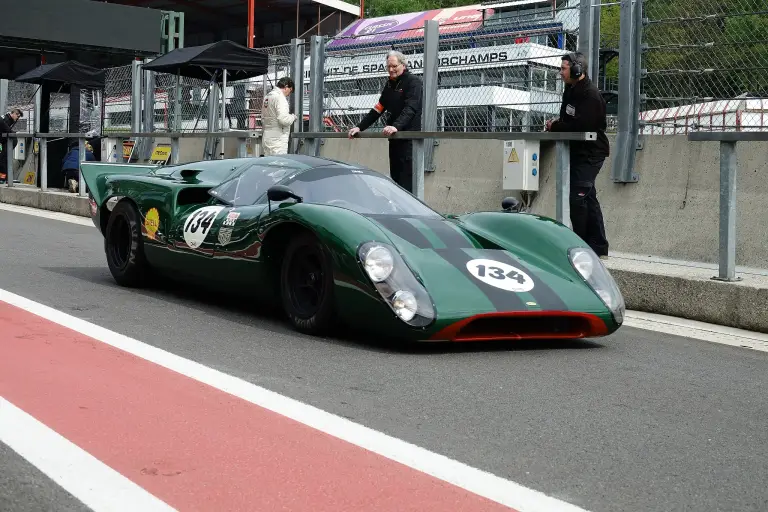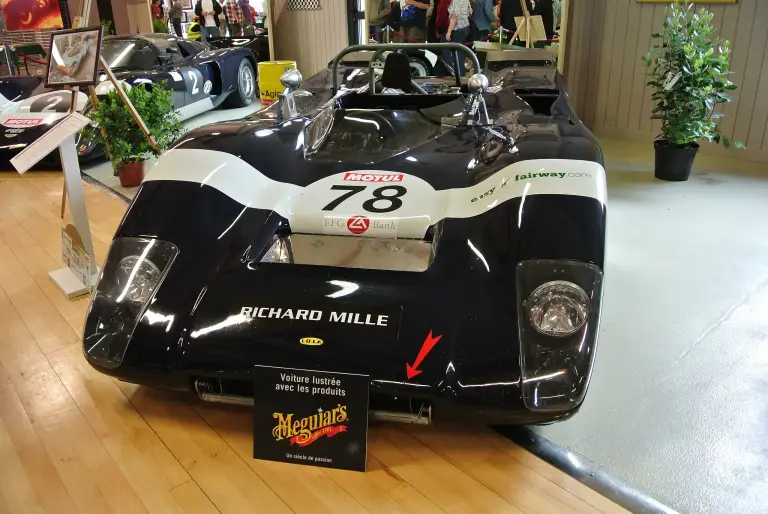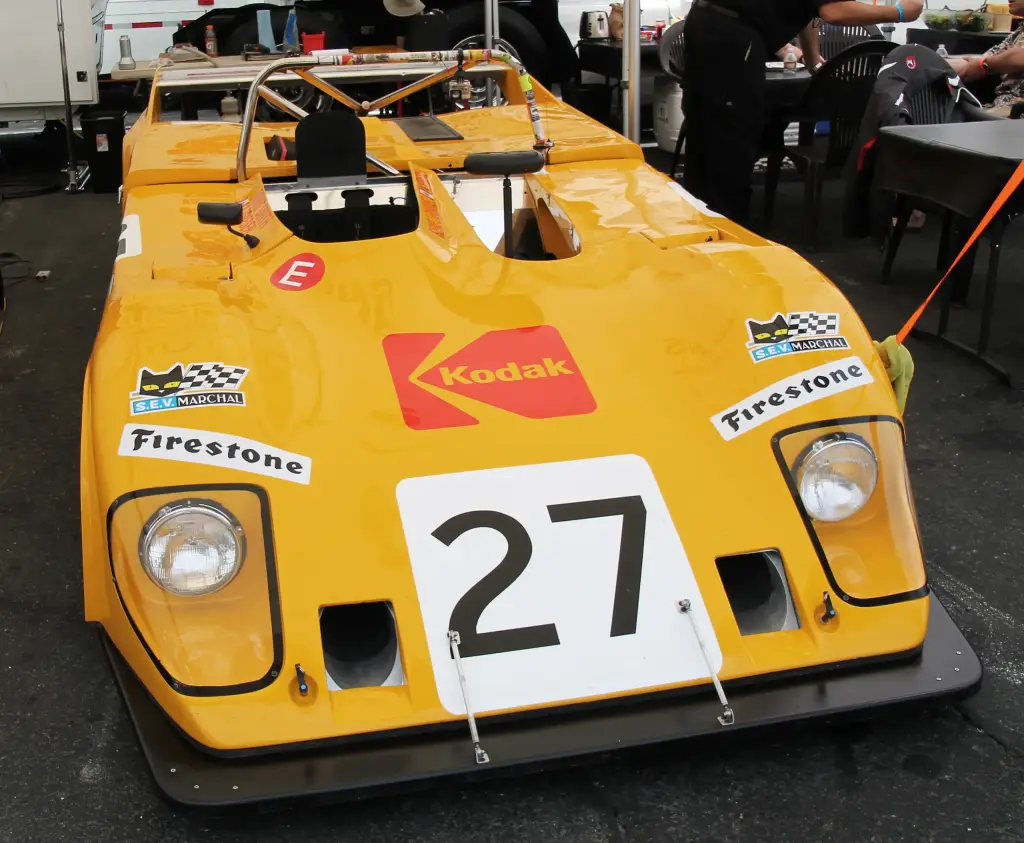
The Lola T290 and its evolutions were two-litre Sports 2000 prototypes designed and built by Lola between 1972 and 1981. Simple, affordable and quick, the series was produced in large numbers for private teams and gave Chris Craft the European title in 1973.
Lola T290 at a glance
| Maker | Lola, Britain |
|---|---|
| Years | 1972–1981 |
| Series | European 2-Litre Championship, Groups 5 and 6 |
| Designers | Bob Marston, John Barnard, Patrick Head, Eric Broadley |
| Chassis | aluminium alloy monocoque |
| Body | profiled fibreglass |
| Engines | various four-cylinder units, incl. Cosworth BDG and BMW M12 |
| Evolutions | T292, T294, T296, T297, T298, T299 |
| T292 production | almost thirty cars |
| T294 | BMW M12 engine |
| European title | Chris Craft, 1973, in a T292 |
| Three-litre relative | Lola T280 |
based on one source (English Wikipedia).
History of the Lola T290
A rule change for the 1972 season created a new Group 5, which merged prototypes with the 25-car “Sport Cars” class. Engines were limited to 3,000 cc, minimum weight rose to 650 kg and no minimum production run was required. The intention was to slow the cars down after the performances of the Porsche 917 and Ferrari 512S, and the new prototypes, often adapted from Group 6 machinery, raced in the World Makes Championship with Formula One-derived engines such as the Cosworth DFV.
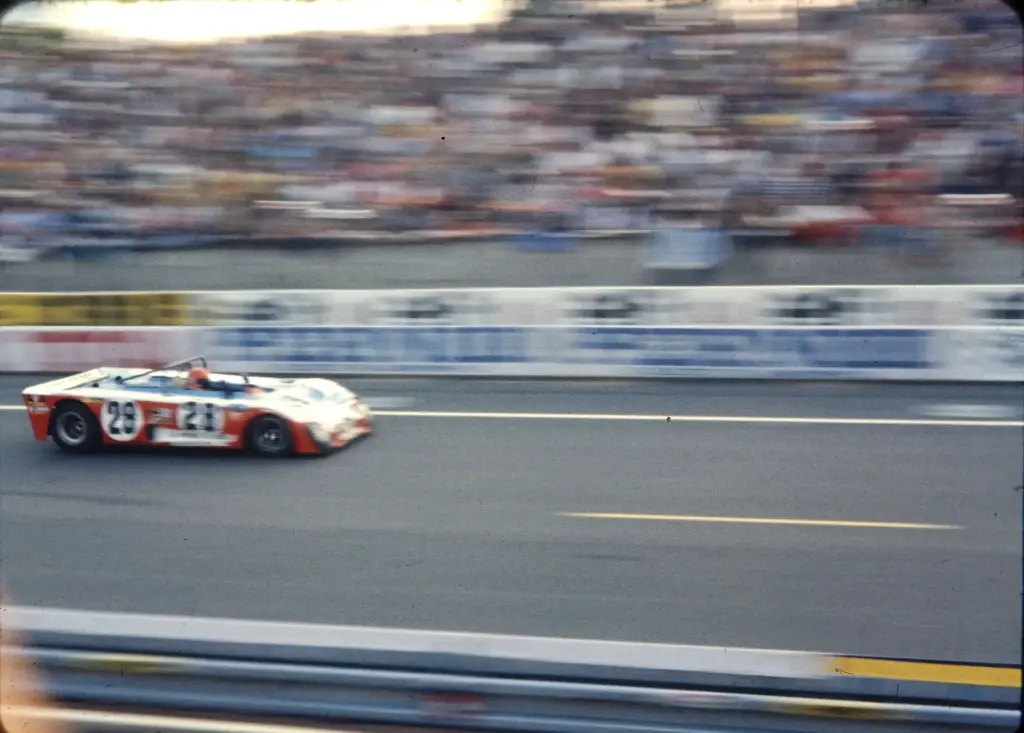
Eric Broadley saw that customers would want a simple car to match the DFV, so Lola designed two machines together: the T280 for the three-litre class and the T290 for the two-litre class. The work was done by Broadley with chief designer Bob Marston and with the help of Patrick Head and John Barnard, then in their twenties, around an aluminium alloy monocoque — the technology already used on the T210 and its T212 derivative — with a highly profiled fibreglass body.
The T292 was an improved T290. The monocoque was practically unchanged; the main mechanical difference was moving the disc brakes to the differential output instead of the wheel hubs, cutting unsprung weight and improving agility. The nose was lengthened and a fixed rear wing added for aerodynamics. One example was fitted with the three-litre Cosworth DFV V8 of 445 hp, and the T292 was a commercial success with almost thirty built, while many T290s were upgraded with T292 bodywork. For 1974 the car evolved into the T294 with a BMW M12 engine, but the changes were not enough against the Renault-powered Alpine A441, and the European two-litre championship was cancelled for 1975. Production of the T290 series resumed in 1976, with the T297 (1978), T298 (1978–80) and T299 (1981) following.
The sheer number of cars built, especially in the T290 series, meant they appeared in the most varied competitions. Chris Craft won the European two-litre sports car title in 1973 in a T292 with a 275 hp Cosworth BDG engine.
Design and features
- Built for customers: a simple two-litre prototype produced in large numbers for private teams.
- Designed by a strong team: Broadley and Bob Marston, with Patrick Head and John Barnard.
- Aluminium monocoque: the proven T210 construction under a fibreglass body.
- Better brakes: the T292 moved the discs to the differential output to cut unsprung weight.
- Title-winning: Chris Craft took the European two-litre championship in a T292 in 1973.
Lola T290 versions
- T290 (1972): the original two-litre car.
- T292 (1973): improved version with different brakes, longer nose and rear wing; almost thirty built.
- T294 (1974): BMW M12 engine.
- T297 (1978) and T298 (1978–80): later versions after production resumed.
- T299 (1981): the final evolution of the series.
The T290 was the two-litre companion of the three-litre T280 and the successor to the T210. More in the Lola collection.
Sources
- Lola T290, English Wikipedia: design, variants, racing history