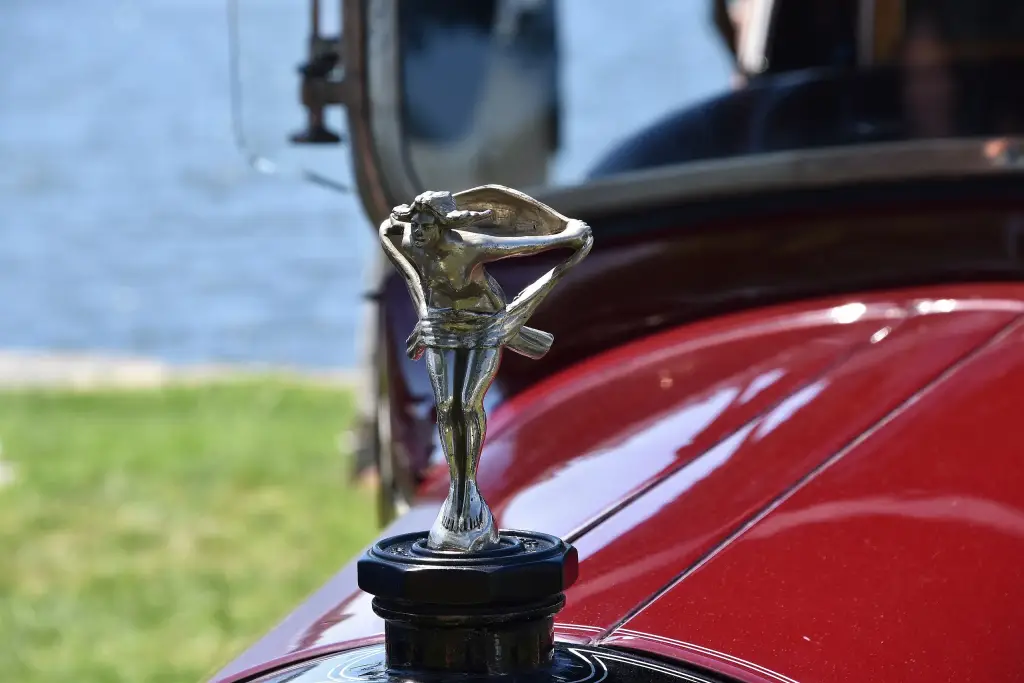
The Locomobile Model 48 was the car that defined Locomobile as a maker of fine luxury automobiles. Introduced in 1911 with a 7-litre straight-six, it grew to 8.6 litres and stayed in production until the company closed in 1929, surviving the takeover by Durant Motors and serving senior American officers in the First World War.
Locomobile Model 48 at a glance
| Maker | Locomobile Company of America, Bridgeport |
|---|---|
| Production | 1911–1929 |
| Layout | front engine, rear-wheel drive |
| Bodies | touring car, roadster, limousine, landaulet |
| Engine 1911 | 429.4 cu in (7,037 cc) straight-six |
| Engine 1913 | 524.8 cu in (8,600 cc), stroke 5.5 in |
| Power | 48.6 hp SAE in 1911; 95 hp in 1913; 103 hp by 1924 |
| Transmission | four-speed manual, multiple disc clutch |
| Wheelbase | 11 ft 3 in, then 13 ft 4 in and 13 ft 8 in |
| Price 1911 | $4,800 tourer to $6,150 landaulet |
| Price 1929 | $9,600 to $12,500 |
| Brakes | rear wheels only until 1924, then four-wheel |
Based on one source (English Wikipedia).
History of the Locomobile Model 48
Locomobile introduced the Model 48 in 1911 as a new luxury car, offered as seven-seat tourers and limousines, two-seat roadsters and landaulets. Factory prices ran from $4,800 for a tourer to $6,150 for a landaulet. The touring car of 1911 measured 16 ft 3 in overall, 5 ft 7½ in wide and 7 ft 5½ in tall with the roof raised, on a wheelbase of 11 ft 3 in. That wheelbase grew to 13 ft 4 in in 1913 and a longer 13 ft 8 in version appeared in 1914; the short chassis was dropped in 1915.
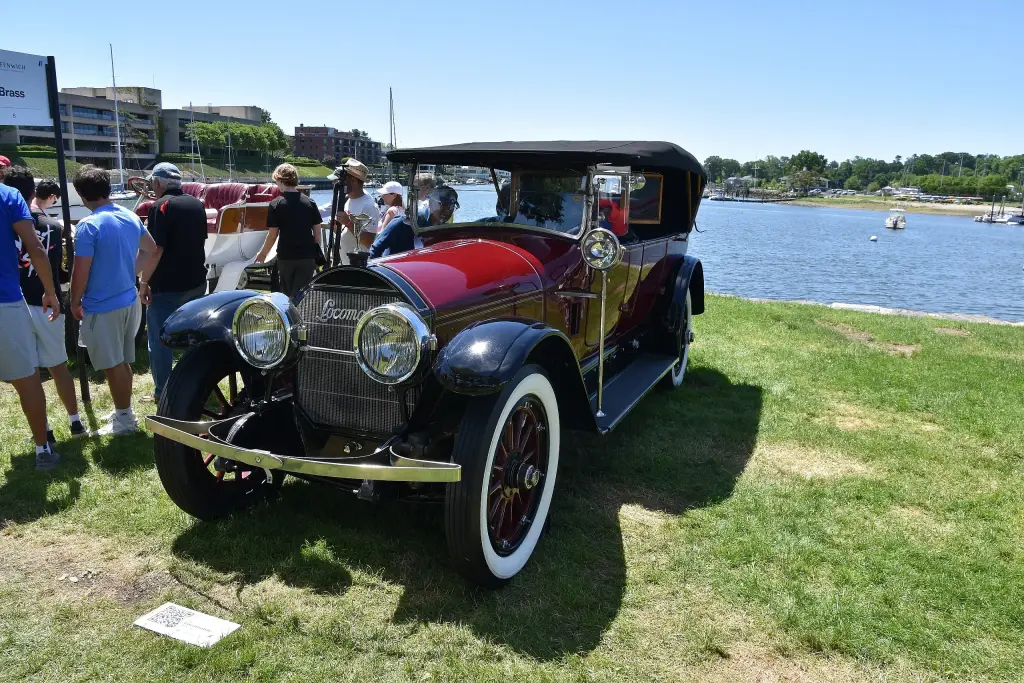
Under the bonnet sat a Locomobile straight-six with dual magnetos. In 1911 it displaced 429.4 cu in (7,037 cc) from a 4½ in square bore and stroke and was rated at 48⅛ hp SAE. In 1913 the stroke was lengthened to 5½ in, raising capacity to 524.8 cu in (8,600 cc) and output to 95 hp at 2,200 rpm; by 1924 the engine was giving 103 hp. Drive went through a four-speed manual gearbox and a multiple disc clutch, with an I-beam front axle, a fully floating live rear axle and semi-elliptical leaf springs. A 23 US gallon tank was later enlarged to 36 gallons.
In 1917 Locomobile added the Sportif, a four-seat sporting tourer. In 1922 William C. Durant bought the company and folded it into Durant Motors, keeping the Model 48 in production under the Locomobile name; in 1926 it was joined by the smaller, cheaper Model 90. The Model 48 was distinctly antiquated by the mid-1920s, yet Locomobile still built 400 to 500 a year, and production only ended in 1929 when the company went out of business.
The Model 48 is also remembered for its war service. When the United States entered the First World War in 1917, the army ordered Model 48s as luxury staff cars for its most senior officers. The Cadillac Type 57 was the standardised AEF staff car, but the Locomobile was considered far more luxurious and was usually reserved for the top ranks. Its limousine was among the most expensive staff cars in Allied service, which led the French Parliament to accuse the American Expeditionary Forces of extravagance. General Pershing ordered nineteen Model 48s at $7,000 to $9,000 each, and on his directive most cars in military use traded their wooden spoked wheels for steel disc wheels, twinned at the rear — a change reported to give an uncomfortable ride. In 1918 Locomobile built a Special Overseas Limousine with disc wheels, a narrower body and a V-shaped windscreen to cut wind resistance, and two unique narrow-bodied cars with wire wheels were made for Pershing himself; both returned to the United States after the war.
Design and features
- Big straight-six: from 7 litres in 1911 to 8.6 litres and 103 hp by 1924.
- Genuine luxury: limousine and landaulet bodies at prices that matched the finest American cars.
- Long chassis: wheelbases of up to 13 ft 8 in for seven-seat bodies.
- War record: the preferred staff car of the most senior AEF officers, including General Pershing.
Locomobile Model 48 versions
- Touring car: the open seven-seater, from $4,800 in 1911.
- Roadster: a two-seat open body.
- Limousine and landaulet: closed bodies up to $6,150 in 1911.
- Sportif (1917): a four-seat sporting tourer.
- Special Overseas Limousine (1918): military body with a narrow shell and V windscreen.
- Model 90 (1926): a smaller, cheaper stablemate introduced alongside the 48.
The Model 48 followed the company’s early steam cars and carried the marque until its closure in 1929. More cars are in the Locomobile collection.
Sources
- Locomobile Model 48, English Wikipedia: design, dimensions, engines, prices, military service