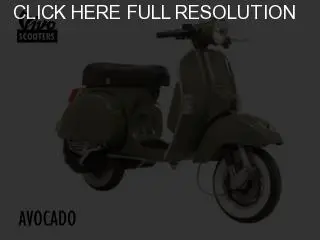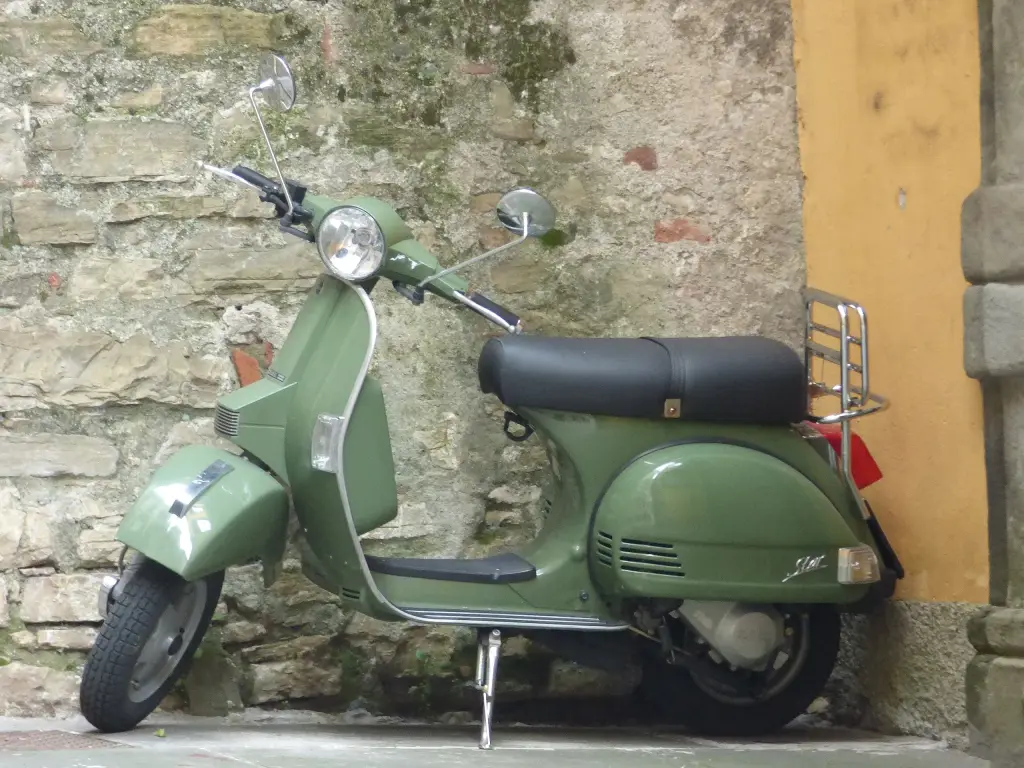
The LML Star is a motor scooter that Lohia Machinery Limited built in Kanpur, India, between 1999 and 2017 on the chassis of the Italian Piaggio Vespa PX. It was sold in Europe as the Star De Luxe, in North America and Thailand as the Stella, and it stayed in production long after the original Vespa PX had left the market.
LML Star at a glance
| Maker | Lohia Machinery Limited, Kanpur, India |
|---|---|
| Production | 1999–2017 |
| Based on | Piaggio Vespa PX |
| Original name | LML NV, 1986–1994 |
| Engines | 110 cc from 1995, 125 cc from 1996, 150 cc from 1997; later 125, 150, 151 and 200 cc |
| Transmission | four-speed twist-grip; stepless belt drive in the 4T Automatica |
| Body | pressed steel monocoque, spare wheel under the rear left panel |
| Brakes | front disc and rear drum on later models |
| Names by market | Star De Luxe (Europe), Stella (USA, Thailand), Via Toscana (UK), Bella Donna (New Zealand) |
| Break in production | February 2006 to March 2008 |
| End | LML insolvent in 2017; imports to the USA stopped in June 2017 |
The English and German articles agree on the scooter but date its origin differently: the German article calls the 1986–1994 version the LML NV, while the English one gives 1999–2017 as the Star’s production period. Both dates are given above.
History of the LML Star
LML had built Piaggio scooters in India since 1983, when the two firms set up the Vespa Automobile Company Limited as a joint venture. That company produced the Vespa PX together with the NV3, Alfa and T5 models under the LML Vespa brand, starting with a 100 cc scooter and later adding the Supremo, a variant of the Vespa Cosa, and the Select, a copy of the Vespa T5. The German Wikipedia dates the original version of the scooter to 1986–1994, when it was known as the LML NV. After further development the first LML Star appeared in 1995 with a 110 cc engine, still in cooperation with Piaggio; a 125 cc version followed in 1996 and the first 150 cc model in 1997. When Piaggio sold its shares in LML at the end of 1999, LML kept the rights to the scooter designs it had been given and continued the model range on its own.
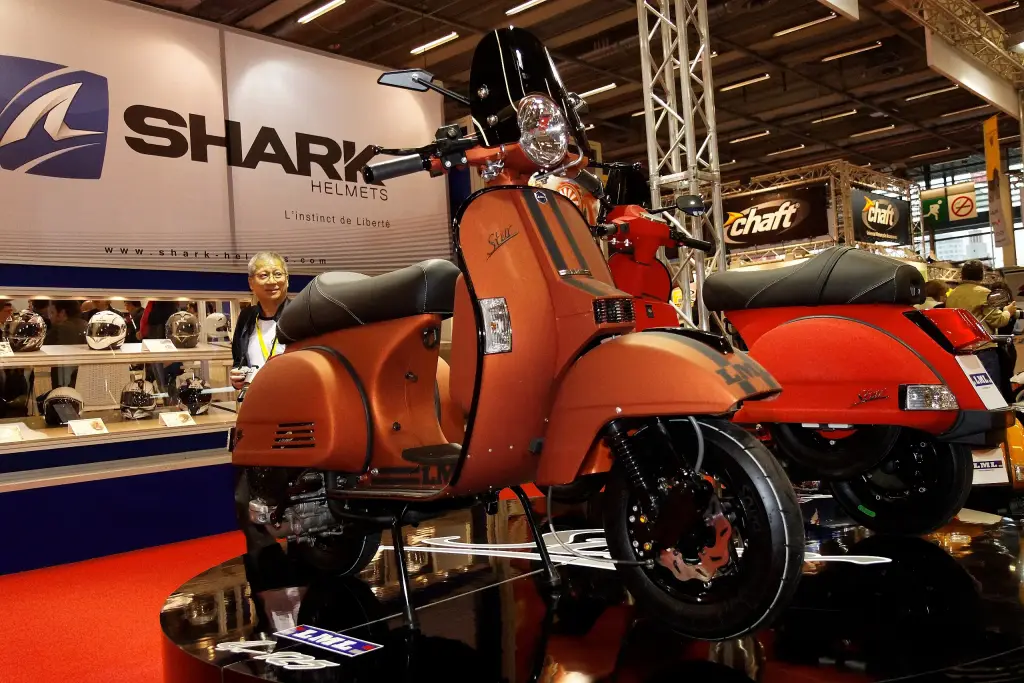
The English Wikipedia gives 1999–2017 as the production period of the Star and lists the names used in each market: Star De Luxe in Europe, Stella in the United States and Thailand, Via Toscana in the United Kingdom and Bella Donna in New Zealand. In Delhi and Ghaziabad the modernised NV scooter with a four-stroke engine was afterwards sold as the LML Speedy. The English article also records the end of LML NV and Select 2 production in 2004, after which the Star carried the range.
Technically the Star follows the Vespa PX closely. It has a pressed-steel body, a four-speed gearbox worked by a twist grip, a spare wheel under the left rear panel, and on the two-stroke versions no automatic oiling system, so that two-stroke oil has to be mixed with the petrol. The 2007 revision of production brought both two-stroke and four-stroke models, and the 2007 and 2008 scooters were given better paint and grips and a redesigned headlight. In 2011 Genuine Scooters, the American importer, developed a four-stroke Stella that met California emission rules, which the two-stroke could not. The 2013 Star 125 4T Automatica used a stepless belt transmission developed by the Italian supplier Adler; on these scooters the engine and gearbox sit at the rear left, so the spare wheel cannot be carried under the panel. A Star 150 4T Automatica was offered in India in February 2014, and a 250 cc version was under consideration. Production was interrupted by a labour strike from 2005 to mid 2006 and by the closure of the works in February 2006; after the plant reopened in March 2008 LML concentrated on the Star, mainly for export. At the Paris motorcycle show in 2011 a planned automatic revival of the LML Sensation 125 was shown as the LML Star Deluxe, but only the PX-chassis Stars reached the dealers. According to ScooterLab.uk, LML had been insolvent since the summer of 2017, and Genuine stopped importing the Stella in June 2017.
Design and features
- Vespa PX chassis: the pressed-steel body and many parts are interchangeable with those of the Vespa P-series, which made the Star easy to keep running.
- Two-stroke simplicity: the classic 150 cc two-stroke with a four-speed twist-grip gearbox and premixed fuel, as on European scooters of the 1960s.
- Four-stroke option: from the 2007 revision LML sold four-stroke Stars as well, including the automatic 4T Automatica with belt drive.
- Long life: the Star outlived the Vespa PX and remained in production in Kanpur until 2017.
LML Star versions
- LML NV (1986–1994): the original version of the scooter, later modernised with a four-stroke engine and sold as the LML Speedy.
- Star 110, 125 and 150: the two-stroke scooters of 1995–1997, with 125, 150 and 151 cc engines in later years.
- Star 4: four-stroke models offered from 2007, with front disc and rear drum brakes.
- Star 125 and 150 4T Automatica: stepless belt-drive versions from 2013, with the engine at the rear left.
- Stella and Star De Luxe: the export names used by Genuine Scooters in the United States and by LML in Europe.
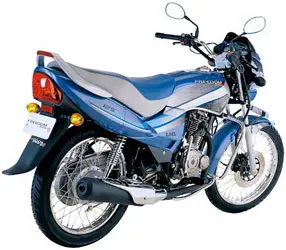
The Star shared its Piaggio-designed body with the LML Select and stood at the top of the range above the LML Freedom motorcycles. More scooters are in the LML collection.
Sources
- LML Star, English Wikipedia: production years, names by market, technical description
- LML Star, German Wikipedia: NV origin, engines by year, automatic versions, insolvency