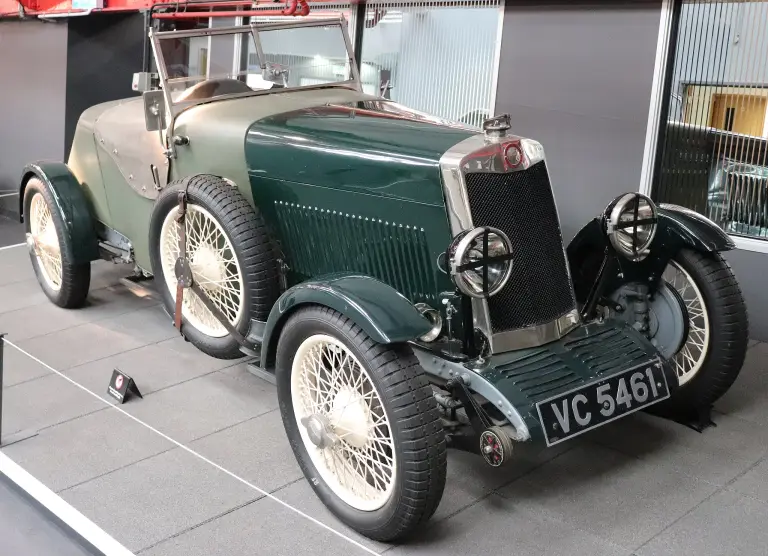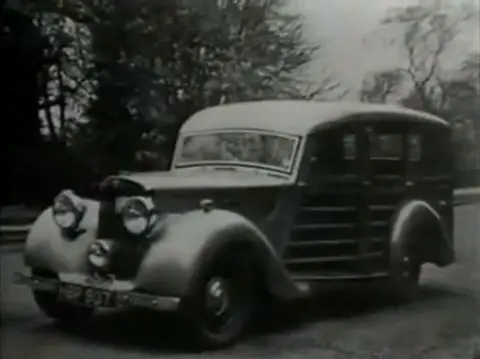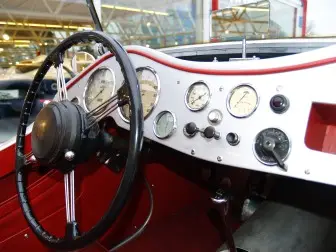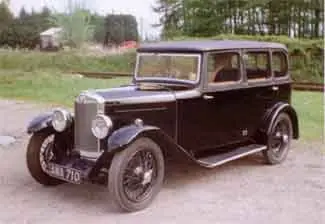
The Lea-Francis P-type dates from the period when the Coventry company turned from solid touring cars to sporting ones. Published histories of Lea-Francis say little about the P-type itself, so this page sets it in the story of the marque: the bicycle shop of 1895, the Vulcan partnership of the 1920s, and the supercharged cars that won at Ards in 1928.
Lea-Francis P-type at a glance
| Maker | Lea-Francis, Coventry |
|---|---|
| Model | P-type |
| Documentation | no separate Wikipedia article on the model |
| Company founded | 1895 as a bicycle maker; cars from 1903 |
| First own cars | 1919, built from bought-in components |
| Vulcan partnership | 1922–1928, shared bodies, gearboxes and dealers |
| Sporting era | from about 1925 |
| Sporting stablemates | Hyper (S-type) and Ace of Spades |
| Best-known result | 1928 Ulster TT win, Ards circuit |
| Owners’ club | about 340 members with some 420 vehicles |
There is no Wikipedia page for the P-type, and the English article on the marque does not describe it. The page therefore gives the history of the company and its sporting models, based on that one source, and adds only what the surviving car itself shows.
History of the Lea-Francis P-type
R. H. Lea and G. I. Francis started the business in Coventry in 1895, building bicycles, and moved into cars in 1903 and motorcycles in 1911. Cars were built under licence for Singer in 1905, and from 1919 the firm made its own cars from bought-in components.
From 1922 Lea-Francis worked with Vulcan of Southport, sharing manufacturing and dealers: Vulcan supplied bodies, and Lea-Francis supplied gearboxes and steering gear. Two six-cylinder Vulcan cars were sold as the Lea-Francis 14/40 and 16/60. The arrangement ended in 1928 when Vulcan stopped making cars.
A sporting image began to appear from about 1925, with models such as the Hyper and the Ace of Spades. The Hyper, also called the S-type, was the first British supercharged production car, with a 1.5 litre Meadows engine, and in 1928 a Hyper won the Ulster TT over 30 laps of the 13.5-mile Ards circuit, driven by Kaye Don before a record 250,000 spectators.
The P-type belongs to this sporting chapter of the company’s history rather than to the later saloon ranges. Cars of the model are still used in competition today: a P-type appeared at the Harewood hillclimb in 2012. The Lea-Francis Owners’ Club, with about 340 members owning some 420 vehicles, is the place where such cars are recorded.
Design and features
- Sporting period: the P-type comes from the years after 1925 when Lea-Francis built its reputation for quick cars.
- Still in use: surviving cars appear at events such as the Harewood hillclimb.
- Owners’ club: about 340 members own some 420 Lea-Francis vehicles between them.
- Part of a short history: car making ended in 1962 after almost 10,000 vehicles.
Lea-Francis P-type versions
- P-type: the model described here, known from surviving cars rather than from published histories.
- Hyper (S-type): the supercharged 1.5 litre stablemate of the same sporting years.
- Ace of Spades: the other sporting model of the mid-1920s.
The supercharged car of the same years is the Lea-Francis Hyper; the Vulcan-built six-cylinder models are covered by the Lea-Francis 14/40, and the post-war cars by the Lea-Francis 14 hp. More cars are in the Lea-Francis collection.
Video: Harewood Hillclimb June2012 – Lea Francis P Type.wmv
Video on YouTube.
Sources
- Lea-Francis, English Wikipedia: company history, Vulcan partnership, sporting models, owners’ club