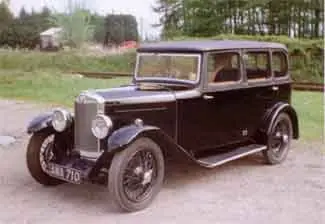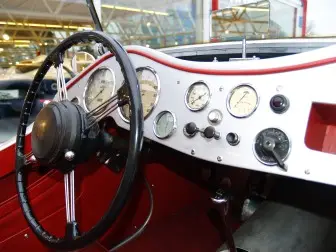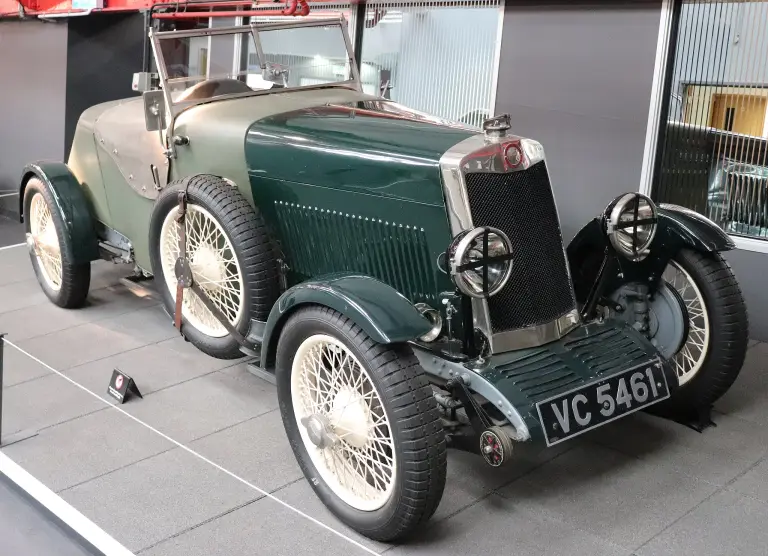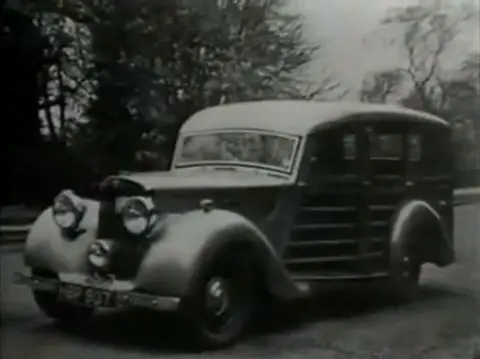
The Lea-Francis 14 hp was one of the two models that relaunched the company in 1937, after it had been re-formed under the chairmanship of George Leek. Its engine was designed by R. H. Rose, one of the ex-Riley men who joined Lea-Francis, and was built on a layout similar to that of the Riley 12/4. The 14 hp survived the war, returned in 1946 in updated form, and stayed in production until 1954.
Lea-Francis 14 hp at a glance
| Maker | Lea-Francis, Coventry |
|---|---|
| Production | 1937–1939 and 1946–1954 |
| Company re-formed | 1937, under George Leek |
| Engine designer | R. H. Rose, formerly of Riley |
| Engine layout | similar to the Riley 12/4 |
| RAC rating | 14 hp, actually 12.9 hp |
| Sister model | Lea-Francis 12 hp, introduced at the same time |
| Bodies after 1946 | 14 hp Saloon and 14 hp Sports |
| Chassis update | independent front suspension and hydraulic brakes |
| Range in 1950 | 18 hp saloon and 2½ litre Sports |
| Racing link | 14 hp Sports chassis became the Connaught L2 and L3 |
There is no separate Wikipedia article on the 14 hp. This page uses the sections on the 1937 relaunch and the post-war range in the English article on Lea-Francis, so the detail rests on one source.
History of the Lea-Francis 14 hp
Lea-Francis was re-formed in 1937 under the chairmanship of George Leek, together with other men from Riley such as R. H. Rose, who designed a new engine for the company with a layout similar to that of the Riley 12/4. The 12 hp and the 14 hp — the latter rated at 14 hp but actually of 12.9 hp — were introduced in 1937 and continued until the start of the war in 1939, when production ceased and the factory concentrated on manufacturing for the war effort.
Car production began again in 1946 with updated vehicles based on the pre-war designs. The 14 hp Saloon and Sports were luxurious and sporty cars, and they were popular, if expensive. In time an improved chassis with independent front suspension and hydraulic brakes was introduced across the range.
In 1950 the 18 hp saloon and the 2½ litre Sports joined the range, both with the more powerful 2.5 litre engine. Production came to a halt again in 1954, after only 85 of the 2.5 Litre Sports had been built; the company had not been at the Earl’s Court motor show since 1952.
Some 14 hp Sports chassis were sold to Connaught Engineering, where they became the L2 and L3 sports-racing cars. Connaught went on to develop a Formula 2 racing engine for its “A” type single seater that was based on the Lea-Francis design.
Design and features
- Rose-designed engine: a new four-cylinder unit with the layout of the Riley 12/4.
- Two bodies: the 14 hp was offered as a saloon and as a sports car.
- Pre-war and post-war: built from 1937 to 1939 and again from 1946 to 1954.
- Updated chassis: independent front suspension and hydraulic brakes arrived across the range.
- Connaught connection: 14 hp Sports chassis were the basis of the Connaught L2 and L3.
Lea-Francis 14 hp versions
- 14 hp (1937–1939): the original pre-war model, sold alongside the 12 hp.
- 14 hp Saloon (1946 onwards): the post-war closed car on the updated pre-war design.
- 14 hp Sports (1946 onwards): the open sporting version; its chassis was sold to Connaught.
- 18 hp and 2½ litre Sports (1950): the larger-engined models added at the top of the range.
The earlier six-cylinder cars are described in the Lea-Francis 14/40, and the supercharged 1920s model in the Lea-Francis Hyper. More cars are in the Lea-Francis collection.
Sources
- Lea-Francis, English Wikipedia: 1937 relaunch, engine, saloon and sports models, Connaught chassis