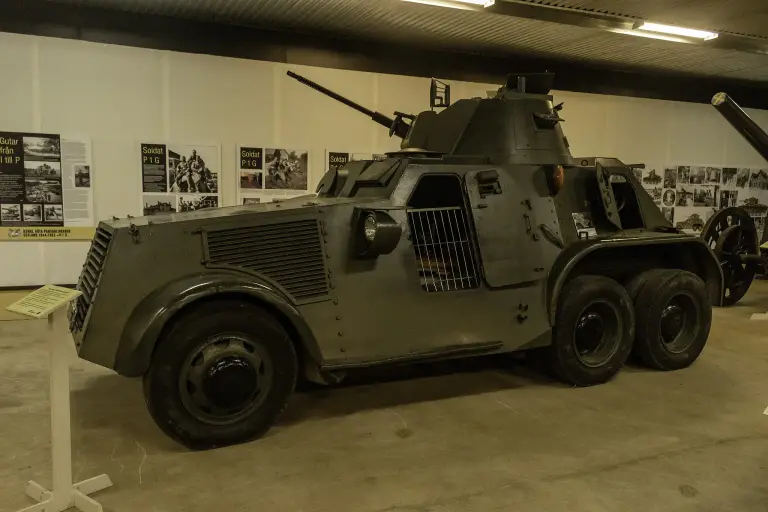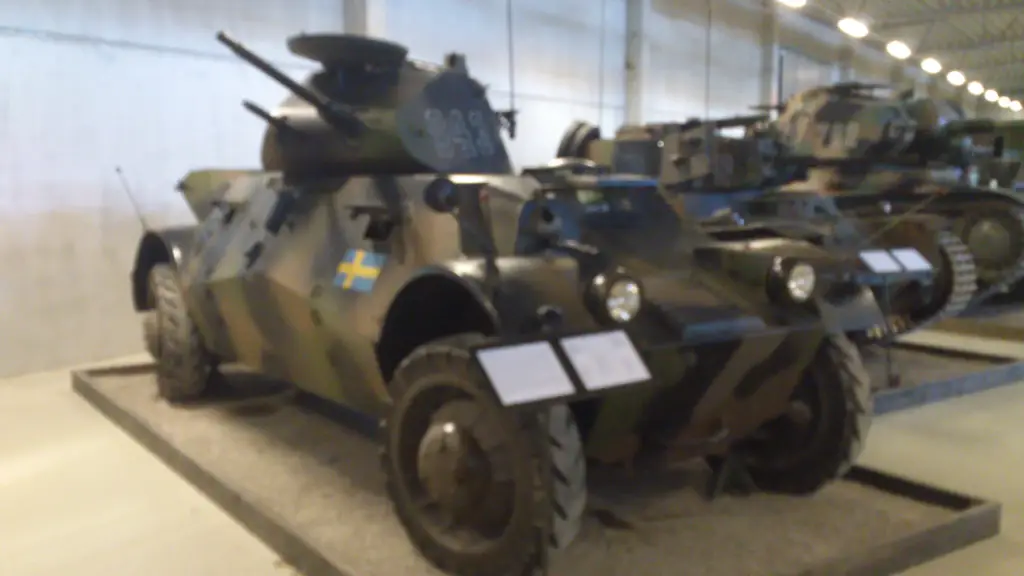
The Landsverk Lynx was a Swedish 4×4 armoured car developed by AB Landsverk just before the Second World War. In Danish service it was the PV M39; in Sweden the same vehicle became the pansarbil m/39, and the later Volvo-built series the pansarbil m/40.
Landsverk Lynx at a glance
| Maker | AB Landsverk, Landskrona, Sweden |
|---|---|
| Type | four-wheel-drive armoured car |
| Development | started 1937 as a private venture |
| First prototype | ready for trials in January 1938 |
| Danish designation | PV M39 |
| Swedish designations | pansarbil m/39 (pbil m/39); m/40 for the Volvo-built series |
| Engine | 140 hp Scania-Vabis, mounted in the middle on the left side |
| Armament | one autocannon (Madsen 20 mm for Denmark, Bofors 20 mm for Sweden) and three machine guns |
| Crew | six: commander, three gunners, front and rear drivers |
| Turret | modified Landsverk L-60 turret |
| Drive | from both the front and the rear |
| Danish order | 18 vehicles; three shipped in April 1938 |
Based on one source, the English Wikipedia article on the Lynx, which covers the design and the Danish and Swedish service of the vehicle.
History of the Landsverk Lynx
AB Landsverk had already built the L-180, L-181 and L-182 family of armoured cars when it began work on the Lynx in 1937 as a private project, without a customer in hand. The Swedish army was not particularly interested, so the company took the car to Denmark and pitted it against the British Alvis-Straussler AC3. The demonstration worked: the Danish army placed an order for 18 vehicles.
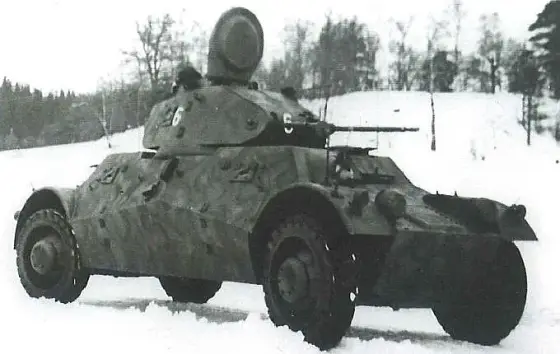
The first prototype was ready for trials in January 1938, and three vehicles were shipped to Denmark in April 1938, armed with a Madsen 20 mm cannon and Madsen machine guns. Fifteen more were to follow, but the German invasion of Denmark in 1940 put an end to the plan. The undelivered cars were instead requisitioned by Sweden, refitted with new turrets and Bofors 20 mm cannon, and taken into Swedish service as the pansarbil m/39.
Sweden then ordered thirty more vehicles, but Landsverk did not have the capacity to build them, so the contract was fulfilled by Volvo. These cars were designated pansarbil m/40 because of a number of changes, among them 145 hp Volvo engines. The m/40 models were completed between 1941 and 1943 and took part in exercises with reconnaissance units. In 1956 thirteen pansarbils were sold to the Dominican Republic.
Design and features
- Low, sloped hull: a low-slung body with well sloped but thin armour.
- L-60 turret: the armoured car used a modified turret from the Landsverk L-60 light tank.
- Two drivers: the Lynx could be driven from the front and from the rear, which made a fast withdrawal possible.
- Six-man crew: a commander, three gunners and two drivers, with three machine guns in addition to the autocannon.
- Central engine: the 140 hp Scania-Vabis sat in the middle of the hull on the left side.
Landsverk Lynx versions
- Danish PV M39: the three cars delivered in 1938, with a Madsen 20 mm cannon and Madsen machine guns.
- Swedish pansarbil m/39: the requisitioned cars, refitted with new turrets and Bofors 20 mm cannon.
- Swedish pansarbil m/40: thirty cars built by Volvo with, among other changes, 145 hp Volvo engines.
- Export cars: thirteen pansarbils sold to the Dominican Republic in 1956.
The Lynx grew out of the earlier Landsverk L-180 family of armoured cars. More vehicles of the maker are in the Landsverk collection.
Sources
- Landsverk Lynx, English Wikipedia: development, design, Danish and Swedish service