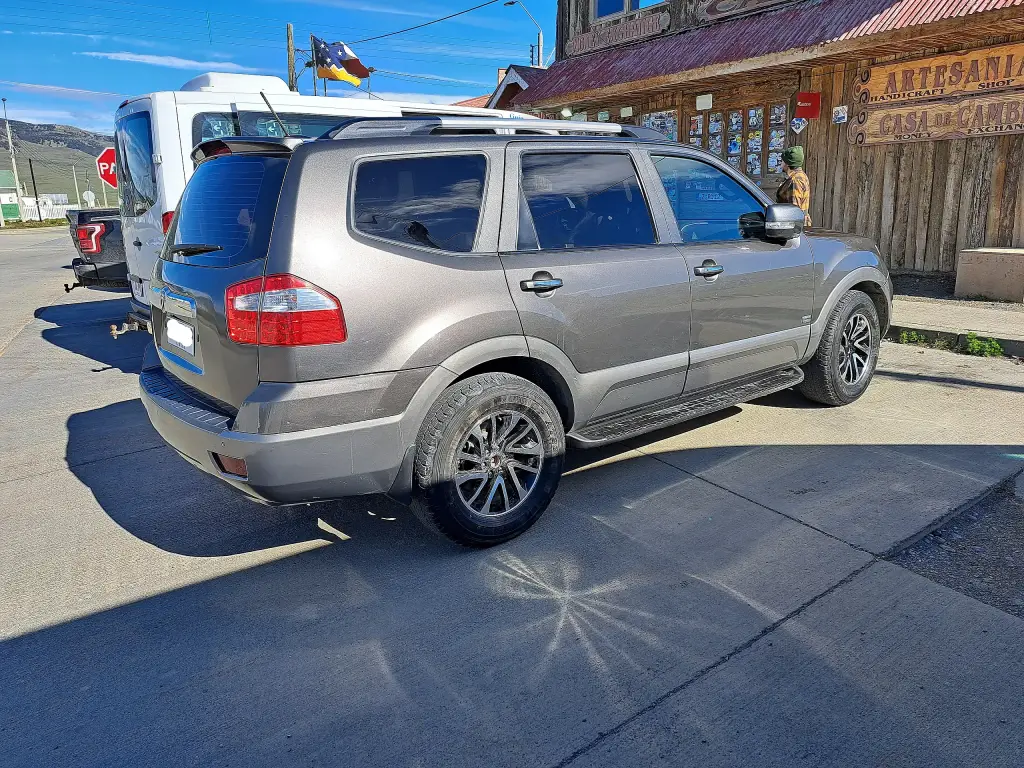
The Kia Mohave was a mid-size SUV with body-on-frame construction that Kia built from 2008 to 2024. It was called the Borrego in North America and China, and it was the largest vehicle in Kia’s range when it appeared.
Kia Mohave at a glance
| Maker | Kia |
|---|---|
| Production | 2008–2024 |
| Also called | Kia Borrego (North America, China) |
| Previewed by | Kia Mesa concept, 2005 |
| Designer | Peter Schreyer |
| Construction | body-on-frame |
| Engines | 3.8 V6 276 hp, 4.6 V8 361 hp, 3.0 V6 diesel |
| Gearbox | five or six-speed automatic; eight-speed from 2011 |
| Towing | 3,400 kg with the V8, 2,300 kg with the V6 |
| Seats | three rows |
History of the Kia Mohave
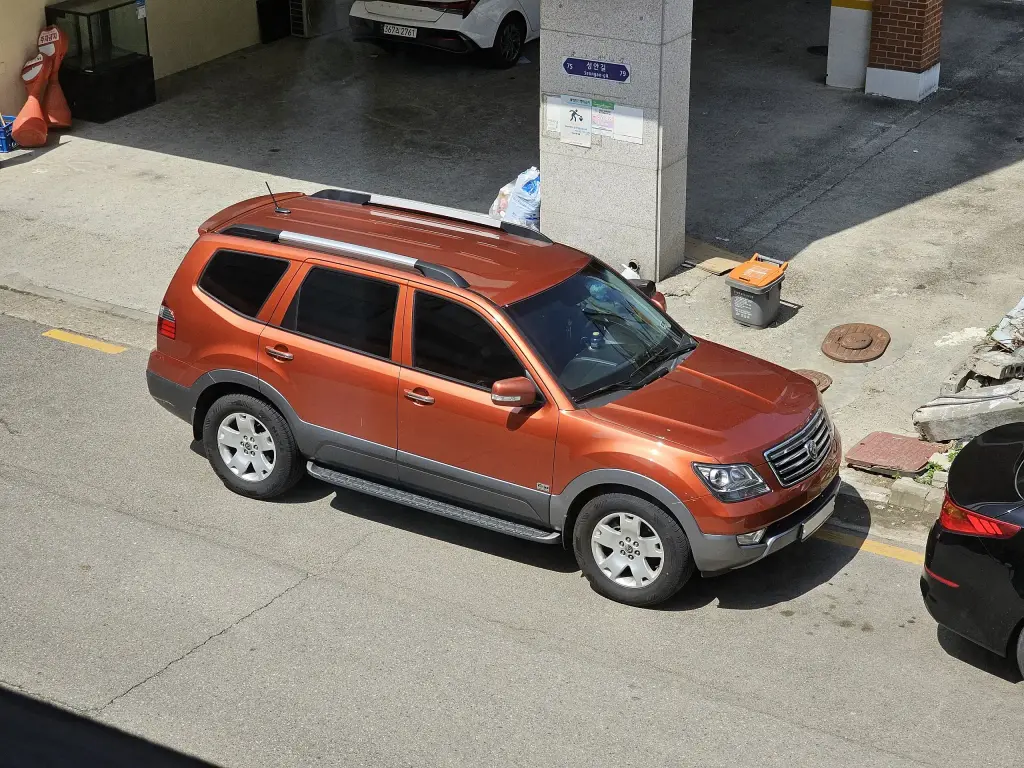
The Mohave was first shown as the Kia Mesa concept at the 2005 North American International Auto Show, and the production car, designed by Peter Schreyer, was presented at the same show in 2008. It went on sale in Korea as the Mohave before reaching the United States, where it was renamed Borrego after the Anza-Borrego Desert State Park in California; the park’s name means “bighorn sheep”.
North America
The Borrego arrived in the United States in July 2008 as a 2009 model and was the largest SUV in Kia’s American range. It came in LX, EX and Limited trim, from $26,245 to $37,995, with three rows of seats. Sales were below expectations, and with oil and petrol prices rising Kia dropped the Borrego in the middle of the 2009 model year; a small number of V6 cars reached US territories and were sold until 2014. In Canada the Borrego stayed as a Canada-only nameplate for 2010 and 2011. The Telluride eventually replaced it for 2020, and the model was officially withdrawn from the United States on 14 May 2013, although it continued in Korea, the Middle East, China, Central Asia, Brazil, Chile and Russia.
Engineering
The Borrego used body-on-frame construction with adjustable air suspension, hill-descent control and an automatic gearbox with high and low ranges. Engines were a 3.0-litre V6 turbodiesel from 2010, a second-generation 3.8-litre Lambda II V6 of 276 hp, or Hyundai’s 4.6-litre Tau V8 of 361 hp, tuned for more torque and less power than in the Hyundai Genesis saloon. The V8 could tow 3,400 kg and the V6 2,300 kg. In 2011 the diesel was updated to the S-II version and paired with a new eight-speed automatic from Hyundai Powertech, shared with Hyundai-Kia’s large rear-drive saloons.
The Korean flagship
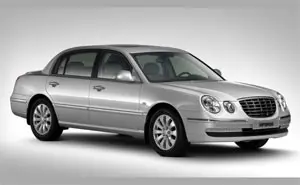
At home the Mohave did not carry Kia badges at all; it used a version of the logo from the Kia Opirus, because it was treated as one of Kia’s flagship models. That, and the lack of a direct successor, explain why the Mohave stayed in production for sixteen years while the American Borrego disappeared after one model year.
Design and features
- Body-on-frame: a truck-based structure, rare among Kia’s car-derived SUVs.
- Air suspension: adjustable ride height, with hill-descent control.
- V8 option: the 4.6-litre Tau engine with 361 hp and 3,400 kg of towing capacity.
- No Kia badge in Korea: the domestic car wore an Opirus-style emblem.
Kia Mohave versions
- Mohave/Borrego (2008–2024): the standard three-row SUV.
- Borrego LX, EX and Limited: the three North American trims.
- 3.0 V6 diesel: added in 2010, updated to S-II with an eight-speed automatic in 2011.
- Mesa concept (2005): the show car that previewed the production model.
The Mohave was Kia’s largest SUV, well above the Sorento, and its Korean flagship badge came from the Opirus. More Kia models are in the Kia collection.
Sources
- Kia Mohave, English Wikipedia: history, markets, engines, trims, badge