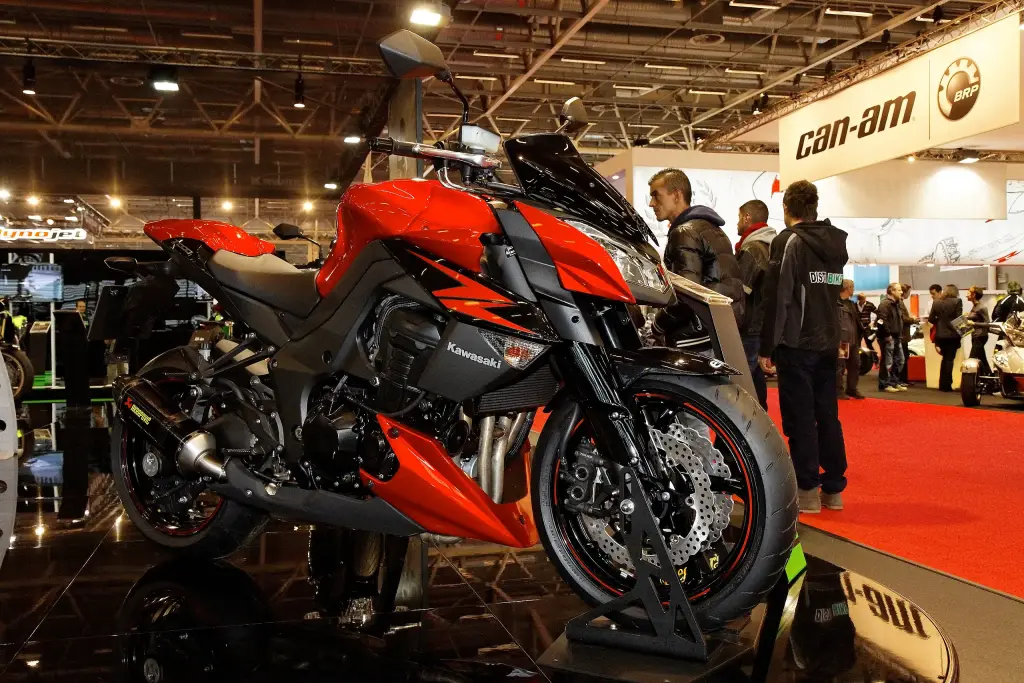
The Kawasaki Z1000 is a four-cylinder motorcycle introduced in 2003 with streetfighter and standard styling. It revived a name first used from 1977, when the Z1000 superseded the 903 cc Z1 and Z900, and it stayed in production until 2020.
Kawasaki Z1000 at a glance
| Maker | Kawasaki |
|---|---|
| Modern Z1000 introduced | 2003 |
| Sold until | 2020 |
| Class | streetfighter / naked |
| First engine | 953 cc, based on the ZX-9R, 127 hp |
| 2003–2006 | ZRT00A, backbone frame, 4-2-4 exhaust |
| 2007–2009 | ZRT00B, regulated catalyst, ABS option (ZRT00C) |
| 2010–2013 | ZRT00D/E, 1,043 cc, aluminium frame, ABS standard |
| Bore × stroke 2010 | 77 × 56 mm |
| Compression 2010 | 11.8:1 |
| Throttle bodies 2010 | 38 mm Keihin |
| 2014–2020 | ZRT00F/G, Sugomi styling, LED headlight, 142 hp |
| Successor | Z1100, presented in October 2025 |
The three articles describe the same model; the German and Italian ones add the later generations.
History of the Kawasaki Z1000
The modern Z1000 was introduced in 2003 as a completely revamped 30th-anniversary edition. It used a modified engine from the ZX-9R, bored out by 2.2 mm for a displacement of 953 cc, which brought more low-rev torque and only a slight loss of 4 bhp compared with the sports bike. Stylistically it was a departure from other naked sportbikes of the time: it shared its tail section with the 2003 ZX-6R 636, used a 4-2-4 exhaust, a backbone frame with the engine as a stressed member and removable engine mounts for easier maintenance, and split the fork damping between the legs — compression on one, rebound on the other, a dirt-bike idea then rare on the road. Nissin four-piston calipers handled the braking. A smaller brother, the Z750, followed in 2004.
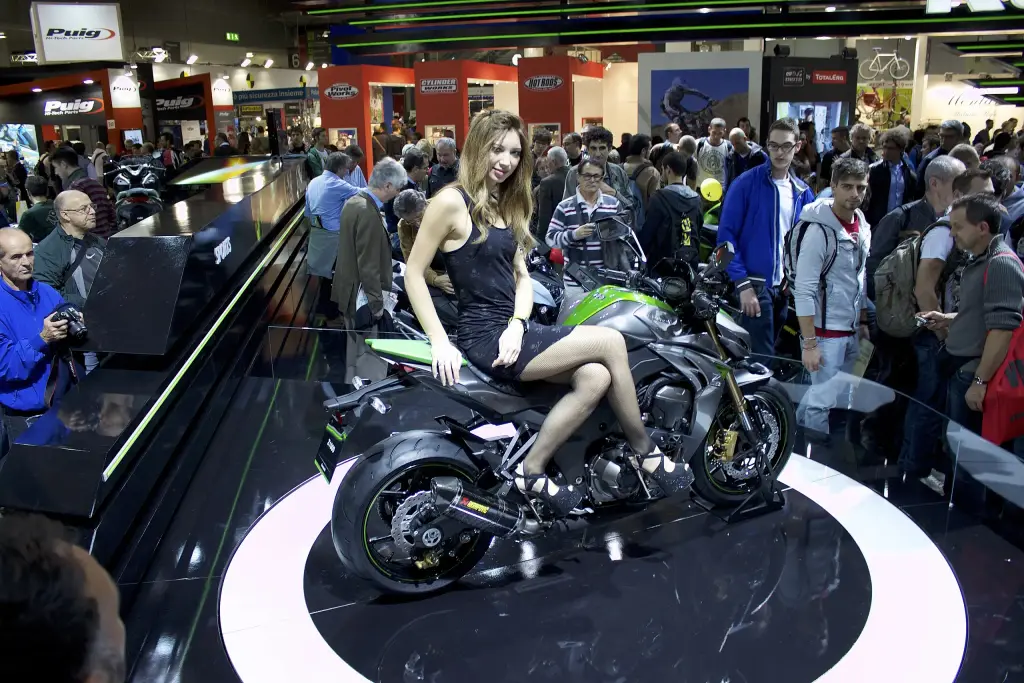
2007–2009
The 2007 model, type ZRT00B, had a regulated catalyst and, apart from the characteristic four-pipe exhaust, a fundamentally redesigned look. It used a detuned version of the ZX-9R engine with less top-end power than the sports bike but more low and mid-range. This was the first Z1000 available with ABS, type ZRT00C. From 2005 all models had an immobiliser, and the 2007 engine was anchored at the base of the cylinders to reduce a known vibration problem.
2010–2013
Kawasaki unveiled the 2010 Z1000 on 5 October 2009. It had a new aluminium frame, a digital instrument panel, new bodywork and an entirely new engine of 1,043 cc, up from 953 cc, with a 77 × 56 mm bore and stroke — 1 mm more than the ZX-10R — a compression ratio of 11.8:1 and a bank of 38 mm Keihin throttle bodies. ABS was fitted as standard, and the bike was marketed as the Z1000 ABS. For 2013 Kawasaki broke its three-year update cycle and released a special edition, alongside the standard model, to mark the 40th anniversary of the Z brand; the differences were purely cosmetic.
2014–2020
The 2014 Z1000, type ZRT00F, or ZRT00G with ABS, was presented on 5 November 2013 under the Japanese philosophy of Sugomi and was comprehensively reworked: new chassis, brakes, engine and lighting, a modern LED headlight, a Showa separate-function fork with a big piston, lighter wheels, four-piston monoblock front calipers and a slightly larger tank. The Italian Wikipedia quotes 142 hp from the 1,043 cc engine. The Z1000 left Kawasaki’s range in 2021 because of Euro 5 and the Covid pandemic, and in October 2025 Kawasaki presented the Z1100 as its successor, based on the 2014 Z1000 but with a six-axis IMU, modern electronic aids, a colour TFT display and full LED lighting.
Design and features
- ZX-9R engine origins: the first Z1000 used a bored-out sports-bike engine, retuned for the road.
- Split fork damping: compression and rebound adjustment on separate legs, a dirt-bike idea rare on street bikes.
- Stressed-member frame: the engine is part of the chassis, with removable mounts for maintenance.
- Big-bore update: 1,043 cc and 142 hp from 2010 and 2014.
- Sugomi styling: the aggressive look of the 2014 model, with LED lighting and modern electronics.
Kawasaki Z1000 versions
- 2003–2006: 953 cc, 4-2-4 exhaust, backbone frame.
- 2007–2009: new design, regulated catalyst, ABS option.
- 2010–2013: 1,043 cc, aluminium frame, ABS standard, 40th-anniversary edition in 2013.
- 2014–2020: Sugomi styling, 142 hp, LED headlight.
- Z1100 (2025): the successor with a six-axis IMU and TFT display.
The Z1000 sits above the Z750 and revives the name of the KZ1000. More models are in the Kawasaki collection.
Video: Kawasaki Z1000 2014- Test | 5 Meinungen – 1 Bike | Stunts, Action, Sound
Video by 1000PS – die starke Motorradseite im Internet on YouTube.
Sources
- Kawasaki Z1000, English Wikipedia: 2003–2016 models, specifications
- Kawasaki Z 1000, German Wikipedia: model generations, type codes, end of production
- Kawasaki Z 1000, Italian Wikipedia: engine details, Sugomi version