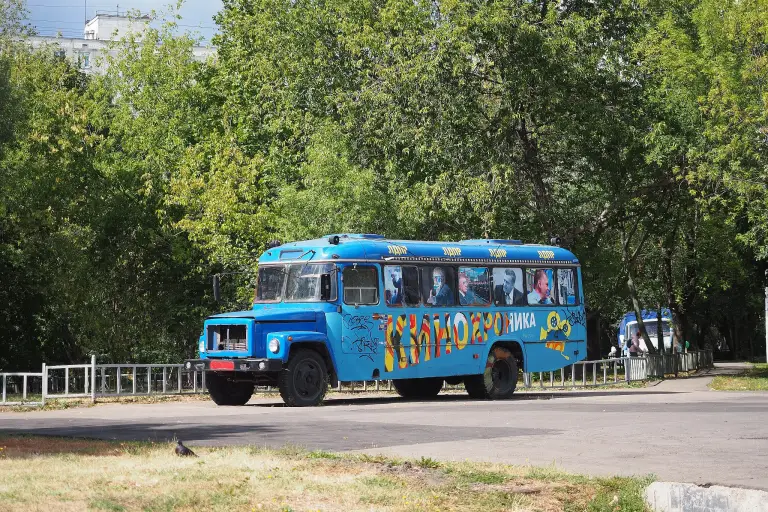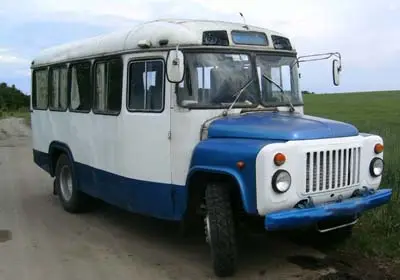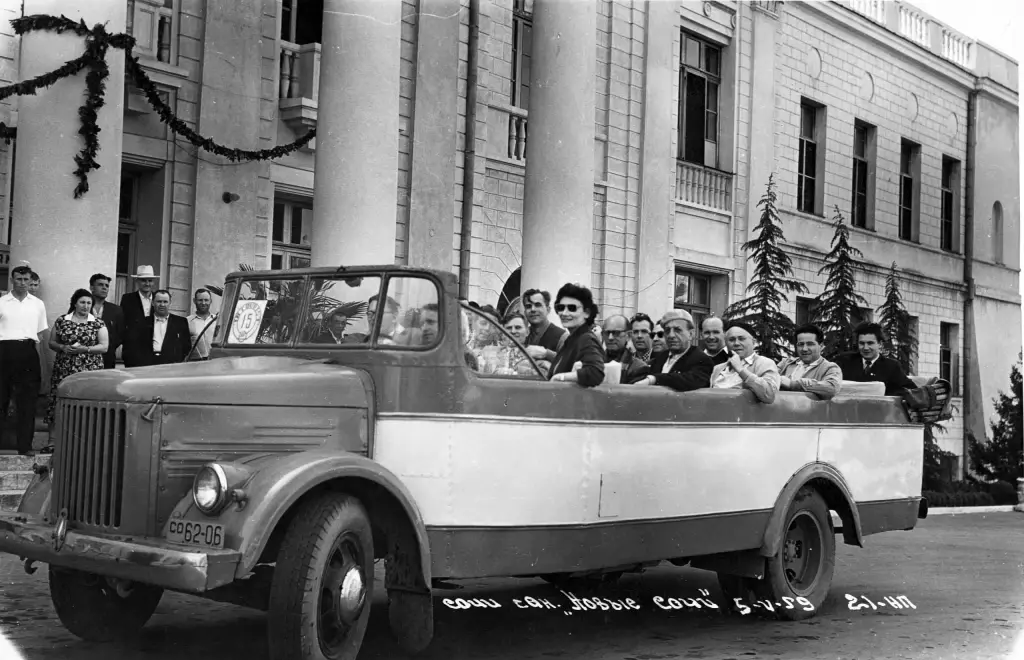
The KAvZ-651 is the Kurgan Bus Plant’s version of the GZA-651, a small bonneted bus with a wooden body frame on the GAZ-51 lorry chassis. Kurgan built the type from 1949, added the all-metal KAvZ-651A in January 1958 and finished with the heated KAvZ-651B in 1973.
KAvZ-651 at a glance
| Maker | Kurgan Bus Plant (KAvZ) |
|---|---|
| Type | bonneted bus with a wooden body frame |
| Base | GAZ-51 lorry chassis |
| Production at Kurgan | 1949–1973 |
| All-metal KAvZ-651A | from January 1958 |
| KAvZ-651B | 1971–1973, the only change a cabin heater |
| Also built at | Gorky (GZA), Pavlovo (PAZ), Riga (RARZ) |
| PAZ production | until 1961 |
| Off-road relative | KAvZ-663 on the GAZ-63 chassis |
| Surviving examples | monuments at Zelva, Shadrinsk and Iskitim |
The English Wikipedia has no article on the KAvZ-651; this page uses the Russian article on the GZA-651 family, of which the Kurgan buses were part. Based on one source.
History of the KAvZ-651
The GZA-651 was a bonneted bus with a wooden body frame on the chassis of the GAZ-51 lorry. It was built from 1949 at the Gorky bus works and later by several other plants: in 1952 production passed to Pavlovo, where the first five PAZ-651 buses were assembled on 5 August 1952, and from 1953 the Riga repair plant No. 2 turned it out as the RARZ-651. The Kurgan Bus Plant was part of this group from 1949, building the same type under its own KAvZ index until 1973.
In January 1958 the all-metal PAZ-651A went into production in parallel at Kurgan as the KAvZ-651A, while Pavlovo kept building the bus until 1961. The wooden body needed no complicated tooling, so dozens of repair works also assembled the type from GAZ-51 and GAZ-51A lorries, sometimes with local changes: the Borisov repair plant in Belarus built new bodies for overhauled chassis until 1982 and the Skuratovsky works in Russia until 1993. All told, buses of this family were made for more than forty years.
The last Kurgan version was the KAvZ-651B, produced from 1971 to 1973. Its only difference from the earlier bus was a heater in the passenger cabin, a sign of how basic the original specification had been. The type was then replaced at Kurgan by the newer KAvZ-685 family. Three KAvZ-651 buses have survived as monuments, at Zelva in Belarus and at Shadrinsk and Iskitim in Russia.
Design and features
- Wooden body frame: simple enough for repair plants to build the bus themselves.
- GAZ-51 chassis: a lorry base shared by every plant that made the type.
- Rounded front: the GZA-651 had a rounded, streamlined radiator grille and a projecting ‘nose’ bonnet, unlike the GAZ-51 lorry.
- Early indicators: buses built before 1956 carried rectangular indicators, as on the Pobeda, beside the front panel under the windscreen.
- Export finish: some buses, mostly export batches, had chrome bumpers front and rear and chrome headlamp rims.
KAvZ-651 versions
- KAvZ-651A (from January 1958): the all-metal version of the PAZ-651A built at Kurgan.
- KAvZ-651B (1971–1973): the same bus with a cabin heater, the final Kurgan version.
- KAvZ-663: an off-road bus on the GAZ-63 chassis built by the same plant.
- GZA-651, PAZ-651 and RARZ-651: the same type from the Gorky, Pavlovo and Riga plants.
The KAvZ-651 was replaced at Kurgan by the KAvZ-685 family, and its story continued with the KAvZ-3976. More buses are in the KAvZ collection.
Sources
- ГЗА-651, Russian Wikipedia: production history, Kurgan versions, special bodies, external differences, monuments