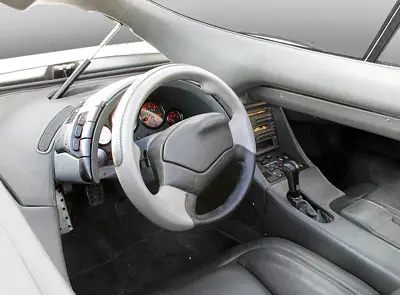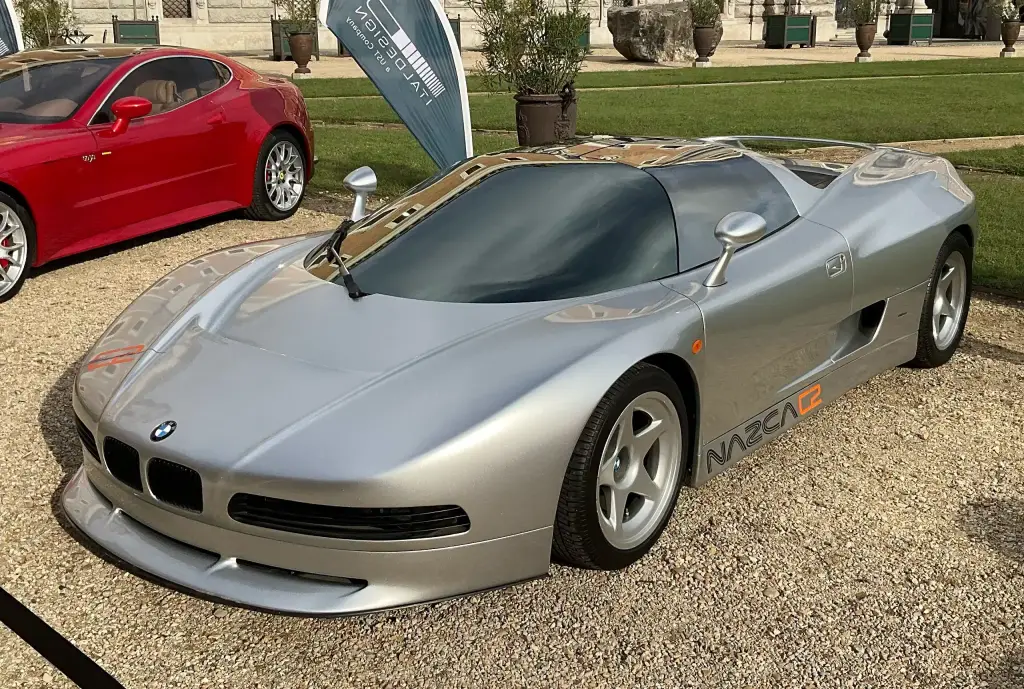
The BMW Nazca C2, also known as the Italdesign Nazca C2, is a concept sports car introduced in 1992. It was the second stage of a project that began in 1991 with the Nazca M12, the first car designed by Fabrizio Giugiaro, and it evolved into a roadster version shown at Monaco in 1993. Five cars were built in total.
Italdesign Nazca C2 at a glance
| Introduced | 1992 |
|---|---|
| Predecessor | Nazca M12, 1991 Tokyo Motor Show |
| Designer | Italdesign, Fabrizio Giugiaro |
| Body | carbon fibre over a carbon fibre space frame |
| Engine | 5.0-litre V12 shared with the BMW 850i |
| Tuning | Alpina, shared with the Alpina B12 5.0 |
| Power | 345 hp (257 kW) |
| Top speed | 311 km/h |
| Gearbox | five-speed |
| Weight | about 100 kg less than the M12 |
| Production | five cars, three with BMW branding |
Based on one source, the English Wikipedia article on the BMW Nazca C2.
History of the Italdesign Nazca C2
The Nazca project began in 1991, when the Nazca M12 was launched at the Tokyo Motor Show. Its design was derived from the Bugatti ID 90 concept shown a year earlier, and it was the first car designed by Giugiaro’s son, Fabrizio, who took elements from Group C racing cars. Tested in the BMW wind tunnel, the M12 reached a drag coefficient of Cd=0.26. Its body and space frame were both made of carbon fibre, which kept the weight to 1,100 kg, and the engine cover and nose were moulded as a single piece.
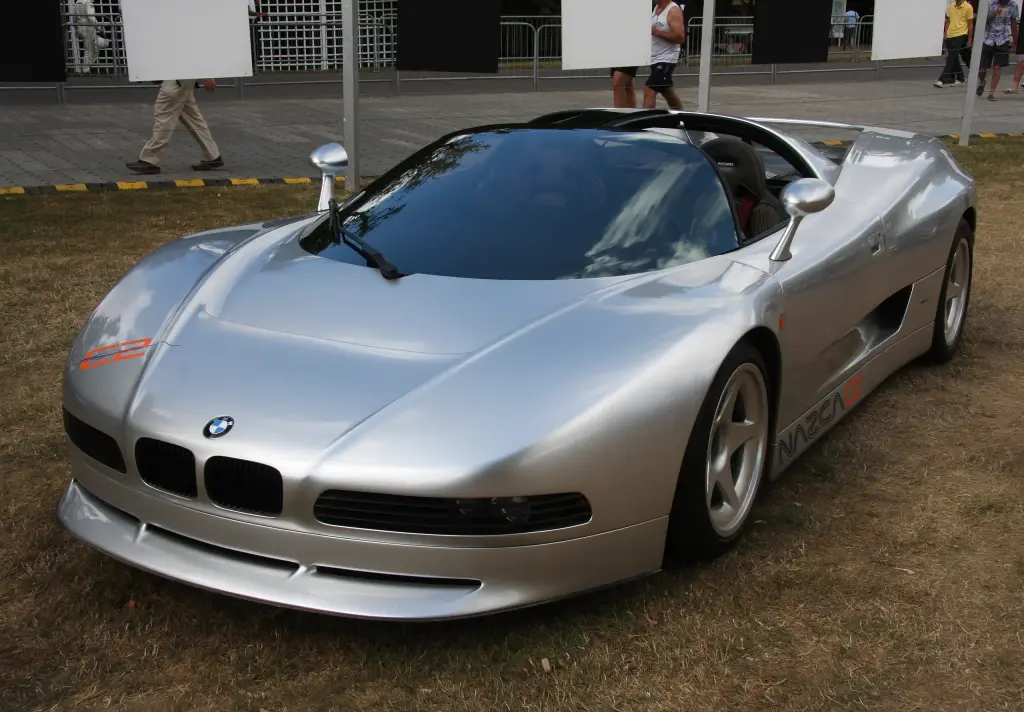
A year later, in 1992, Italdesign introduced the C2. The front was redesigned and the headlamps moved beside the kidney grille, while the engine was modified with help from Alpina. The result was 49 hp more, for a total of 345 hp (257 kW) from the 5.0-litre V12, the same unit used in the Alpina B12 5.0. The C2 also had fixed racing seats and three rear spoilers as marks of its racing inspiration.
BMW allowed Italdesign to use its name and grille on only three of the five cars built, intending the model as a possible replacement for the BMW M1. The company was unwilling to return to a mid-engined sports car after the M1 had failed commercially, so the project stopped at the concept stage. The other two cars were commissioned by the Sultan of Brunei, carried no BMW badges and used Alpina-tuned V12s with slightly more power; the Estoril Blue example was later sold for $1.1 million.
Design and features
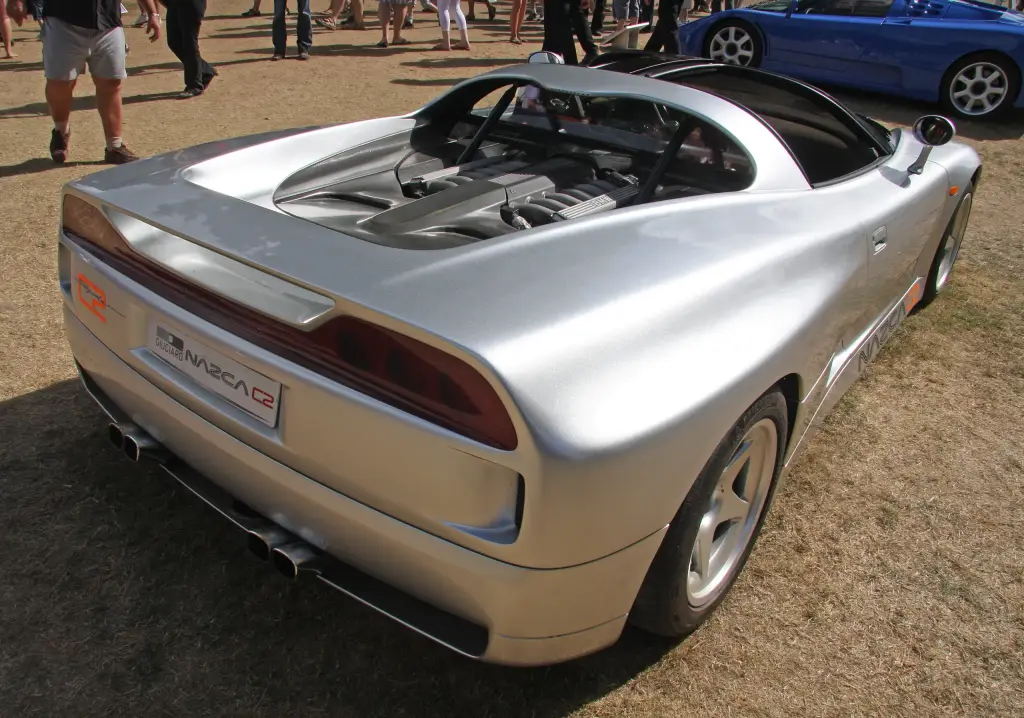
- Carbon-fibre structure: body panels and space frame in carbon fibre, with a glass engine cover over the V12.
- Gull-wing windows: conventional doors combined with windows that opened upwards in a gull-wing arrangement.
- Alpina engine: a modified 5.0-litre V12 shared with the Alpina B12 5.0.
- Racing details: fixed racing seats and three rear spoilers on the C2.
Italdesign Nazca C2 versions
- Nazca M12 (1991): the original show car, 295 hp and 1,100 kg.
- Nazca C2 (1992): redesigned nose, Alpina engine with 345 hp, fixed seats and three spoilers.
- C2 Spider (1993): roadster with removable glass panels, a 5.6-litre V12 of 375 hp and a six-speed gearbox, shown at the Monaco Grand Prix.
- Sultan of Brunei cars: two cars without BMW badges, in Estoril Blue and black.
The Nazca C2 followed the Italdesign Aztec as a show car from the same studio, and both appeared in the film A spasso nel tempo. More designs are in the Italdesign collection.
Video: Need For Speed 2 SE – Italdesign Nazca C2 (Showcase Video) [HD 1080p]
Video on YouTube.
Sources
- BMW Nazca C2, English Wikipedia: design, engine, production, Spider