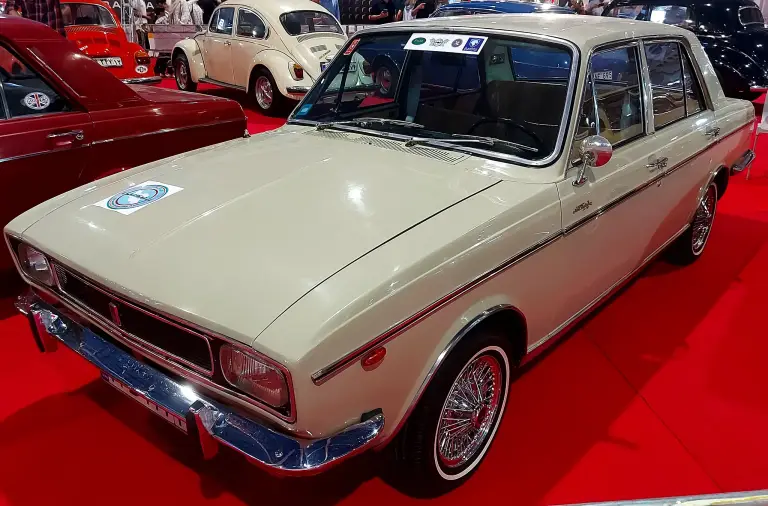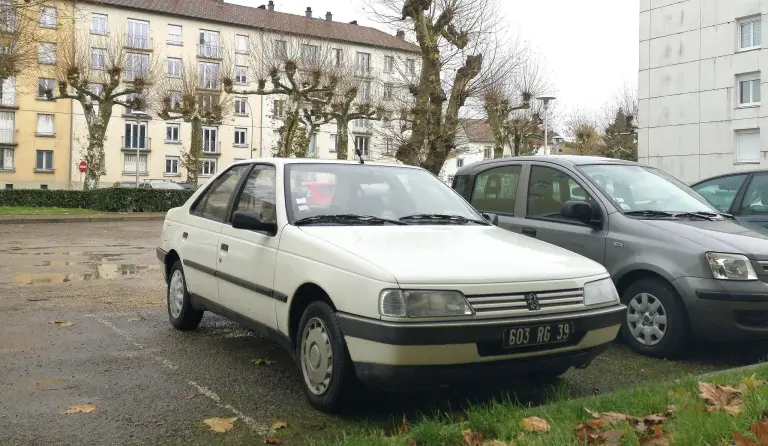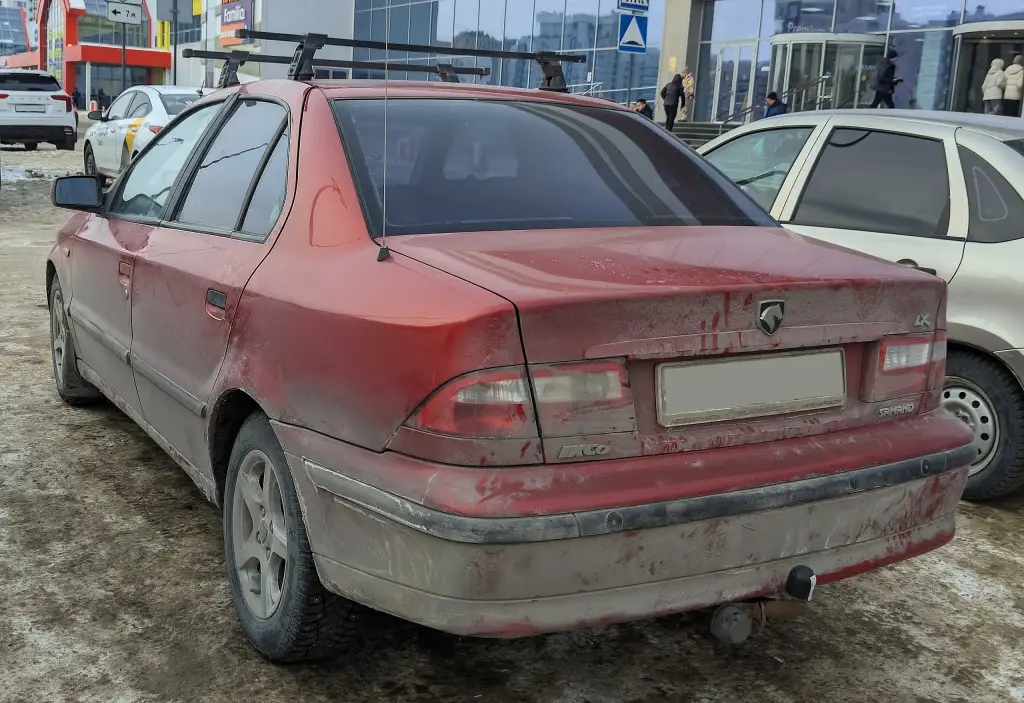
The Samand is a large family car produced by Iran Khodro (IKCO). Production began in 2001 and the first unit was sold the same year. Considered the national vehicle of Iran, it was introduced to replace the Paykan, which had been sold from 1967 to 2005.
Iran Khodro Samand at a glance
| Maker | Iran Khodro (IKCO), Tehran |
|---|---|
| Production | from 2001 |
| Class | large family car |
| Replaces | Paykan |
| Platform | Peugeot 405 |
| Engines | IKCO EF7 and PSA XU7JP/L3; TU5JP4 for export |
| Local content | about 80% of parts made in Iran |
| Dual-fuel option | EF7 CNG from 2009; petrol-only EF7 from mid-2010 |
| Diesel | EFD engine announced in 2009, postponed to 2011 |
| Assembled abroad | Belarus, Azerbaijan, Venezuela and Syria |
This page is based on English Wikipedia only, so the details could not be cross-checked against a second source.
History of the Iran Khodro Samand
A national car to replace the Paykan
The Samand entered production in 2001 and the first unit was sold in the same year. It is considered the national vehicle of Iran and was created as the successor to the Paykan, the long-running model that Iran Khodro had built since 1967 and continued to sell until 2005. Where the Paykan was a licensed British design, the Samand was developed at home around a platform Iran Khodro already knew well, that of the Peugeot 405.
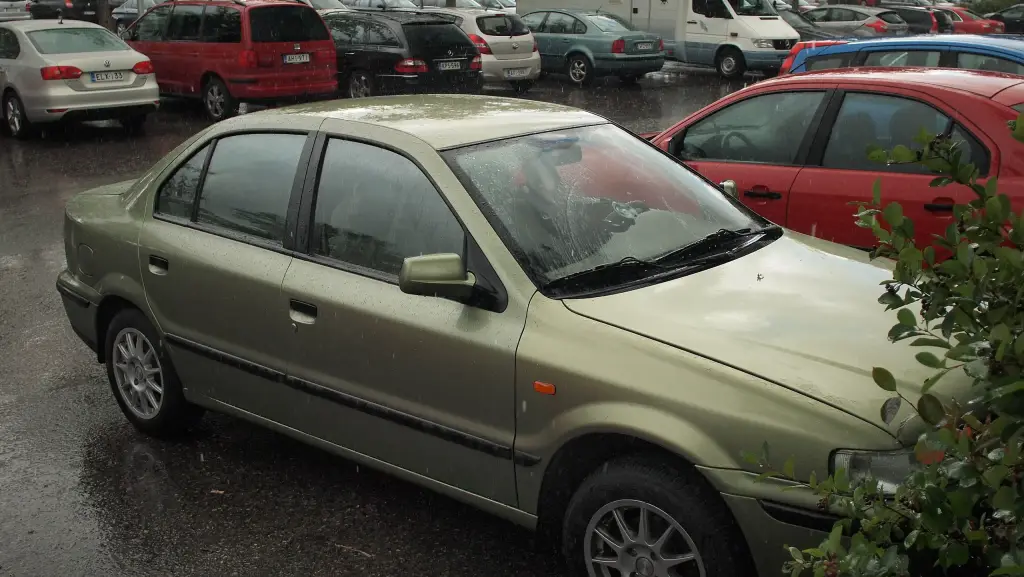
Peugeot 405 underpinnings and Iranian engines
The Iranian-designed Samand uses the Peugeot 405 platform. It can be had with IKCO-designed EF7 engines or PSA XU7JP/L3 units, among others. IKCO manufactures 80% of the Samand’s parts domestically, including its Iranian-designed engine. For export markets, and also for Iran, IKCO uses the Peugeot TU5JP4 engine, chosen for its low consumption, its power and the ease of finding parts all over Europe, since the TU5 has been used in the Peugeot 206, 307 and 207. The TU5 version of the Samand came with a driver airbag, pre-tensioner seatbelts, a headlight height adjuster and an active antenna, and it used Peugeot 405 components; this was done only from 2008 to 2010.
Gas and diesel engines
Since early 2009 IKCO has used newly developed Iranian engines such as the dual-fuel national engine, the EF7. In mid-2010 the company started installing petrol-only EF7 engines in the Samand: the engine is not a petrol-based version of the EF7, but a unit with the compressed natural gas parts removed and its engine control unit reprogrammed. In 2009 IKCO announced that it would produce the Samand with a new diesel engine, the EFD, in 2010. The required tests, the preparation of the car for the engine and the lack of Euro IV diesel fuel in the country postponed production to 2011. On 30 November 2010 IKCO announced the changes needed to fit the EFD: a different radiator, an intercooler, new water and hydraulic hoses, engine housings, exhaust system, gearbox and engine compartment insulation.
Quality and safety concerns
Critics and owners have long complained about the Samand’s low-grade interior finishes, fragile plastics, dashboards that crack or fade and trim that shows premature wear, leading many owners to seek aftermarket repairs. More serious safety controversies arose after high-profile multiple-vehicle collisions in which airbags on some Iran-made cars, including Samand examples shown in media coverage, reportedly failed to deploy; the incidents prompted public outcry and calls for investigations. Independent evaluations and domestic quality rankings have sometimes placed the Samand near the bottom of Iranian car quality lists, with earlier models earning low star ratings from standard-inspection bodies because of material durability and finish issues.
Built abroad
From 2006 to 2013 the Samand was manufactured in Minsk, Belarus, by the Unison firm alongside Lublin vans; Unison signed a new agreement with Iran Khodro in 2018 to produce other models. The car is assembled by AzSamand in Şamaxı, Azerbaijan, under the local name AzSamand Aziz. Venirauto began assembling Samand sedans, badged Centauro, in Venezuela in 2006, and Siamco produced the Samand as the Siamco Sham in Syria from 2006 to 2012.
Design and features
- Peugeot 405 platform: the Samand was built on the floorpan and running gear Iran Khodro already produced.
- High local content: about 80% of the parts, including the engine, are made in Iran.
- EF7 engines: an Iranian-designed family, offered first as a dual-fuel CNG unit and from 2010 as a petrol-only engine.
- Export TU5 version: the Peugeot TU5JP4 engine with driver airbag, pre-tensioner seatbelts and a headlight height adjuster.
- Assembly abroad: the car was also put together in Belarus, Azerbaijan, Venezuela and Syria.
Iran Khodro Samand versions
- Samand (from 2001): the original saloon with XU7 or EF7 engines.
- Samand LX: the better-equipped version, including cars exported with the TU5 engine.
- TU5 version (2008–2010): export and domestic cars with the Peugeot TU5JP4 engine and added safety equipment.
- EF7 dual-fuel (from 2009): the Iranian national engine running on petrol and compressed natural gas.
- EF7 petrol (from mid-2010): the same engine with the CNG parts removed.
- Foreign-badged cars: AzSamand Aziz in Azerbaijan, Centauro in Venezuela and Siamco Sham in Syria.
The Samand replaced the Paykan and shares its platform with the Peugeot 405. More cars are in the Iran Khodro collection.
Video: Тест-драйв Iran Khodro Samand 1,8
Video on YouTube.
Sources
- IKCO Samand, English Wikipedia: engines, platform, local content, diesel plans, quality issues, foreign assembly