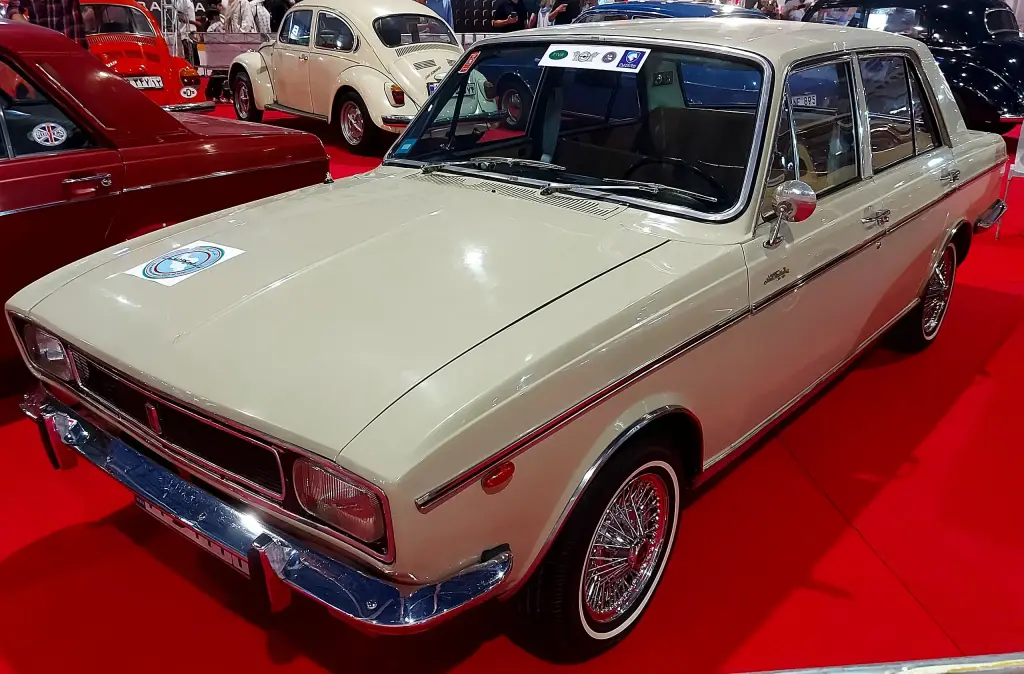
The Paykan was the first Iranian-made car. Produced by Iran Khodro, then still called Iran National, between 1967 and 2005, it was a licensed version of the British Rootes Arrow, best known as the Hillman Hunter. Cheap, simple and easy to repair, it became a familiar sight on Iranian roads for nearly four decades.
Paykan at a glance
| Maker | Iran Khodro (Iran National), Tehran |
|---|---|
| Production | 1967–2005 |
| Based on | Rootes Arrow, sold in Britain as the Hillman Hunter |
| Assembly | complete knock-down kits from 1967; full manufacture except the engine by the mid-1970s |
| Facelift | 1977, designed by Roy Axe with parts from the Chrysler Alpine |
| Engine | original 1,725 cc Rootes unit, later a Peugeot 504-derived engine |
| Body styles | saloon and pickup |
| Related model | Bardo coupé utility, 1969–2014 |
| Brand owner | PSA Peugeot Citroën, as successor to the Rootes Group |
This page is based on English Wikipedia only, so the details could not be cross-checked against a second source.
History of the Paykan
A British design for Iran
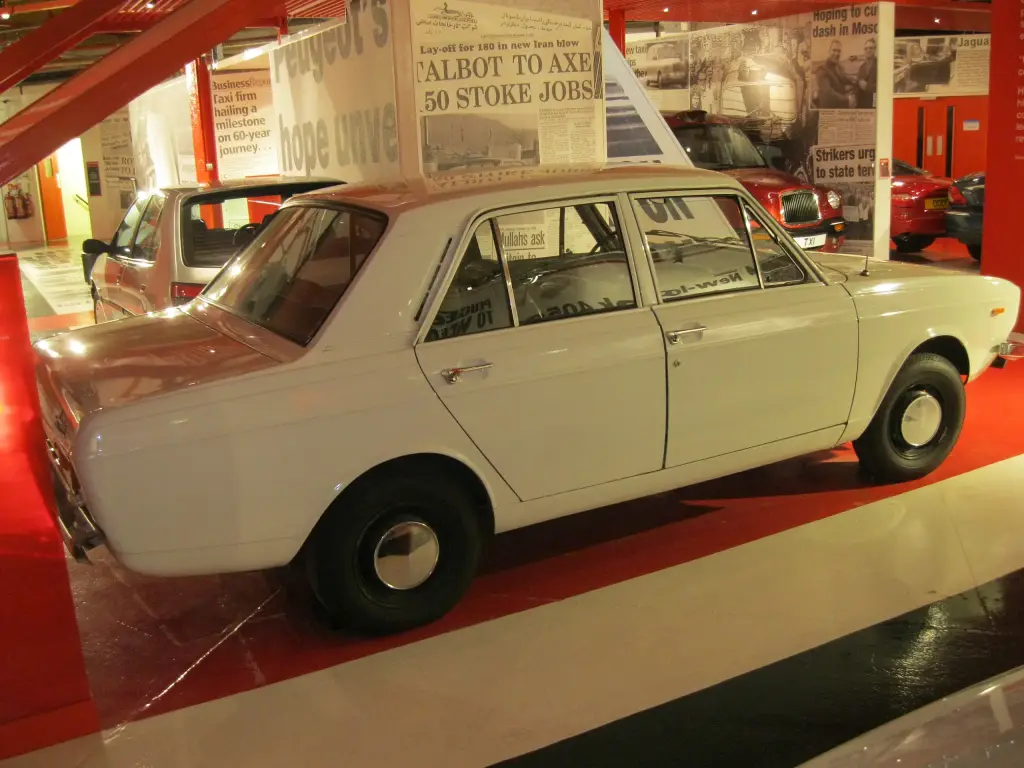
The idea of a cheap, simple car for ordinary Iranians came from Mahmoud Khayami, co-founder and by then owner of Iran National, the company later renamed Iran Khodro. The car itself originated in 1966 as the Rootes Arrow series, the most prolific version of which was badged as the Hillman Hunter. Rootes, the British wing of Chrysler Europe, designed and manufactured it. In 1967 Rootes began exporting Hunters to Iran in complete knock-down kit form for assembly in Iran, and by the mid-1970s full-scale manufacturing of the car, apart from its engine, had started in the country.
Facelift and a change of owner
In 1977 Roy Axe designed a new Paykan facelift using many interior and exterior parts from the Chrysler Alpine. A year later PSA Peugeot Citroën bought the ailing Chrysler Europe after Chrysler left the European market, and with it acquired the rights to the Hillman Hunter and the Arrow design. Peugeot ended Hunter production in Ireland in 1979; after that the Paykan’s engine production tooling was moved to Iran, where the car was manufactured in full under Peugeot licence.
The end of the line
Over the years the Paykan received many changes and modifications, notably the substitution of the original 1,725 cc Rootes engine with a Peugeot 504-derived unit, along with revised headlights and taillights. A Paykan Pickup was also offered. The Iranian government reportedly offered Iran Khodro a large cash incentive to end production by 2005, labelling the car an environmental hazard because of its high fuel consumption; in its last years the order backlog was nearly two years long. Production ended in 2005, when the car’s assembly line was sold to the Khartoum Transport Company in Sudan, although parts for the Paykan are still made by third-party manufacturers in Iran.
The Bardo and the “New Paykan”
The Paykan spawned locally developed variants, most notably a coupé utility named Bardo, which had a different body shell from the versions sold elsewhere and was produced from 1969 to 2014. Iran Khodro later tried to replace the Paykan with a so-called “New Paykan”, but Peugeot did not agree with the naming. The dispute revealed that the intellectual ownership of the Paykan brand and logo still belongs to PSA Peugeot Citroën as a legacy of the Rootes Group. The Samand, often called the New Paykan, became the modern substitute for the Paykan class of cars.
Design and features
- Licensed Rootes Arrow design: the Paykan was a Hillman Hunter built under licence, which kept tooling and parts simple.
- Locally developed variants: the Bardo coupé utility had its own body shell, different from the Hillman Hunter pickups sold elsewhere.
- Peugeot-derived engine: the original Rootes unit was later replaced by an engine derived from the Peugeot 504.
- Long life: the same basic design stayed in production for 38 years, from 1967 to 2005.
Paykan versions
- Paykan saloon: the standard four-door car, assembled from kits from 1967 and built in Iran from the mid-1970s.
- 1977 facelift: Roy Axe’s update with Chrysler Alpine interior and exterior parts.
- Paykan Pickup: a load-carrying version of the same car.
- Bardo (1969–2014): a coupé utility based on the Paykan with a different body shell.
The Paykan was replaced in the Iran Khodro range by the Samand, and the company also built the Peugeot 405. More cars are in the Iran Khodro collection.
Video: Paykan (Hillman Hunter) Part 2 پیکان – بخش دوم
Video on YouTube.
Sources
- Paykan, English Wikipedia: history, facelift, engine, end of production, Bardo