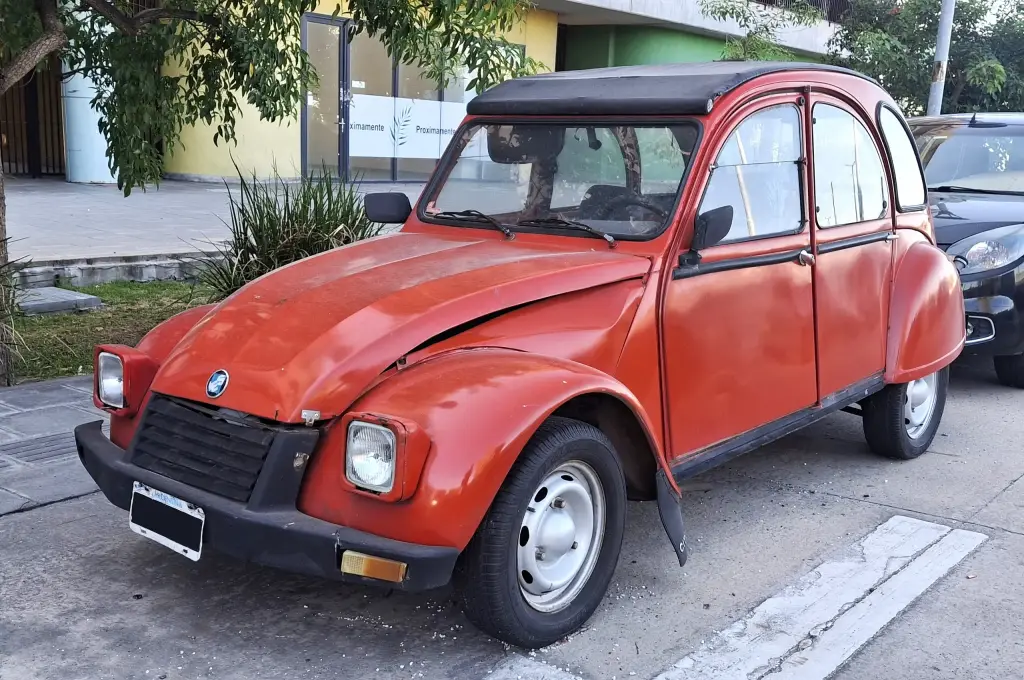
The IES 3CV was the Citroën 3CV built in Argentina by Industrias Eduardo Sal-Lari, the last Argentine company to make cars in series with entirely local capital. Production began in 1983 and the car was modernised twice, in 1986 and 1987, ending up as the Súper América with its own chassis and a 635 cc engine.
IES 3CV at a glance
| Maker | Industrias Eduardo Sal-Lari S.A., Argentina |
|---|---|
| Production | from 1983 until the bankruptcy of 1990 |
| Based on | Citroën 3CV |
| Plant | new factory at Mercedes, Buenos Aires Province, from 1983; all production there from 1985 |
| 1986 update | IES 3cv América, cosmetic changes |
| 1987 update | IES 3cv Súper América, mainly mechanical changes |
| Chassis (Súper América) | tubular structure with transverse frames |
| Suspension (Súper América) | transverse leaf springs, oblique hydraulic telescopic dampers |
| Engine (Súper América) | 635 cc, two-barrel carburettor, electronic ignition |
| Starting (Súper América) | ignition key plus an electronic card |
| Stablemates | IES Carga (the AK 400 van) and IES Safari |
Based on one source: the Spanish Wikipedia article on Industrias Eduardo Sal-Lari, which describes the 3CV in a section of the company’s history.
History of the IES 3CV
From Citroën Argentina to IES
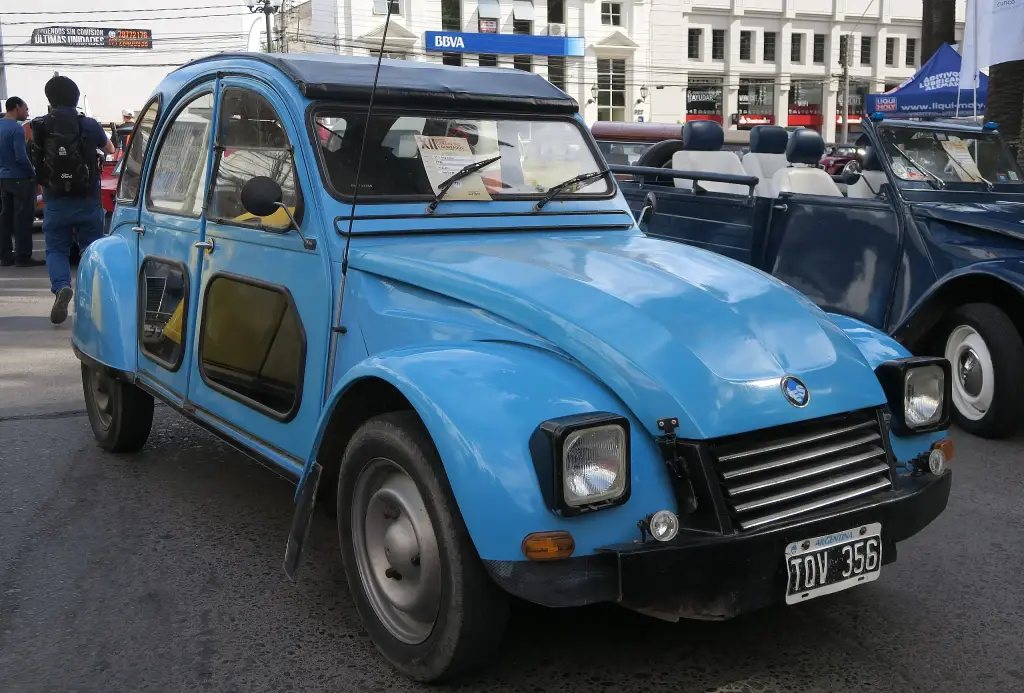
Around 1980 Citroën decided to withdraw from the Argentine market and sold the shares of its local subsidiary, Citroën Argentina S.A., to the engineer Eduardo Sal Lari. Sal Lari already had close commercial links with the company: he owned Daher Boge, which made and supplied shock absorbers to Citroën. For a time the firm, still trading as Citroën Argentina, kept building Citroën cars from the stock of parts it had received and also bought French-built cars to sell in Argentina.
In 1982, with the car market depressed and closed, Sal Lari decided to transform the company and to build the 3CV entirely in Argentina. In 1983 the company took the name Industrias Eduardo Sal Lari and the model was sold as the IES 3CV — IES being the acronym of Industrias Eduardo Sal-Lari. The AK 400 van became the IES Carga, and production of the Méhari continued under the name Safari.
A new plant at Mercedes
In the same year, 1983, the company began building a new car plant at Mercedes in Buenos Aires Province. From 1985 all of the brand’s vehicles were assembled there, and the move marked the moment when IES was no longer a leftover of the French company but a maker in its own right.
América and Súper América
The 3CV was modernised in two stages. In 1986 came cosmetic changes and the car was renamed the IES 3cv América. In 1987 a more important, basically mechanical update produced the IES 3cv Súper América, which some sources wrongly call the América Super.
The Súper América abandoned the Citroën-designed chassis, suspension, brakes and steering. In their place came a tubular structure with transverse frames, mounted on wishbone suspension with transverse leaf springs and oblique hydraulic telescopic dampers. The engine was taken out to 635 cc, fed by a two-barrel carburettor and fitted with electronic ignition. Inside, the steering wheel, instruments and dashboard were completely different from those of the earlier 3CV, the gear lever moved to the floor, and besides the ignition key the driver had to insert an electronic card before the engine would start.
The end of the line
The economic crisis that broke out in Argentina in February 1990 left Industrias Eduardo Sal-Lari in a very difficult financial position and the company went bankrupt. The collapse coincided with the arrival of the Gringo, the firm’s last new model. At the time IES was also working on the “Latinoamericano” project, a larger and more versatile car than the 3cv Súper América with a water-cooled two-cylinder engine, to be built from parts made in several Latin American countries and assembled in each of them.
Design and features
- Argentine-built 3CV: from 1983 the whole car was made by IES rather than assembled from a French parts stock.
- Own chassis by 1987: the Súper América dropped the Citroën platform for a tubular structure with transverse frames.
- Bigger engine: 635 cc with a two-barrel carburettor and electronic ignition in the Súper América.
- Electronic starting card: an extra security device used alongside the ignition key.
- New interior: redesigned dashboard and instruments, and a floor-mounted gear lever.
IES 3CV versions
- IES 3CV (1983): the original model, with the Citroën-derived chassis and running gear.
- IES 3cv M83, M84, M85: model-year designations used for the early cars.
- IES 3cv América (1986): cosmetic update.
- IES 3cv Súper América (1987): new chassis, suspension, brakes and steering, 635 cc engine, electronic starting card.
- IES Carga: the AK 400 van built under the IES name.
The 3CV shared its platform with the IES Gringa pickup of 1988, and the Méhari-derived IES Safari was built alongside it. More cars of the make are in the IES collection.
Video: Reformando un 2CV en un 3CV IES 85
Video on YouTube.
Sources
- Industrias Eduardo Sal-Lari, Spanish Wikipedia: history, models, technical changes


