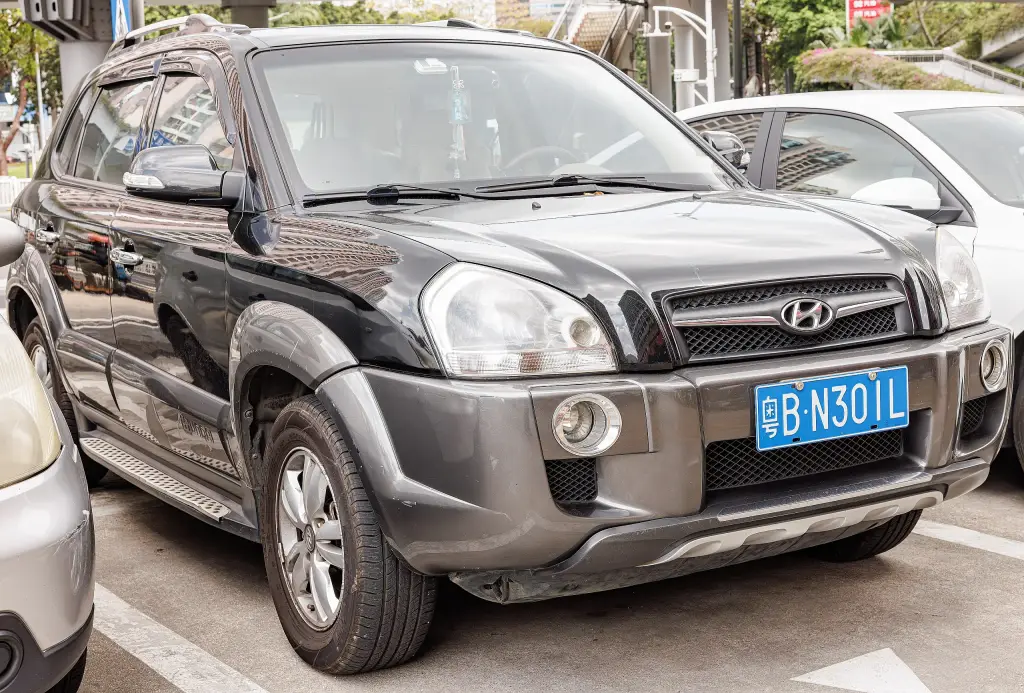
The Hyundai Tucson is the compact crossover Hyundai has built since 2004, named after the city of Tucson in Arizona. It is the company’s best-selling model, with more than seven million sold worldwide and 1.4 million of those in Europe, and it has been developed alongside the Kia Sportage, sharing platforms and engines. Its second generation was sold in several markets, including Europe, Australia and China, as the Hyundai ix35.
Hyundai Tucson at a glance
| Maker | Hyundai Motor Company |
|---|---|
| Production | since 2004 |
| Name announced | November 2003 |
| First generation | JM, 2004 |
| Platform | Elantra-based, shared with the second Kia Sportage |
| Second generation | LM, known as the ix35 outside Korea and North America |
| ix35 design | Cha Il-Hoei, under Thomas Bürkle at Rüsselsheim |
| ix35 development | 36 months, 280 billion won |
| Global sales | more than seven million |
| European sales | 1.4 million |
| Japanese name | Hyundai JM |
| Fuel cell version | Tucson FCEV, shown in 2005 |
History of the Hyundai Tucson
The first Tucson was launched in 2004, after its name was announced in November 2003, and was positioned as a smaller alternative to the Santa Fe. It used an Elantra-based platform shared with the second-generation Kia Sportage. In the United States it came as GLS, SE and Limited, with air conditioning, six airbags, electronic stability control, a CD player, alloy wheels, remote keyless entry and cloth seats as standard; the SE added grey body cladding and fog lights, and the Limited leather, a six-disc CD changer, automatic climate control and heated seats. The GLS and Limited used the 2.7-litre V6, while the GL came only with the 2.0-litre four.
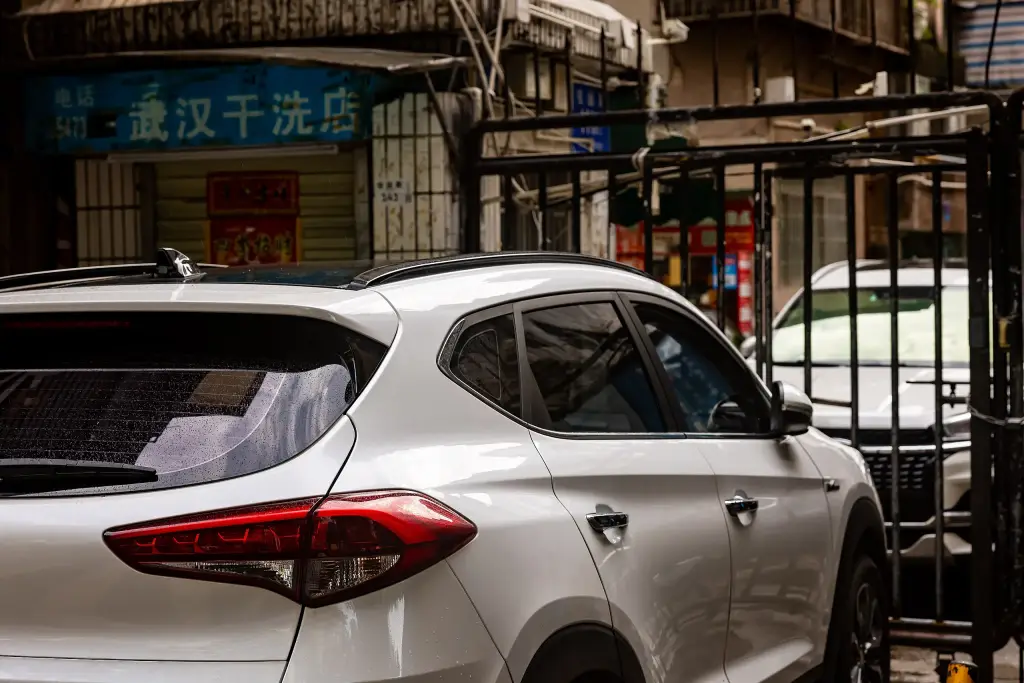
Trims changed in 2006, when the LX became the Limited with body-coloured cladding and automatic climate control, and again in 2007, when GL and GLS became GLS and SE. The 2009 cars were restyled. In Japan the Tucson was sold as the Hyundai JM, because place names could not be registered as trademarks there after 2002; Hyundai Japan said JM stood for Joyful Mover. In Brazil the car was built from October 2009 to the second half of 2018, in GL and GLS trims. The first-generation Tucson won the Canadian Car of the Year Best New Crossover award for 2005, was listed among the most reliable vehicles in the 2009 Consumer Reports survey, and scored four stars for adult occupants in Euro NCAP testing in 2006.
The fuel-cell version, the Tucson FCEV, was a test vehicle for Hyundai’s second-generation hydrogen fuel cell: an 80 kW motor from Enova Systems, UTC fuel cells, a 152-volt battery developed with LG Chem and 152 litres of hydrogen storage from Dynetek, giving a 300 km range and 150 km/h top speed. It was shown at the 2005 Los Angeles auto show and completed a 4,300-mile journey on the 2008 Hydrogen Road Tour.
The second generation of 2009 was known as the ix35 outside Korea and North America. It was unveiled at the Frankfurt motor show, took 36 months and 280 billion won to develop, and was styled by Hyundai designer Cha Il-Hoei in 2007 under former BMW designer Thomas Bürkle at the Rüsselsheim studio, reportedly based on the ix-onic concept. In China and Brazil the ix35 later became a model of its own while the Tucson name returned with the third generation.
Design and features
- Best seller: more than seven million cars sold since 2004.
- Sportage twin: developed alongside the Kia Sportage on shared platforms.
- Two names: Tucson in Korea and North America, ix35 in Europe, Australia and China.
- Hydrogen test bed: the Tucson FCEV of 2005 with a 300 km range.
Hyundai Tucson versions
- Tucson JM (2004–2009): the first generation with 2.0 four and 2.7 V6 engines.
- Tucson FCEV (2005): the hydrogen fuel-cell test vehicle.
- Hyundai JM: the Japanese name for the first generation.
- ix35 LM (2009): the second generation, sold as the Tucson in Korea and North America.
- Third generation: the Tucson name returned in all markets.
The Tucson sits below the larger Santa Fe and was joined in the range by the ix20. More Hyundai models are in the Hyundai collection.
Video: Hyundai Tucson off road
Video by ionu7631 on YouTube.
Sources
- Hyundai Tucson, English Wikipedia: generations, platform, trims, markets, FCEV, ix35 development