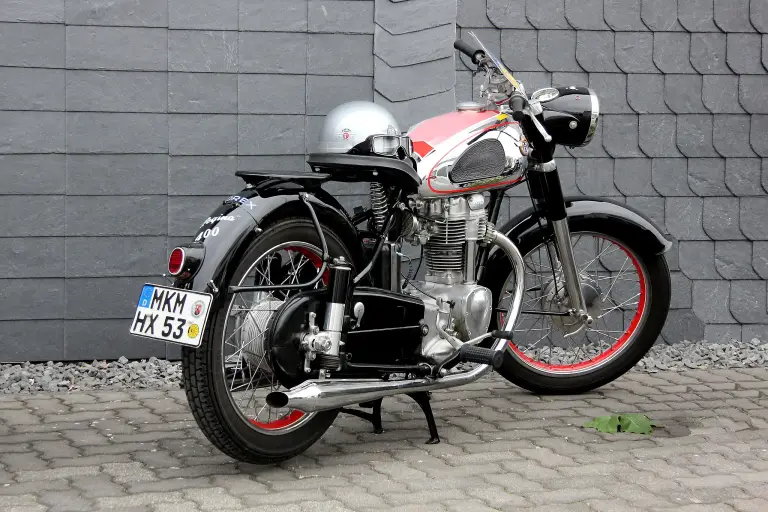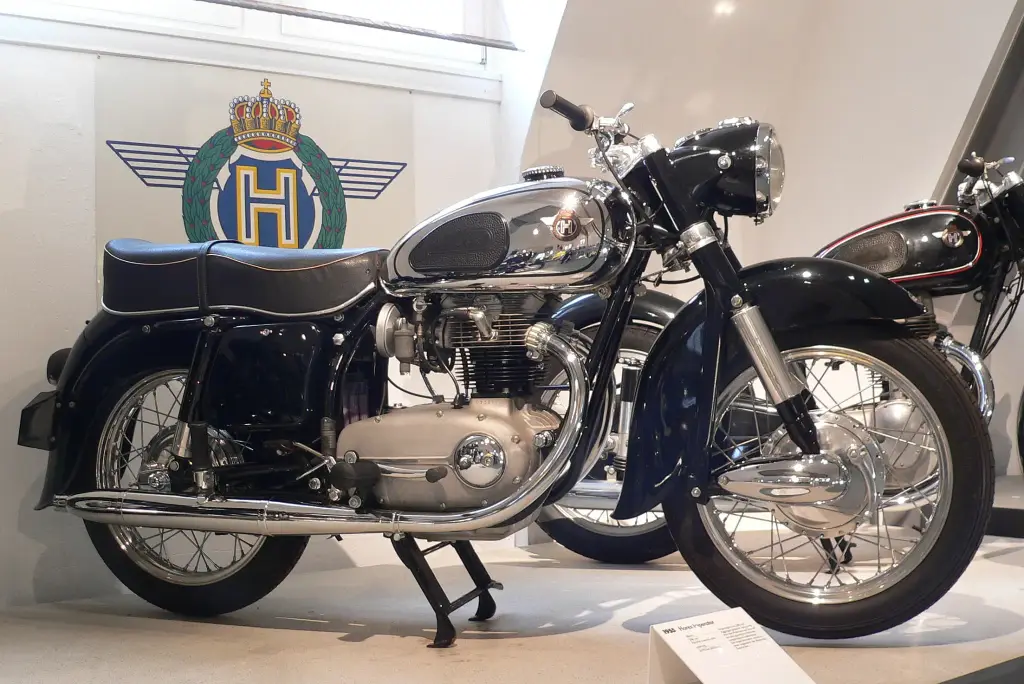
The Horex Imperator was the only series-production motorcycle from the Bad Homburg works with a two-cylinder four-stroke engine and an overhead camshaft. Its 500 cc prototype appeared at the IFMA in 1951; the production machine of 1955 used a 400 cc engine, cut back to keep the German tax and insurance of a 350.
Horex Imperator at a glance
| Maker | Horex-Werke KG, Bad Homburg vor der Höhe |
|---|---|
| Production | 1955 to about 1957 |
| Chief engineer | Hermann Reeb |
| Engine | air-cooled parallel twin, OHC four-stroke |
| Displacement | 500 cc prototype; 400 cc production |
| Power | 26 PS at 6,500 rpm with one carburettor; 27.8 PS at 7,350 rpm with two |
| Cruising speed | 135 km/h quoted by the maker |
| Gearbox | four-speed in the crankcase, made by Hurth of Munich |
| Frame | closed double-tube steel, telescopic fork |
| Rear suspension | swingarm with 80 mm travel |
| Price in 1952 | 2,850 DM |
| Built | about 4,000, by estimate |
The Imperator has a detailed article only in German Wikipedia; the English Horex article gives different production figures, noted in the text.
History of the Horex Imperator
A new design, not a development
Unlike the Regina, which grew out of the pre-war SB 35, the Imperator was a clean-sheet design under chief engineer Hermann Reeb, who had already created the 600 and 800 cc S 6 and S 8 engines of the 1930s. Its engine was an air-cooled parallel twin with both pistons rising together and an overhead camshaft working the valves through rockers; the cylinders were cast iron, the separate heads aluminium.
Reeb patented in 1949 the idea of running the camshaft chain in a light-alloy housing between the cylinders, which the works press release praised for symmetry, easy access to the spark plugs and even heat distribution. The 500 cc prototype of 1951 made 30 PS at 6,800 rpm and reached 150 km/h.
Prototype and pause
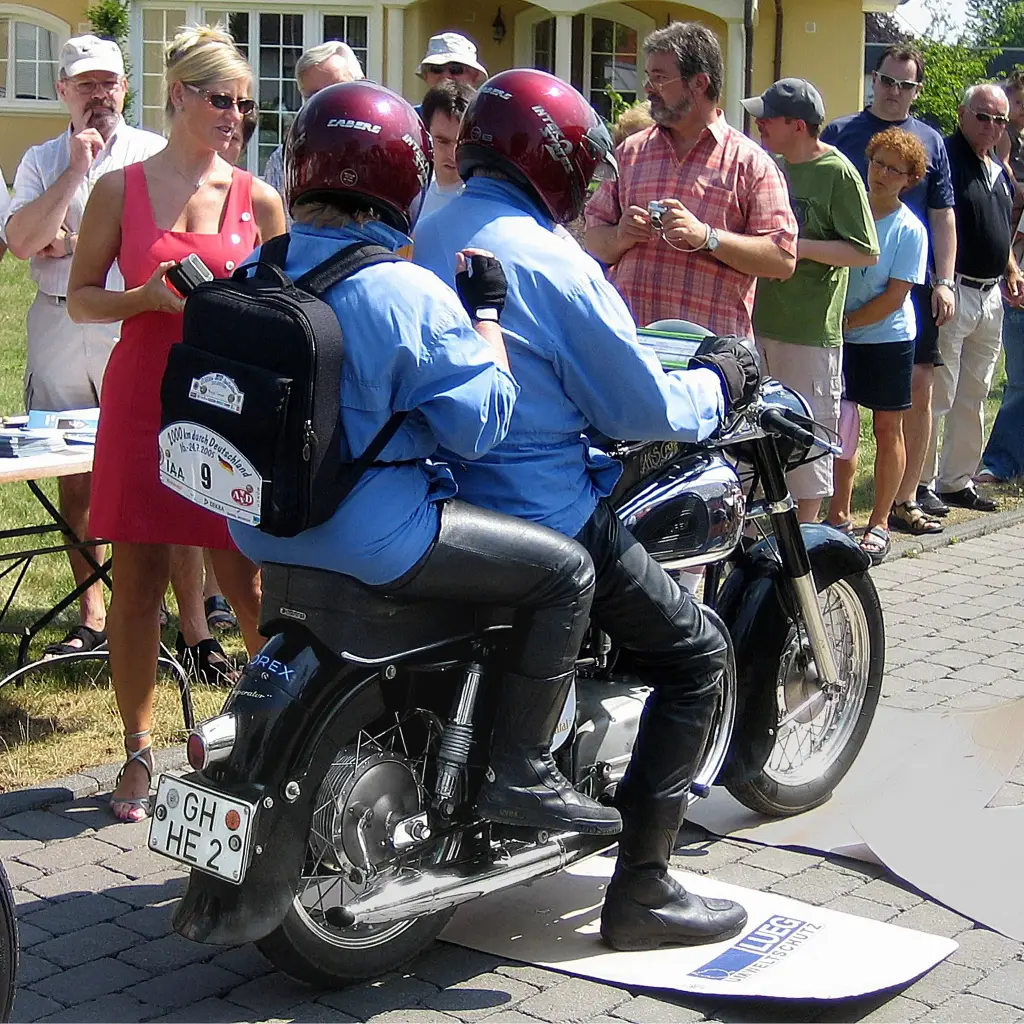
The prototype was announced at the IFMA show in the autumn of 1951, at a time when Horex was selling about 20,400 Reginas a year. Its gearbox sat inside the engine housing, the primary chain could be adjusted from outside, and a small button above the left foot change lever selected neutral from any gear; the gearbox came from Hurth in Munich. The frame was a double tube with a telescopic fork and a rear swingarm of 80 mm travel, and a rear enclosure covering the battery was meant to improve airflow and keep dirt out.
Development of a 500 cc works racer ran in parallel and stretched the test department, so that the long test programme with the Imperator prototypes was dropped. The official explanation was that so powerful a machine was unsuitable for the ordinary rider.
The production Imperator
The project was taken up again in early 1954 and brought to production standard in less than half a year; the first running machine was shown in December 1954 and production began in 1955. Engine and frame were new. Because German tax and insurance were based on swept volume rather than power, the engine was reduced from 500 to 400 cc against the advice of the senior engineer Rudolf Gunkel. Horex advertised the result as offering “the tax of a 350, the economy of the middle class and the performance of the very largest”.
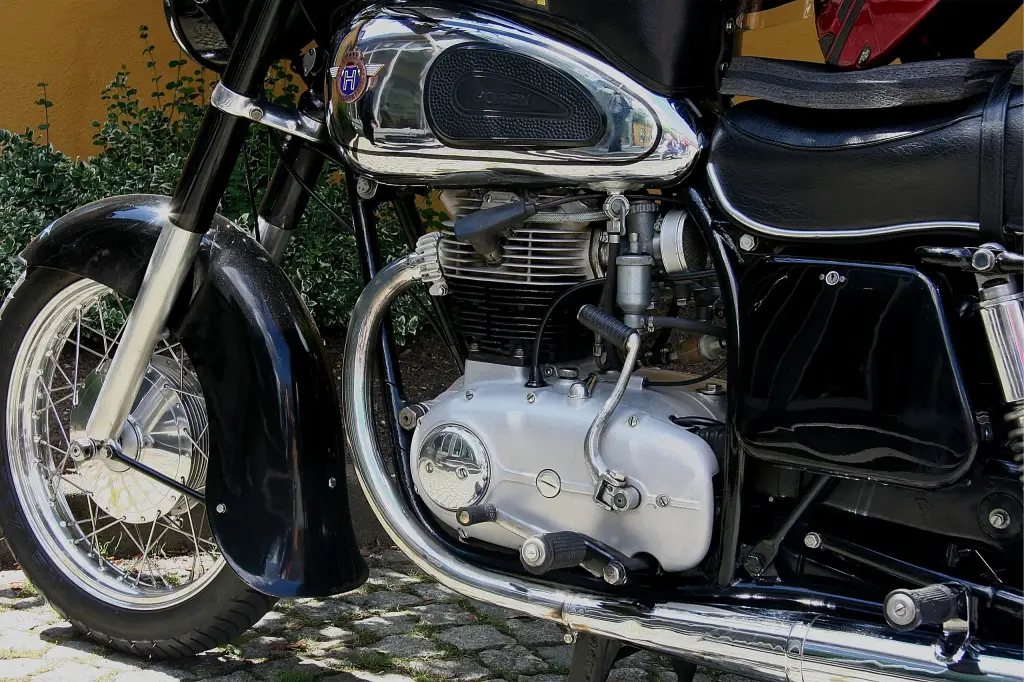
With one carburettor the 400 made 26 PS at 6,500 rpm and 24 PS continuous at 5,650 rpm; with two carburettors 27.8 PS at 7,350 rpm and 26 PS continuous at 6,200 rpm. The crankcase was now a two-part light-alloy casting split vertically, cylinders and head were cast in one piece, and the primary drive used helical gears instead of a chain. The rear chain ran in a swinging case with felt pads to keep it oiled and clean. A leading-link front fork, recommended for sidecar work, was offered after a short time.
End of the line
Production lasted about two years. The Imperator was the last twin of the old Horex works, and the final machines were built with Zündapp as the Zündapp Citation for the American market. Estimates put total Imperator production at about 4,000; the English-language history of the marque gives 2,420 Reginas and Imperators together for the years 1948 to 1955, so the exact figure is uncertain.
Design and features
- Overhead camshaft: the only series Horex twin of the period with an OHC engine and a patented central camshaft chain.
- Integrated gearbox: a four-speed Hurth gearbox in the crankcase with an external primary chain adjustment and a neutral button.
- Aerodynamic rear enclosure: a quick-release panel over the rear wheel hid the battery and improved airflow.
- Two carburettor option: buyers could choose one or two carburettors, worth about 2 PS.
- Tax-driven 400: the smaller engine was chosen for German tax and insurance classes, not for performance.
Horex Imperator versions
- 500 cc prototype (1951): 30 PS at 6,800 rpm, 150 km/h, separate cylinders and heads.
- Imperator 400, one carburettor (1955): 26 PS at 6,500 rpm, 24 PS continuous.
- Imperator 400, two carburettors: 27.8 PS at 7,350 rpm, 26 PS continuous.
- Sidecar specification: leading-link front fork with oil-damped spring units in place of the telescopic fork.
- Zündapp Citation: the final machines built with Zündapp for the United States.
The Imperator was the twin-cylinder flagship above the single-cylinder Horex Regina; both are in the Horex collection.
Video: Horex Imperator 400
Video on YouTube.
Sources
- Horex Imperator, German Wikipedia: prototype, production version, engine and chassis
- Horex, English Wikipedia: marque history, production totals