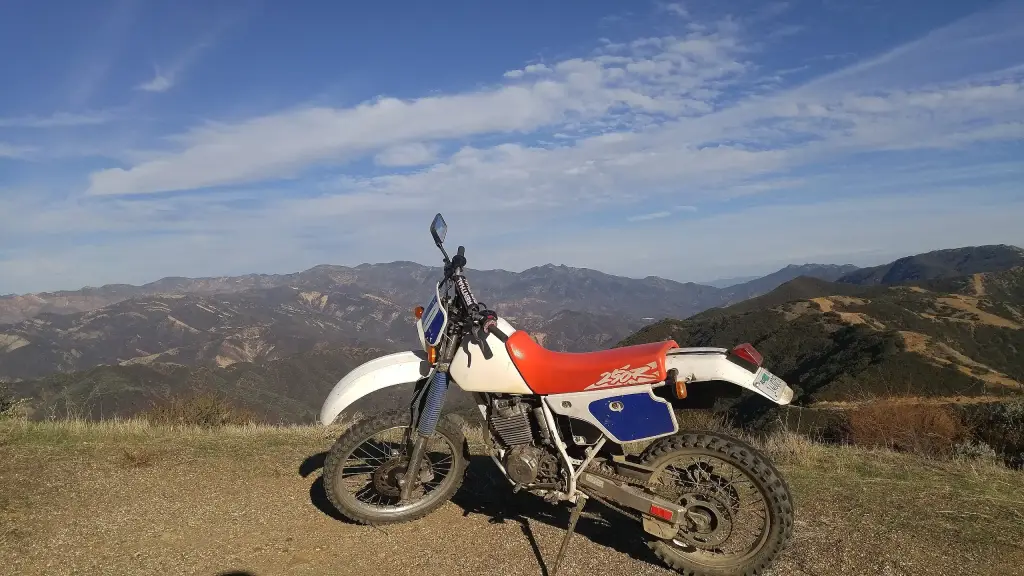
The Honda XR series is a range of four-stroke off-road motorcycles designed in Japan but assembled all over the world. Some models came in two versions: R bikes were enduro machines for off-road competition, fitted with knobby tyres and not always street legal, while L models were dual-sport trail bikes with lights, indicators, a horn and street-legal tyres.
Honda XR at a glance
| Maker | Honda |
|---|---|
| Type | four-stroke off-road motorcycles |
| Versions | R enduro and L dual-sport |
| Small models | XR50R, XR70R, XR75R, XR80R, XR100R |
| XR50 origin | introduced 1969 |
| XR50 today | still produced as the CRF50 in 2021 |
| XR100R | from 1985, with Pro-Link monoshock |
| XR125L | 2003, replacing the XLR 125 |
| XR125L power | 11.52 hp (8.59 kW) at 4,500 rpm |
| XR80R in film | Terminator 2: Judgment Day |
Based on one source, the English Wikipedia article on the XR series.
History of the Honda XR
R and L
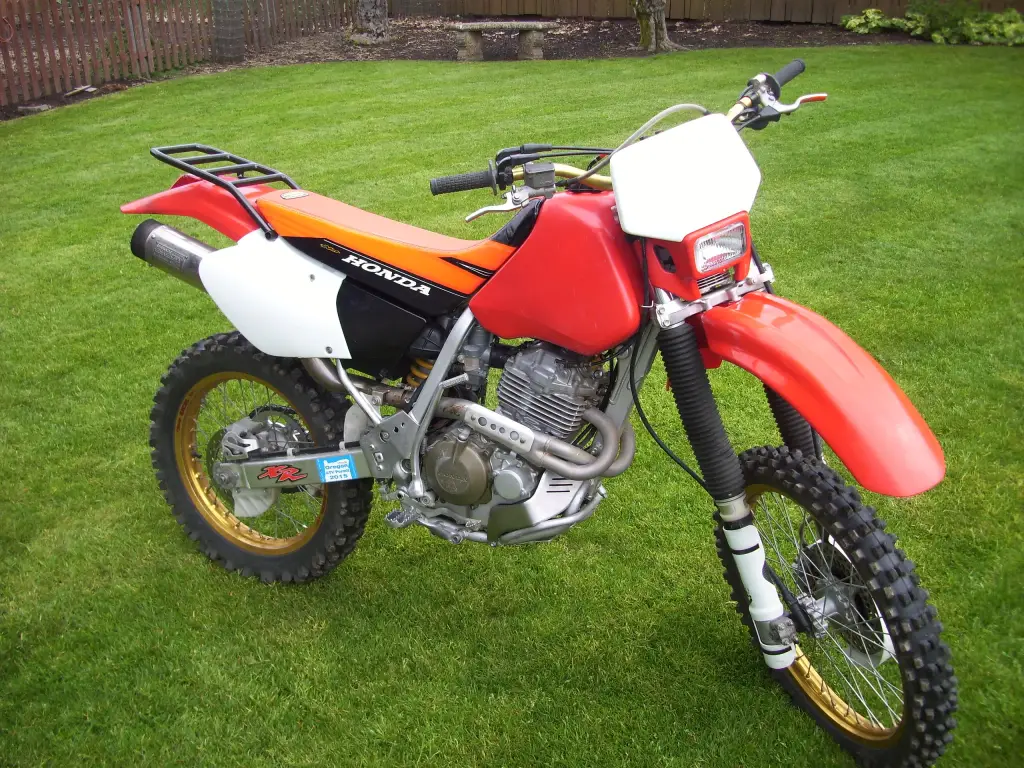
The XR series was designed in Japan but assembled all over the world. The R versions were enduro machines for competitive off-road riding with knobby tyres, not always street legal; the L versions were dual-sport trail bikes with lights, indicators, horn and road tyres.
Small XRs
The small XR models include the XR50R, XR70R, XR75R, XR80R and XR100R. They are much smaller than the rest of the range and are designed for children, smaller riders, pit-bike use or fun. The XR80R appeared in the film Terminator 2: Judgment Day, ridden by a young John Connor; in some scenes the taller XR100R was used because the stunt double was an adult, and the sound effects are those of a two-stroke for dramatic effect. The XR50 is a small four-stroke 50 cc child’s entry-level bike introduced in 1969 and still in production as the CRF50 in 2021; it was originally called the Z-50, then Trail-50, the XR50, CRF50 and the mini dirt bike.
XR100R and XR125L
The XR100R was first introduced with the R designation in 1985, four years after the XR100 came to market. The major difference was a rear suspension upgrade to a more race-like single coil-over monoshock and a new swingarm instead of the XR100’s twin shocks, a system Honda called Pro-Link. In some markets such as Western Europe, an XR125L was released in 2003 to replace the XLR 125. Its 124 cc engine produces 11.52 hp at 4,500 rpm, and only the 2010 XR125L has a kick starter; the XR125L shares the JC30E engine with the CB125.
Design and features
- R and L versions: competition enduro or road-legal dual-sport.
- Small-capacity range: XR50R to XR100R for younger riders.
- Pro-Link suspension: the XR100R’s monoshock rear end.
- XR125L: the European road-legal replacement for the XLR 125.
Honda XR versions
- XR50R: the 50 cc child’s bike, now the CRF50.
- XR70R and XR75R: small trail models.
- XR80R and XR100R: the larger minis, the XR100R with Pro-Link.
- XR125L (2003): the European dual-sport model.
The XR series is Honda’s off-road four-stroke line alongside the CRF series, with the road-legal XR650L at the top. More Hondas are in the Honda collection.
Sources
- Honda XR series, English Wikipedia: R and L versions, small models, XR100R, XR125L