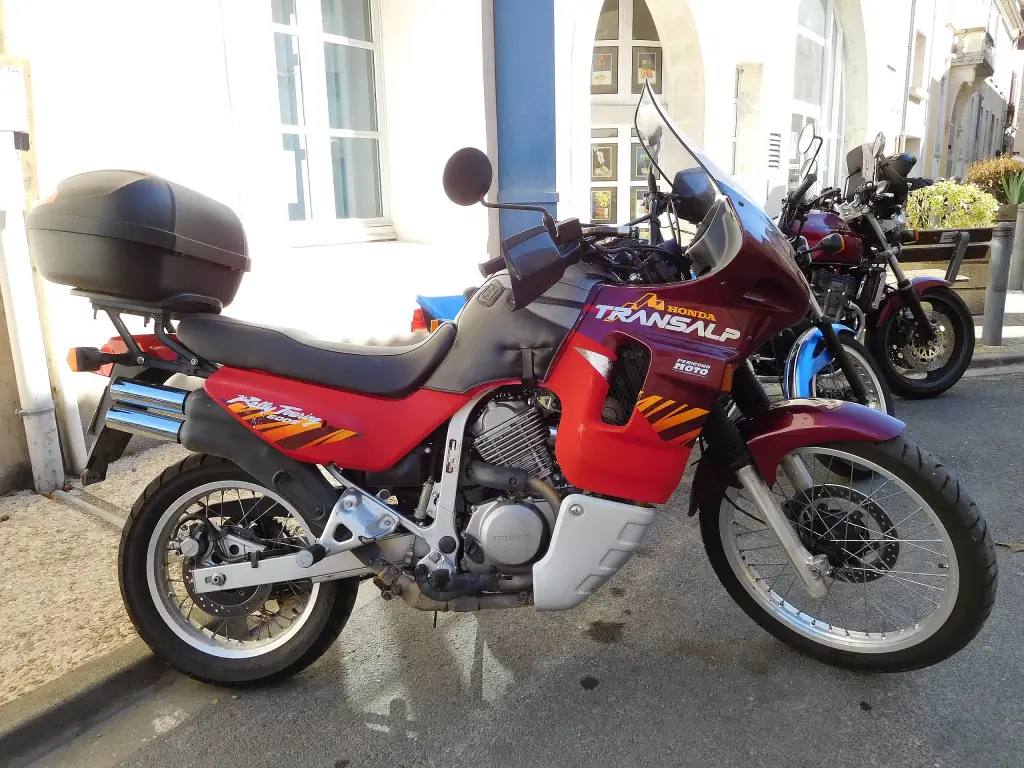
The Honda Transalp is the XL400V, XL600V, XL650V, XL700V and XL750 series of dual-sport motorcycles manufactured since 1987. Except for the XL750, the Transalp uses a liquid-cooled four-stroke 52-degree V-twin engine.
Honda Transalp at a glance
| Maker | Honda |
|---|---|
| Built since | 1987 |
| Models | XL400V, XL600V, XL650V, XL700V, XL750 |
| Engine | liquid-cooled 52-degree V-twin, except XL750 |
| First prototype | 1985, 500 cc off-road bike |
| XL600V | from 1986, US in 1989 |
| XL650V | from 2000 |
| XL700V | from 2008, 680 cc |
| XL750 | 2023 |
| First power | 50 hp at 8,000 rpm |
| 1989–1990 power | 55 hp |
| Weight growth | 175 kg to 218 kg |
Based on one source, the English Wikipedia article on the Transalp.
History of the Honda Transalp
From prototype to production
The first prototype was built in 1985 as an off-road motorcycle with a 500 cc engine. Further development increased capacity to 600 cc and added more road-oriented features, notably an improved fairing. The XL600V arrived in 1986 and was available in the United States in 1989.
Changes through the years
The first version produced 50 hp at 8,000 rpm, raised to 55 hp for 1989 and 1990 before later models returned to 50 hp. From 1991 the rear drum brake was replaced by a 240 mm disc with a single-piston caliper. The appearance changed in 1994 with new lights and a new fairing. In 1996 new 34 mm carburettors arrived and the CDI ignition was replaced by a microprocessor-driven system. The front brake was modified in 1997 with a second disc and a smaller 256 mm diameter. Weight grew over time from 175 kg for the first models to 218 kg for the latest V-twin version.
XL650V and XL700V
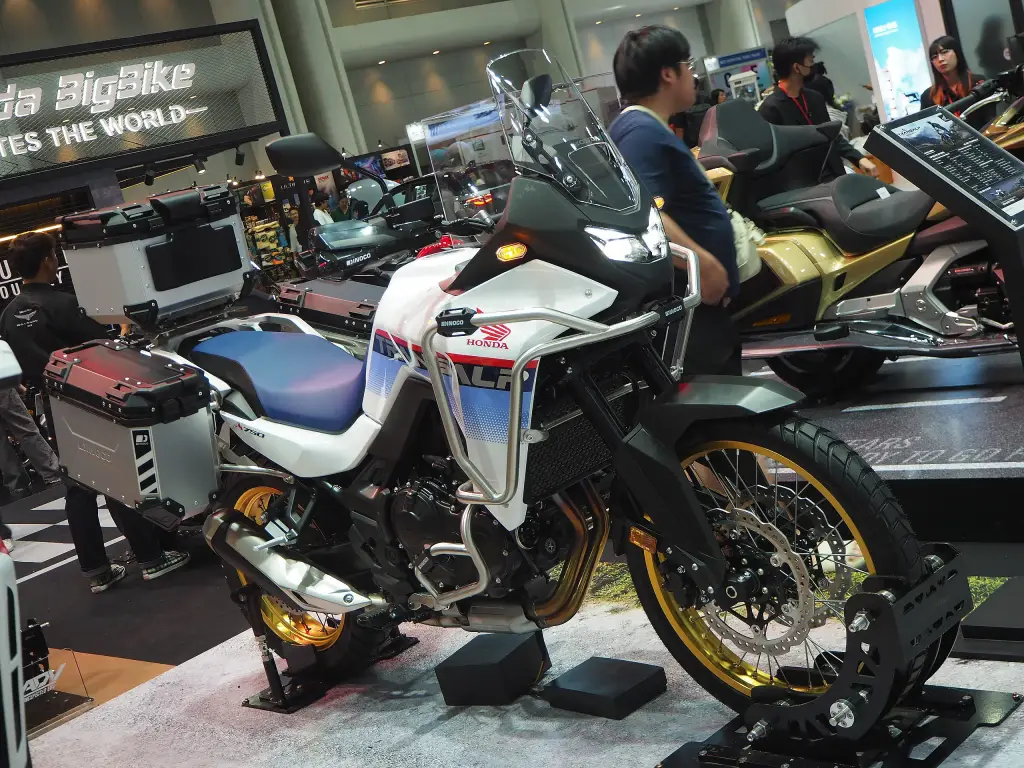
In 2000 the XL650V replaced the XL600V, using the engine from the Deauville and Honda Revere. Power rose to 39 kW (52 hp) at 7,500 rpm and torque to 54 Nm at 5,500 rpm, with a 4 mm bore increase giving 64 cc more displacement. The shock absorbers were redesigned for road use, the exhaust updated, fuel capacity increased by a litre, the instrument panel redesigned and weight cut by 4 kg. In 2008 the XL700V arrived with a new 680 cc engine, and in 2023 the XL750 switched to a different engine layout.
Design and features
- 52-degree V-twin: the Transalp’s signature engine until the XL750.
- Dual-sport brief: road comfort with genuine off-road ability.
- Progressive updates: disc brakes, better ignition and fairings.
- Deauville-derived 650: the engine that powered the 2000 model.
Honda Transalp versions
- XL400V: the Japanese-market 400 cc version.
- XL600V (1986): the original production model.
- XL650V (2000): the Deauville-engined version.
- XL700V (2008): the 680 cc model.
- XL750 (2023): the current generation.
The Transalp sits beside the Honda Africa Twin and Varadero in Honda’s adventure range, and shares its later engine with the Deauville. More Hondas are in the Honda collection.
Sources
- Honda Transalp, English Wikipedia: models, engines, updates, weights