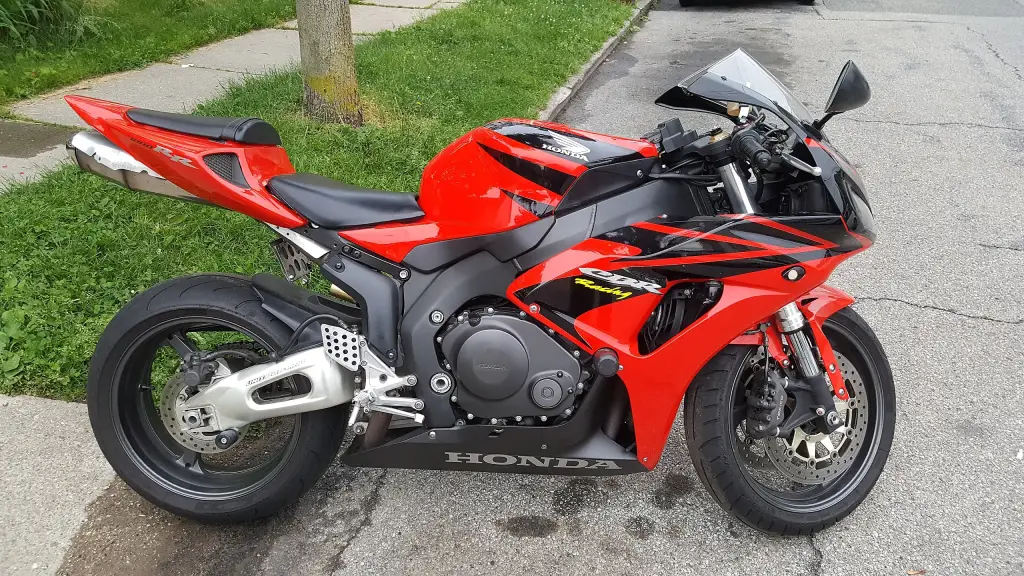
The Honda CBR1000RR, marketed in some countries with the Fireblade suffix, is a sport bike produced by Honda since 2004 as the seventh generation of the CBR Fireblade series that began with the CBR900RR in 1992.
Honda CBR1000RR at a glance
| Maker | Honda |
|---|---|
| Produced since | 2004 |
| Generation | seventh of the Fireblade line |
| Predecessor | CBR954RR of 2002 |
| Model code | SC57 |
| Engine | 998 cc inline four |
| Gearbox | race-inspired cassette six-speed |
| Fuel system | dual-stage fuel injection, ECU-controlled ram air |
| Swingarm | 585 mm, longer than the CBR954RR’s 551 mm |
| Wheelbase | 1,405 mm |
| Electronic aid | Honda Electronic Steering Damper (HESD) |
Based on one source, the English Wikipedia article on the CBR1000RR.
History of the Honda CBR1000RR
From MotoGP
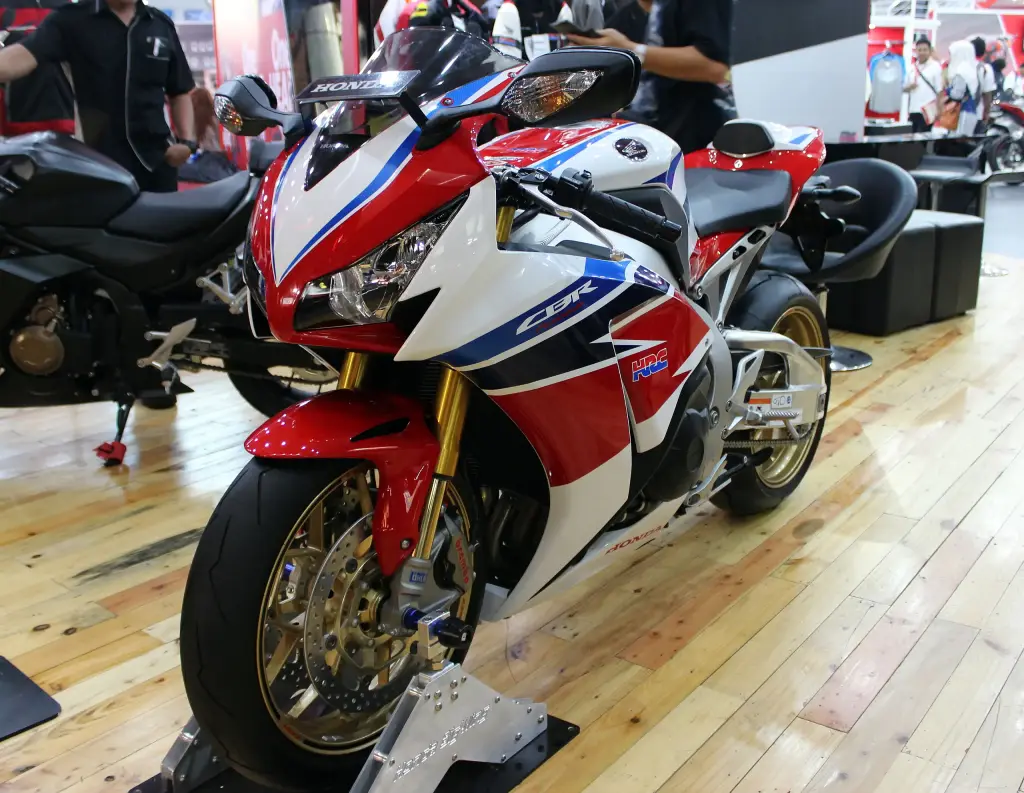
The CBR1000RR was developed by the same team behind Honda’s MotoGP programme, and many of the technologies introduced in the CBR600RR were used in the new bike, including the lengthy swingarm, Unit Pro-Link rear suspension and a dual-stage fuel injection system.
2004–2005 (SC57)
The seventh-generation RR replaced the 2002 CBR954RR, and few parts were carried over. The compact 998 cc inline four was a new design with different bore and stroke, a cassette-type six-speed gearbox, an all-new ECU-controlled ram-air system, dual-stage fuel injection and a centre-up exhaust with a computer-controlled butterfly valve.
A new chassis
The frame was all new, with organic-style aluminium Gravity Die-Cast main sections and a Fine Die-Cast steering head, an inverted fork, Unit Pro-Link rear suspension, radial-mounted front brakes and a centrally mounted fuel tank hidden under a faux cover. The Honda Electronic Steering Damper was an industry first, adjusting automatically for high and low speed.
Compact engine, long swingarm
The 585 mm swingarm, longer than the CBR954RR’s 551 mm, formed 41.6 percent of a wheelbase that grew 5 mm to 1,405 mm. To make room, the crankshaft, main shaft and countershaft were arranged in a triangulated layout with the countershaft below the main shaft, shortening the engine and moving the swingarm pivot closer to the crankshaft.
Design and features
- MotoGP-derived design: laid out by the team behind Honda’s race programme.
- Triangulated engine: a compact 998 cc four with a short front-to-back size.
- Long swingarm: 585 mm for traction and progressive rear suspension.
- Electronic steering damper: the HESD, an industry first.
Honda CBR1000RR versions
- CBR1000RR (SC57, 2004–2005): the seventh-generation Fireblade.
- CBR954RR (2002): the predecessor it replaced.
- CBR600RR: the smaller model that pioneered several of the same technologies.
The CBR1000RR continues the line of the CBR900RR and sits above the CBR600RR. More Hondas are in the Honda collection.
Sources
- Honda CBR1000RR, English Wikipedia: generations, engine, chassis, HESD