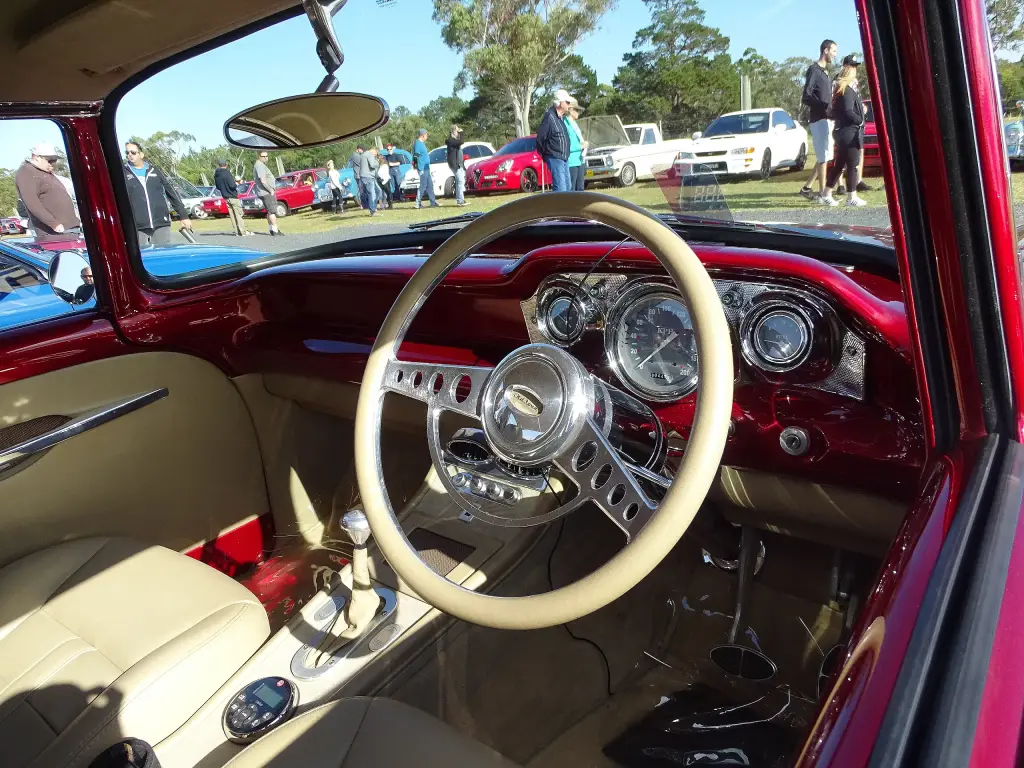
The Holden FB was produced in Australia from 1960 to 1961 and introduced on 14 January 1960 as the replacement for the Holden FC. It was promoted as longer, lower, more spacious and more powerful, and it was the first Holden built in left-hand drive form for export.
Holden FB at a glance
| Maker | Holden, Australia |
|---|---|
| Production | 1960–1961 |
| Introduced | 14 January 1960 |
| Replaced | Holden FC |
| Replaced by | Holden EK, May 1961 |
| Length | 140 mm (5.5 in) more than the FC |
| Wheelbase | unchanged |
| Engine | 138 cu in (2.26 L) inline six, 75 bhp (56 kW) |
| Bore | 3 inches (76 mm), the last model with that size |
| Paint | Magic Mirror acrylic from May 1960 |
| Not carried over | Holden Business Sedan |
| Built | 147,747 |
History of the Holden FB
A modest change
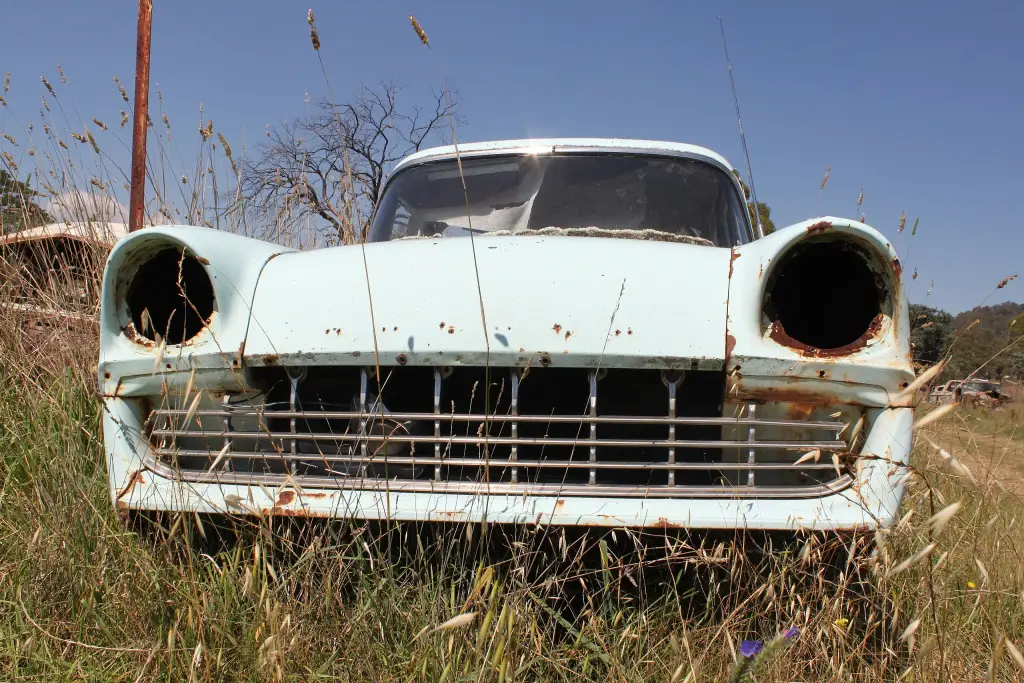
The FB was promoted as being longer, lower, more spacious and more powerful than the FC, but in reality it was only slightly so on each count. Overall length grew by 5.5 inches (140 mm) while the wheelbase stayed the same. The engine bore was still 3 inches, the last model with that specification, and capacity stayed at 132 cubic inches. A raised compression ratio added 4 brake horsepower (3 kW), which did not compensate for the greater weight, so performance was actually inferior to the car it replaced. Changes were also made to the brakes, front coil springs, air cleaner and clutch.
New paint and new styling
The FB saw the end of nitrocellulose lacquer (Duco) finishes: in May 1960 Holden switched to the new “Magic Mirror” acrylic finish. The visible changes were a lower bonnet, finned rear mudguards with new tail lamps on sedans and wagons only, and a wrap-around windscreen. Seating and the instrument panel were improved as well.
Six models and exports
The range consisted of four-door sedans in two trim levels, five-door station wagons in two trim levels, a two-door coupé utility and a two-door panel van, marketed as the Standard Sedan, Standard Station Sedan, Special Sedan, Special Station Sedan, Utility and Panel Van. The Holden Business Sedan, which had been part of the FC range, was not carried over.
The FB was notably the first Holden model also produced in left-hand drive, those cars being destined for export markets. All FB models used the 138-cubic-inch (2.26 L) inline six, the last with the 3-inch bore, producing 75 bhp (56 kW). After 147,747 vehicles the FB was replaced by the Holden EK series in May 1961.
Design and features
- Acrylic paint: the Magic Mirror finish replaced nitrocellulose lacquer from May 1960.
- Wrap-around windscreen: part of a lower, reshaped front end.
- Finned rear mudguards: with new tail lamps on sedans and wagons.
- Left-hand drive: the first Holden built in that form, for export.
- Last 3-inch bore: the 138 cubic inch six ended that engine specification.
Holden FB versions
- Standard Sedan and Station Sedan: the base bodies.
- Special Sedan and Station Sedan: the better equipped pair.
- Utility: the two-door coupé utility.
- Panel Van: the two-door commercial body.
The FB was replaced by the Holden EK and came before the Holden EJ and EH. More cars are in the Holden collection.
Video: Slammed FB Holden by the Chop Shop
Video by STREET MACHINE on YouTube.
Sources
- Holden FB, English Wikipedia: models, changes, engine, production