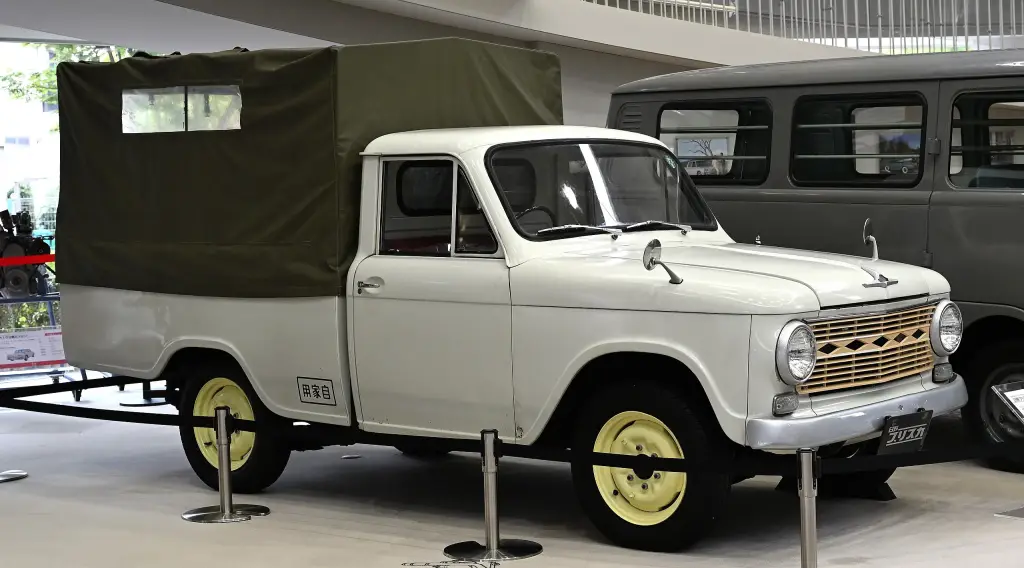
The Hino Briska was a light pickup truck built from 1961 to 1968 and adapted from the Renault-based Hino Contessa. It was assembled under contract by Mitsui Seiki rather than by Hino itself, and in its last year it was sold as the Toyota Briska, the model from which the Toyota Hilux was developed.
Hino Briska at a glance
| Maker | Hino Motors, built by Mitsui Seiki |
|---|---|
| Production | 1961–1968 |
| First generation | FG10, FG20, FG30, 1961–1965 |
| Second generation | FH, Briska 1300, 1965–1968 |
| Layout | front engine, rear-wheel drive |
| First engine | 893 cc, 35 PS, later 40 PS |
| Second engine | 1,251 cc, 55 PS |
| Payload | 750 kg, then 850 kg, then 1 tonne |
| Built | 33,916 Briska 900 and 15,036 Briska 1300 |
| Renamed | Toyota Briska (GY10) from 12 May 1967, 10,000 built |
| Successor | Toyota Hilux |
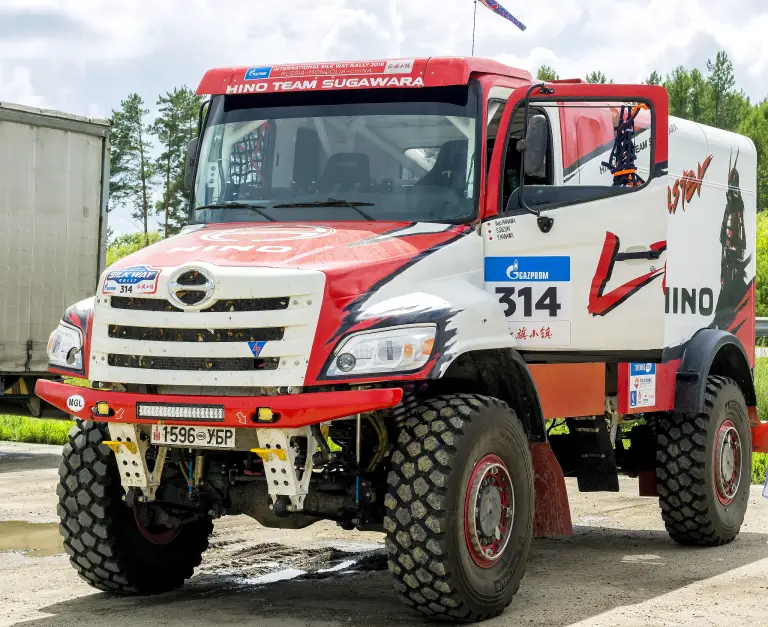
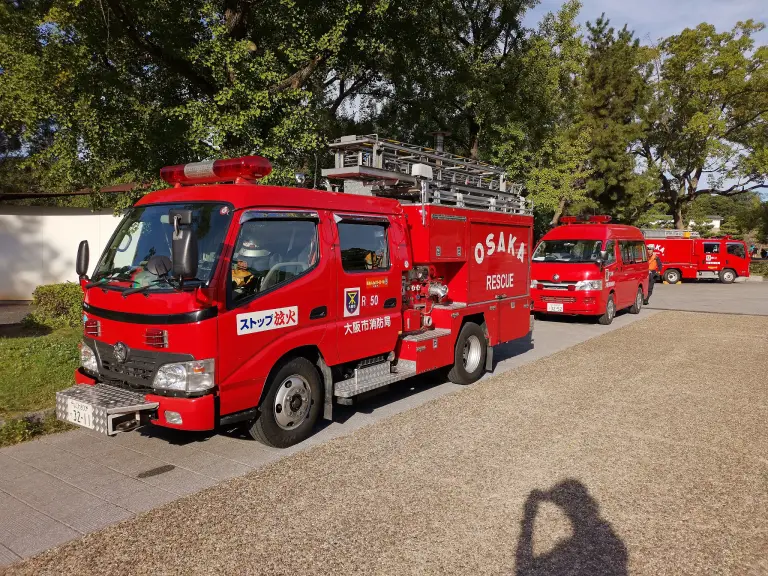
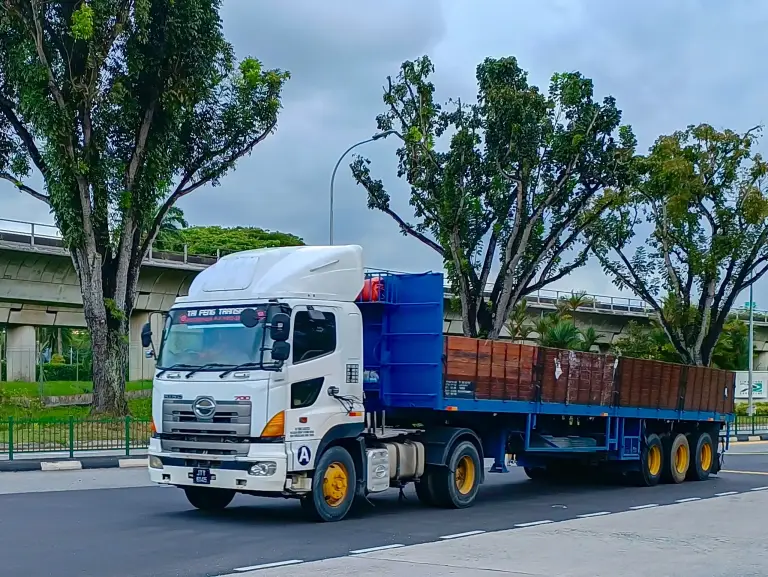
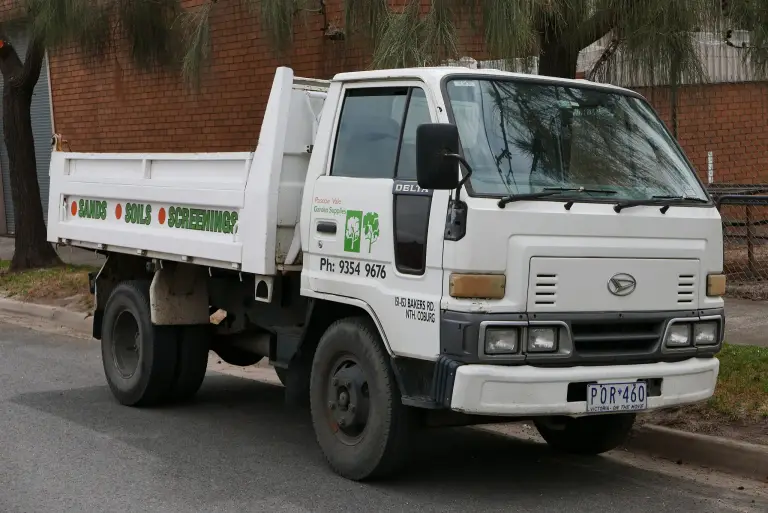
There are no free photographs of the Briska on Wikimedia Commons, so the record keeps its earlier cover image.
History of the Hino Briska
FG series (1961–1965)
The Briska was introduced in March 1961 at exhibitions in 32 cities across Japan. The FG10 used a Hitachi-Stromberg carburettor on a modified version of the Contessa’s Renault-derived engine. Where the Contessa was rear-engined, the Briska used a front engine and rear drive, which made the load bed easier to fit and coped better with overloads. In March 1962 a longer version with a second bench seat arrived as the FG20P, together with a glazed Light Van, the FG20V. The single-bench truck carried 750 kg, the crew-cab pickup 400 kg. In September 1962 the longer FG30 came with a payload of 850 kg, and in 1963 the engine was raised from 35 to 40 PS, taking the top speed from 91 to 100 km/h. A facelift in October 1963 brought a new front with a row of five diamond-shaped openings. According to the Japanese Ministry of Posts and Telecommunications, the Briska was the first Japanese-built truck to seat three people on a single bench. 33,916 Briska 900s were built.
FH series (1965–1968)
The second generation appeared in April 1965 with the 1,251 cc engine of the new Contessa and 55 PS; only a single-cab truck was offered and the payload rose to one tonne. The four-speed gearbox was synchronized on the top three gears only. After Hino and Toyota agreed their partnership in 1966, Hino concentrated on heavy trucks and Toyota took over sales in May 1967, selling the unchanged truck as the Toyota Briska with twin headlamps and 63 PS. Toyota moved production from the Mitsui plant to Hino’s Hamura factory to replace the Contessa, and the Hilux succeeded the Briska there in March 1968. 15,036 Briska 1300s were built, and 10,000 Toyota Briskas in under a year.
Related models
The Briska was preceded by a delivery van called the Hino Commerce (model code PB) of 1959, mechanically similar to the Renault Estafette. At the time Hino built three vehicles with three different layouts sharing engines: the Briska was front-engined and rear-driven, the Commerce front-engined and front-driven, and the Contessa rear-engined and rear-driven.
Design and features
- Contessa genes: the engine and much of the running gear came from the Renault-based Contessa.
- Front engine, rear drive: chosen for easy body mounting and tolerance of overload.
- Three abreast: the first Japanese truck to seat three on a single bench, according to the Ministry of Posts and Telecommunications.
- Body styles: single-cab truck, crew-cab pickup, Light Van and panel van.
Hino Briska versions
- FG10 (1961–1965): single-cab truck, 750 kg payload.
- FG20P and FG20V (1962): six-seat pickup and glazed Light Van.
- FG30 (1962–1965): longer wheelbase, 850 kg payload.
- Briska 1300 (1965–1968): 1,251 cc, one tonne, single cab only.
- Toyota Briska GY10 (1967–1968): Toyota-badged version with twin headlamps and 63 PS.
The Briska shared its engine with the Hino Contessa. More Hino models are in the Hino collection.
Sources
- Hino Briska, English Wikipedia: generations, payloads, Toyota takeover
- 日野・ブリスカ, Japanese Wikipedia: development, body styles, name origin