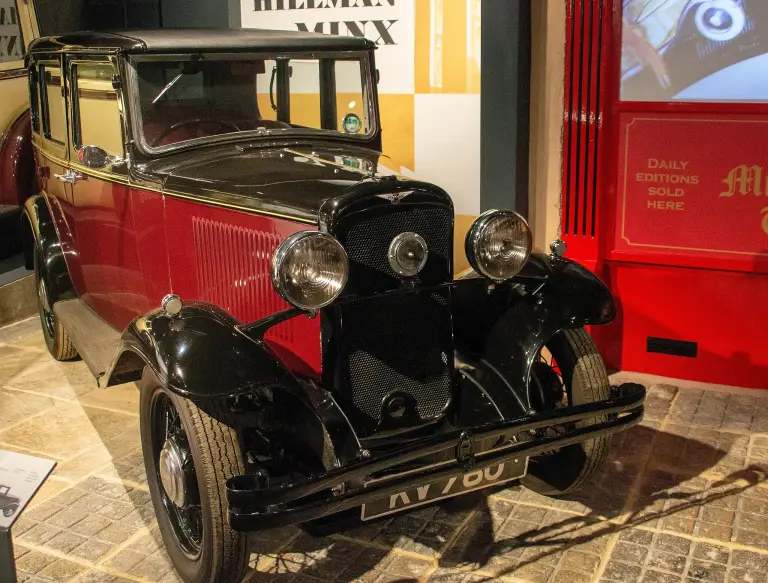
The Hillman Hawk was one of a series of 20 horsepower Hillmans built in the 1930s. The range began with the Wizard 75, continued with the Twenty 70 and was sold under several names, including the long-wheelbase Seven Seater and 80, before the Rootes brothers changed the badges to Humber Snipe at the end of the decade.
Hillman Hawk at a glance
| Maker | Hillman, Rootes Group |
|---|---|
| Series | Hillman 20 hp family |
| RAC rating | 20 horsepower |
| Layout | front engine, rear-wheel drive, separate chassis |
| Seats | 5 to 7 |
| Brakes | Bendix Duo-Servo, 11 in drums |
| Front suspension | half-elliptical springs, H-section axle |
| Rear suspension | underhung half-elliptical springs, 50 in long |
| Steering | worm and nut |
| Later badge | Humber Snipe |
Based on one source. The English Wikipedia page covers the whole 20 hp family — Wizard 75, Twenty 70, Hawk, Seven Seater and 80 — rather than the Hawk alone, so this article describes the series the Hawk belonged to.
History of the Hillman Hawk
The 20 horsepower Hillmans were medium-priced five- to seven-seat executive cars of the 1930s, built at a time when body and chassis were still separate structures. Hillman gave the chassis three different body shapes in five years and five different names once the long-wheelbase cars are counted. The same bodies and chassis were also used for the company’s 16 horsepower model, although that smaller engine was never offered with the long-wheelbase cars.
The series started with the Hillman Wizard 75, designed by the Rootes brothers to win export markets and to continue the challenge to “the American type of car” begun by the Humber Super Snipe. The chassis frame had five cross members and was as deep and rigid as possible. The front axle was an H-section forging, brakes were Bendix Duo-Servo units on 11-inch drums worked by enclosed cables, and all four corners used half-elliptical springs with double-acting hydraulic shock absorbers. Steering was by worm and nut, and cars came on artillery wheels, with wire wheels and a sunshine roof as extras.
The Wizard was replaced in mid-September 1933 by the Hillman 20/70, which kept essentially the same body but gained all-steel panels, a more streamlined tail and electric direction indicators built into the body sides. The radiator shell sloped back to match the new coachwork and had thermostatically controlled chromium shutters. The engine was carried on flexible mountings, the four-speed gearbox had synchromesh between third and top, and a freewheel was fitted except on the cheapest Family model. Buyers could choose a sports saloon, a foursome drophead coupé or an open tourer, while the Seven Seater sat on a longer wheelbase as a saloon, limousine or landaulette. The Hawk continued this line into the later 1930s before the Rootes brothers moved the badges to Humber Snipe.
Design and features
- Separate chassis: a deep frame with five cross members, typical of the period and shared with the smaller 16 hp model.
- Bendix brakes: Duo-Servo operation on 11-inch drums, regarded in road tests as very effective.
- Comfortable springing: half-elliptical springs on both axles with double-acting hydraulic dampers and long underhung rear springs.
- Coachbuilt choice: saloon, sports saloon, drophead coupé and tourer bodies, plus long-wheelbase seven-seat cars.
- Period details: artillery wheels, opening windscreen, sunshine roof and later built-in electric indicators.
Hillman Hawk versions
- Wizard 75 (1931): the first of the series, with a road-tested top speed of about 65 mph.
- Wizard de luxe (1932): walnut dashboard, special hide, de luxe carpets and double-barred bumpers.
- Twenty 70 (1933): all-steel body, sloping radiator shell and electric direction indicators.
- Hawk: the later model of the same 20 hp line in the second half of the 1930s.
- Seven Seater and 80: long-wheelbase versions with a pair of occasional seats in the rear.
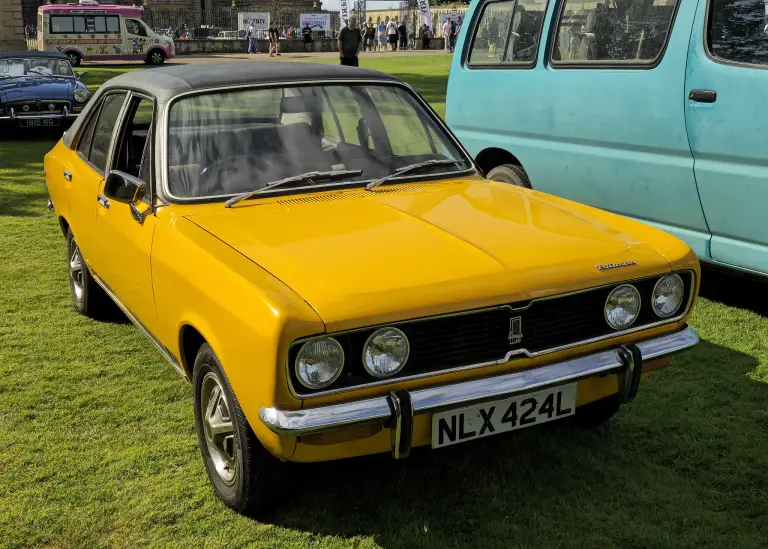
The Hawk was the largest of the 1930s Hillmans, above the Minx that appeared in 1931. The later Hunter and Avenger show how far the company moved in thirty years. More cars are in the Hillman collection.
Video: 1936 Hillman Hawk (20HP), Cream of Classics Show Day 2013
Video on YouTube.
Sources
- Hillman 20, English Wikipedia: the 20 hp series, chassis, bodies, engines