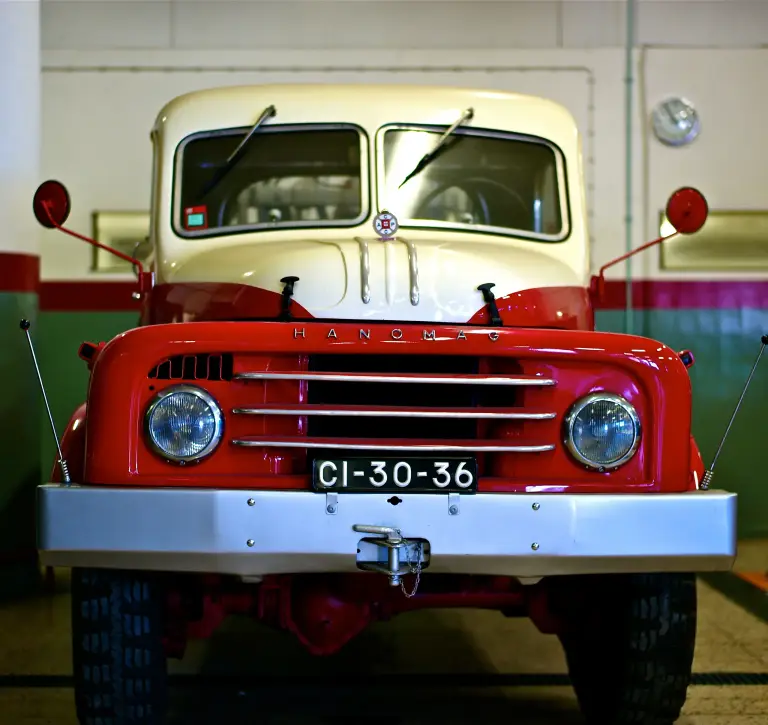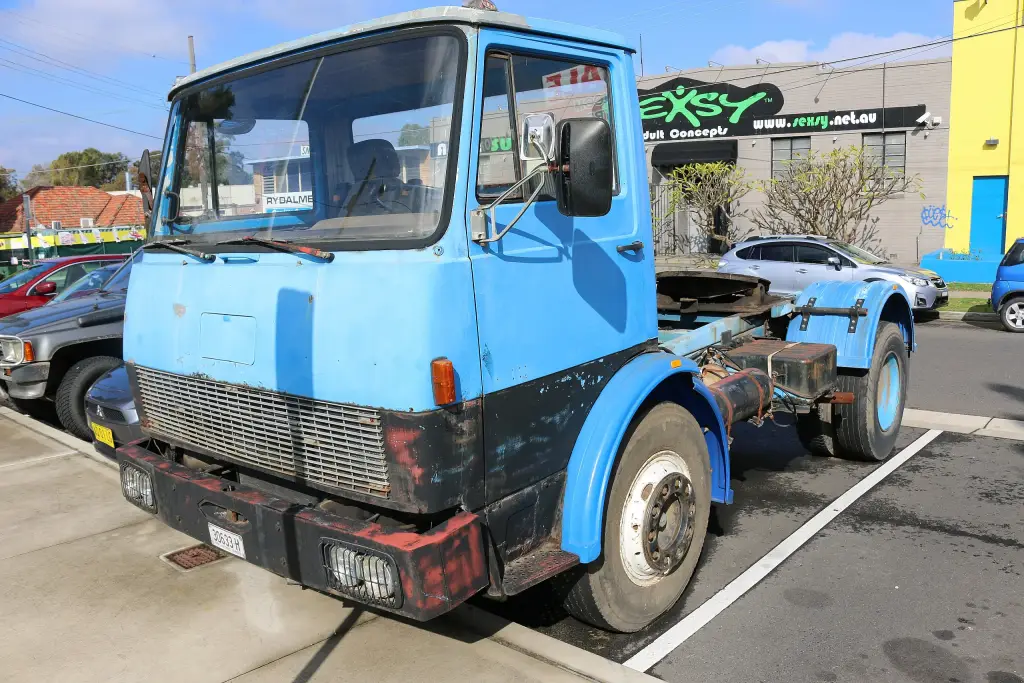
Hanomag-Henschel Fahrzeugwerke GmbH was the truck manufacturer created on 1 April 1969 by the merger of Hanomag and Henschel. For a few years it offered the broadest commercial-vehicle programme in Germany, but after Daimler-Benz took full control the brand disappeared in 1974.
Hanomag-Henschel at a glance
| Full name | Hanomag-Henschel Fahrzeugwerke GmbH (HHF) |
|---|---|
| Founded | 1 April 1969 |
| Headquarters | Hanover |
| Created from | Hanomag and Henschel-Werke |
| Parent | Rheinstahl group |
| Daimler-Benz stake | 51% from 1969, 100% from the end of 1970 |
| Plants | Hanover, Hamburg-Harburg, Bremen-Sebaldsbrück, Kassel |
| Programme | light transporters to 26-tonne trucks |
| Brand ended | 1974 |
| Last models | built as Mercedes-Benz until 1978 |
Based on one source: the German Wikipedia article on Hanomag-Henschel.
History of the Hanomag-Henschel
The machine and vehicle maker Hanomag of Hanover, which had built trucks since 1905, was taken over by Rheinische Stahlwerke AG in 1952; the locomotive and truck producer Henschel of Kassel, building trucks since 1925, followed in 1964, and the Tempo works of Hamburg, a maker of light transporters, in 1965. Hanomag also built construction machinery, tractors and light to medium trucks, while Henschel concentrated on locomotives and medium to heavy trucks.
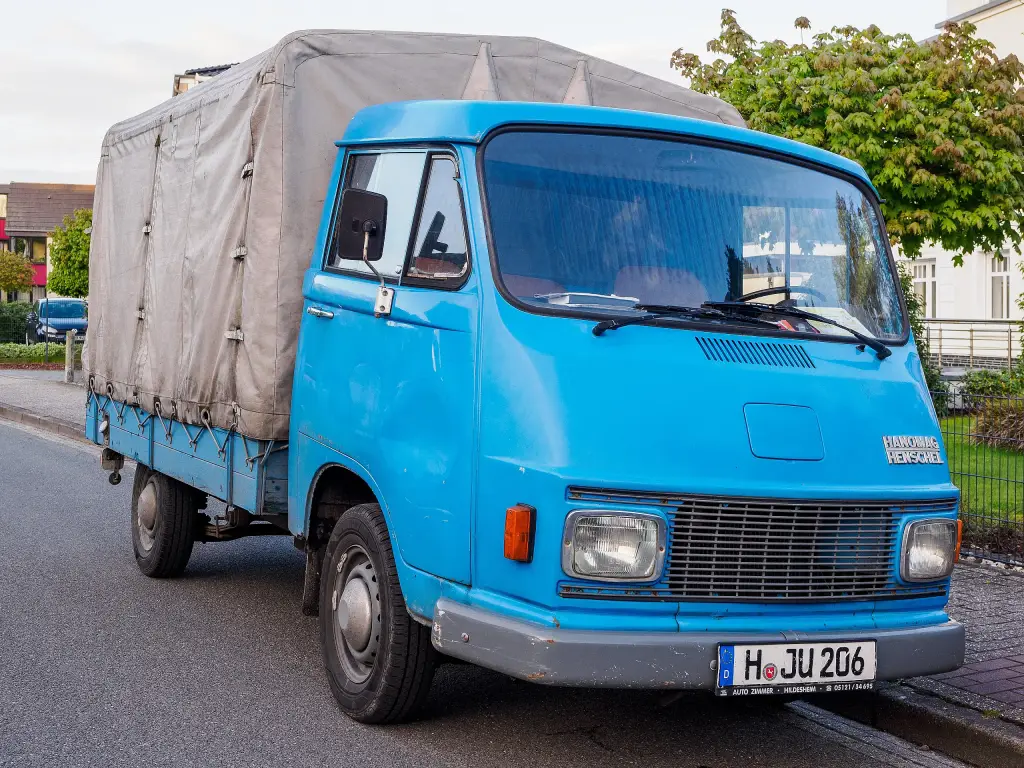
Rheinstahl regarded its commercial-vehicle business at Hanomag and Henschel as a sideline and did not merge the two companies immediately after buying Henschel, although their products complemented each other well. When the German steel crisis of the late 1960s left Rheinstahl short of money, it looked for a financially strong partner from the industry. Talks with Magirus-Deutz failed; later talks with British Leyland attracted the attention of Daimler-Benz, which feared Leyland entering the German market, negotiated with Rheinstahl itself and succeeded. On 1 April 1969 Rheinstahl separated the commercial-vehicle divisions of Hanomag and Henschel and combined them in the new Hanomag-Henschel Fahrzeugwerke GmbH in Hanover, with Daimler-Benz taking 51 per cent. Daimler also took 25 per cent of the remaining Rheinstahl Hanomag.
From then on the otherwise unchanged vehicles of the two makers carried the new Hanomag-Henschel name. The works were in Hanover (Linden-Süd and Ricklingen, the former Hanomag main plant, which supplied engines), Hamburg-Harburg (the former Tempo works), Bremen-Sebaldsbrück (the former Borgward works) and Kassel-Nord-Holland (the Henschel main plant). Until then the German truck industry had a certain division of labour, with Borgward, Opel and Hanomag building transporters and light to medium trucks and MAN, Büssing, Magirus-Deutz and Henschel building medium to heavy trucks; the merger created the first full-range supplier, offering everything from the light Harburger Transporter to a 26-tonne long-distance truck.
Further financial problems led Rheinstahl to sell its remaining shares in Hanomag-Henschel to Daimler-Benz for 140 million DM at the end of 1970; in return Daimler gave its stake in Hanomag back to Rheinstahl. Daimler had promised to keep Hanomag-Henschel as a second sales channel alongside Mercedes-Benz, but soon switched the heavy trucks to Mercedes technology and ended their production, despite a new engine generation being ready at Hanomag-Henschel. Models that filled gaps in the Mercedes range survived for a time, some sold in parallel as Hanomag-Henschel and Mercedes-Benz. This applied above all to the light Harburger transporters, which were built until 1978, and to the heavy construction vehicles from the Henschel programme, which had a good reputation and covered a field where Mercedes was still weak. After Mercedes replaced its heavy models from 1973 the gap was closed, and the last vehicles with the Hanomag-Henschel name left the market in 1974. Rheinstahl-Hanomag sold the engine plant in Hanover-Linden to Volvo.
Design and features
- First full-range German truck maker: from the light Harburger Transporter to a 26-tonne long-distance truck.
- Four plants: Hanover, Hamburg-Harburg, Bremen-Sebaldsbrück and Kassel.
- Daimler-Benz control: 51 per cent from 1969 and the whole company from the end of 1970.
- Short life: the brand was gone in 1974, only five years after it was created.
- Mercedes legacy: some models, especially the Harburger transporters, were built as Mercedes until 1978.
Hanomag-Henschel versions
- Harburger Transporter: the light transporter line that outlived the brand, built until 1978.
- Hanomag F-series: the medium trucks continued under the Hanomag-Henschel name after 1969.
- Henschel heavy trucks: medium and heavy models taken over from the Kassel maker.
- Heavy construction vehicles: Henschel-designed site trucks kept for their good reputation.
- Mercedes-badged models: transitional vehicles sold in parallel under both names.
The company combined the Hanomag F-series and the L 28 heritage with the Henschel truck range, and more models are in the Hanomag collection.
Video: Hanomag-Henschel-Verrottend
Video by Ivor Schandor on YouTube.
Sources
- Hanomag-Henschel, German Wikipedia: merger, ownership, plants, end of the brand