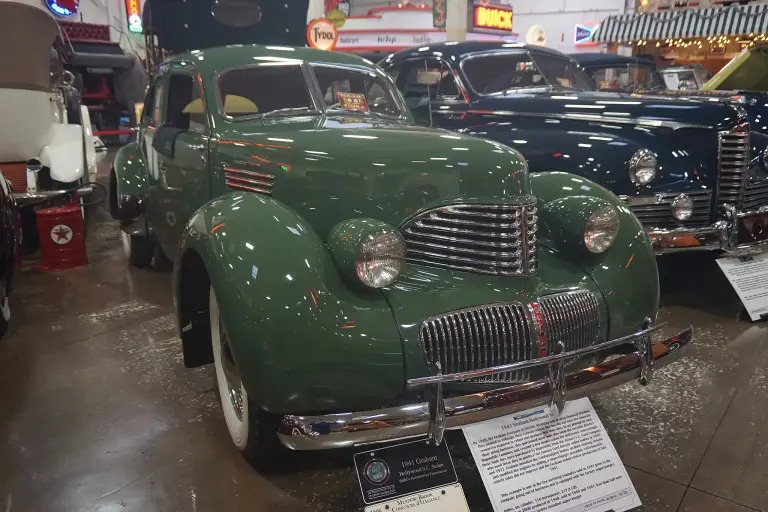
Graham was the American manufacturer that made supercharging a production feature rather than a racing curiosity. Its crankshaft-driven blower arrived in 1934, moved from the eight-cylinder cars to the six in 1936, and gave the company a distinction it kept for the rest of its short life: more supercharged cars built than any other maker, until Buick passed the mark in the 1990s.
Graham Supercharged at a glance
| Maker | Graham-Paige, Detroit, Michigan |
|---|---|
| Supercharger introduced | 1934 |
| Designer | Floyd F. Kishline, Graham assistant chief engineer |
| Type | crankshaft-driven supercharger, designed in-house |
| First fitted to | the top eight-cylinder models |
| Six-cylinder from | 1936, when the eights were dropped |
| Bodies 1936–1937 | Hayes-built bodies bought through REO Motor Car Company |
| Engine | Graham’s own 217 cu in six with a new full water jacket |
| Record | more supercharged cars than any other maker until Buick in the 1990s |
| Car production ended | 1940 |
Graham’s supercharged models have no separate Wikipedia article; this page is built from the Graham-Paige brand article in English, German and French. Based on the brand pages alone.
History of the Graham Supercharged
The 1934 blower
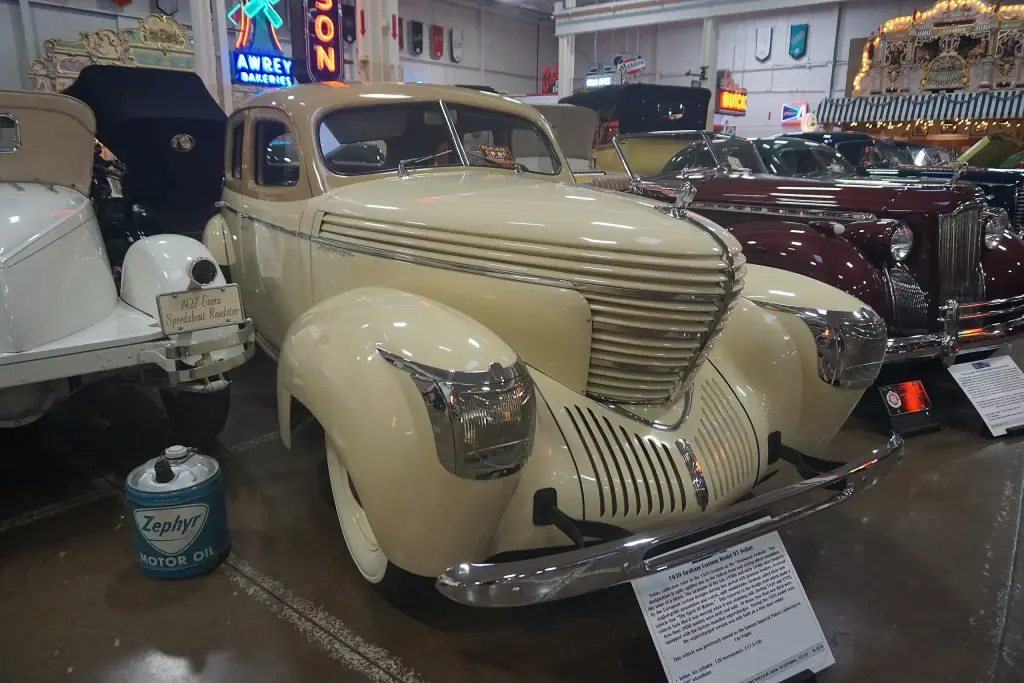
For 1934 Graham introduced a supercharger driven directly from the crankshaft. It was designed in-house by Graham’s assistant chief engineer, Floyd F. Kishline, and at first it was offered only on the top eight-cylinder models, where the extra cost could be carried by the most expensive cars in the range. When the eights were dropped in 1936 the supercharger was adapted to the six, and from then on it was the six-cylinder Graham that carried the blown engine.
The arrangement suited a company that had always done its own engineering. Graham-Paige made most of its own bodies and engines; it had no foundry and contracted Continental for castings, and some models used Continental stock engines, but the engines themselves were largely the work of Graham’s own engineering department. The supercharger was part of that in-house tradition, and over the years Graham built more supercharged cars than any other automobile manufacturer — a record Buick only took away in the 1990s.
New bodies for 1936 and 1937
By 1935 the “Blue Streak” styling of the 1932 cars was looking dated, and the restyled front and rear ends of that year made the cars appear higher and narrower — a failure. With no money for a new body, Graham signed an agreement with the REO Motor Car Company to buy car bodies, paying REO $7.50 in royalties for every Hayes-built body. The engines received new full water jackets, and Graham added its own front-end styling and revised detailing to create the 1936 and 1937 Grahams.
Spirit of Motion and the end
Amos Northup of Murray Body was hired to design the 1938 car but died before the design was complete; Graham-Paige engineers most probably finished it. The result was launched as the “Spirit of Motion”: fenders, wheel arches and grille leaned forward so the car looked as if it were moving at speed while standing still. The American press and designers praised it and it won the Concours d’Élégance in Paris. These were the last supercharged Grahams, and Graham’s automobile production ceased in 1940.
Design and features
- Crankshaft drive: the supercharger was driven straight from the crankshaft rather than by a belt.
- In-house design: drawn by assistant chief engineer Floyd F. Kishline, in keeping with Graham’s policy of engineering its own engines.
- Eight first, then six: offered on the top eights in 1934–1935 and moved to the six when the eights were dropped in 1936.
- A lasting record: more supercharged cars than any other manufacturer until Buick in the 1990s.
Graham Supercharged versions
- Supercharged eight (1934–1935): the first blown Grahams, built on the top eight-cylinder models.
- Supercharged six (1936 onwards): the blower moved to the six when the eights left the range.
- 1936–1937 cars: Hayes bodies bought through REO, new water jackets and Graham front-end styling.
- Spirit of Motion cars (1938–1940): the forward-leaning final generation.
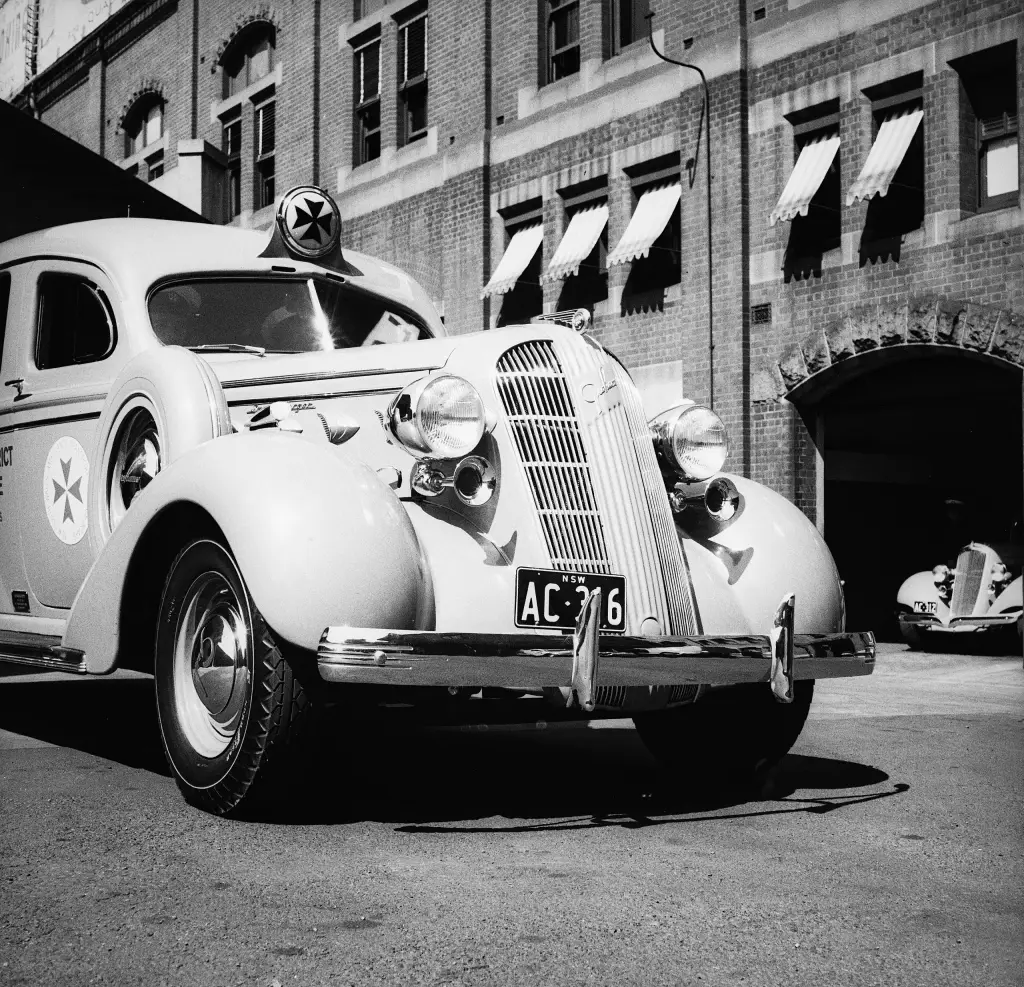
- Supercharged chassis for ambulances: the blown Graham-Paige chassis was also bodied as an ambulance.
The final Graham of this line is described in Graham Hollywood. More cars of the marque are in the Graham collection.
Sources
- Graham-Paige, English Wikipedia: supercharger, Kishline, bodies, Spirit of Motion
- Graham-Paige, German Wikipedia: supercharger history, REO bodies
- Graham-Paige, French Wikipedia: end of production