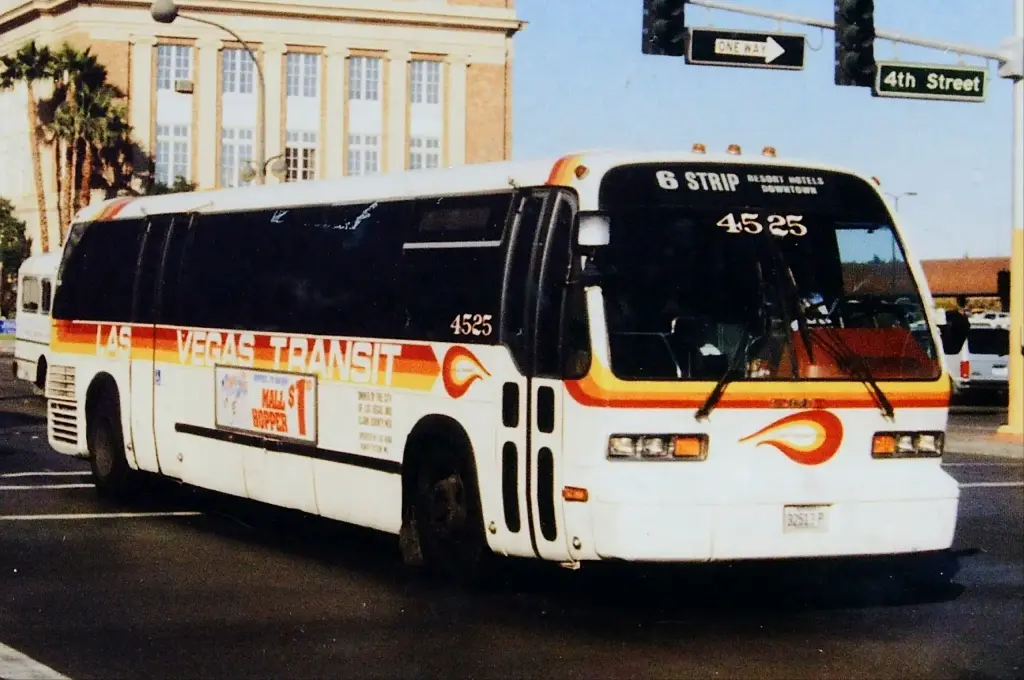
The Rapid Transit Series, or RTS, is a long-running family of city buses that GMC Truck and Coach originally built in Pontiac, Michigan. First produced in 1977, it was GMC’s entry in the Advanced Design Bus programme and the descendant of the company’s prototype for the US Department of Transportation’s Transbus project.
GMC RTS at a glance
| Introduced | 1977 |
|---|---|
| Builder | GMC Truck and Coach, Pontiac, Michigan |
| Lengths | 30, 35 and 40 ft |
| Construction | modular, with the same parts for all three lengths |
| Seating, 40 ft | up to 47 passengers |
| Engines | Detroit Diesel Series 71, six or eight cylinders |
| Later engines | Series 92 and Series 50 |
| Transmissions | Allison V730 or ZF 5HP-500 |
| Models | RTS-01, RTS-03, RTS-04 and later generations |
| Owners after GMC | TMC 1987, Nova Bus 1994, Millennium Transit Services 2003 |
| Production ended | 2009 |
Based on one source, the English Wikipedia article on the Rapid Transit Series. No free photograph clearly identified as this model was found.
History of the GMC RTS
Prototypes
The RTS descends from a line of experimental GMC buses. The RTX, or Rapid Transit Experimental, was a turbine-powered prototype produced in 1968 and under development since 1964, using the GT-309 gas turbine already fitted to the Turbo Titan III and Turbo-Cruiser concept vehicles, together with a toric continuously variable transmission. The RTX had smaller wheels and a kneeling suspension that cut the first-step height by 4.5 inches, and its floor was 21 inches above the road, seven inches lower than a New Look bus of the time, although passenger capacity of a 40-foot bus fell from 50 to 29. The Transbus prototype, the RTS-3T, carried the same ideas further.
Into production
Wanting a backup in case the Transbus project was abandoned, GMC began the RTS-II project in 1970, designating two axles, and the first prototype was assembled in 1973. The project paused, was revived in 1974, and GMC withdrew from Transbus to concentrate on the RTS, billed as an Advanced Design Bus and a transitional step towards low-floor buses. GM announced it was ready to take orders in October 1975, and production began in 1977.
Design
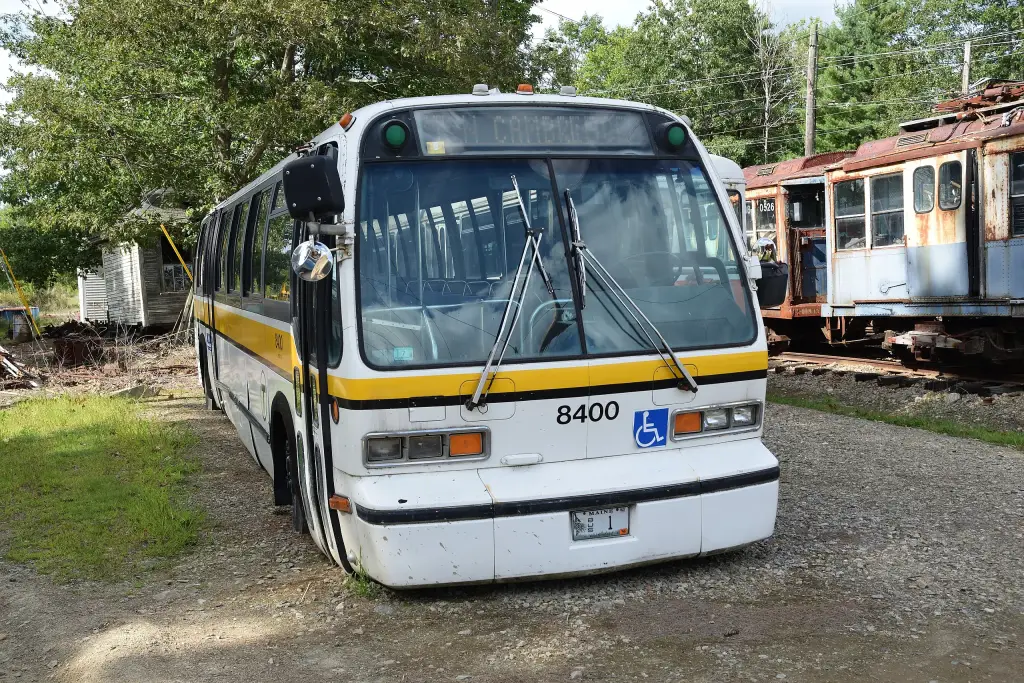
The RTS was notable for its futuristic, car-like curved body and window panels, unlike the flat-sided buses that followed. It came in 30-, 35- and 40-foot lengths built on a modular design that used the same parts across all three, with the longest seating up to 47 passengers. Power originally came from six- or eight-cylinder Detroit Diesel Series 71 two-stroke engines through an Allison V730 or ZF 5HP-500 transmission, and later models could use the six-cylinder Series 92 or the four-cylinder Series 50.
Four owners
In September 1985 GMC announced that, because of poor sales, it was trying to sell or close its transit bus business. In May 1987 it sold the RTS design, patents and production line to Transportation Manufacturing Corporation of Roswell, New Mexico, a subsidiary of Motor Coach Industries, although the two companies completed a joint order for New York City Transit to prepare TMC for production. TMC sold the design to Nova Bus in September 1994, in the middle of an order for the Massachusetts Bay Transportation Authority, and Nova Bus built it until 2002, when it left the US market. Millennium Transit Services revived production in Roswell in 2003 but ceased in 2009; it briefly returned in 2011 before failing to win orders and closing.
Design and features
- Advanced Design Bus: an interim step between high-floor and modern low-floor city buses.
- Curved panels: car-like body and window shapes instead of flat sides.
- Modular construction: shared parts across 30-, 35- and 40-foot lengths.
- Kneeling suspension: a feature inherited from the RTX prototype to ease boarding.
- Long production: built under GMC, TMC, Nova Bus and Millennium over 32 years.
GMC RTS versions
- RTS-01 (1977-78): the first production version, for a consortium led by Houston.
- RTS-03 (1978-80): the first mass-produced version.
- RTS-04 (1981-86): the most widely known of the GMC-built models.
- Later generations: built by TMC, Nova Bus and Millennium Transit Services.
- RTX and RTS-3T prototypes: the turbine-powered and Transbus experimental buses.
The RTS replaced the GMC New Look in 1977 and was the last city bus GMC built itself. Its predecessors in the old-look family are covered with the PD-4104. More buses are in the GMC collection.
Sources
- Rapid Transit Series, English Wikipedia: prototypes, production, design, models, ownership history