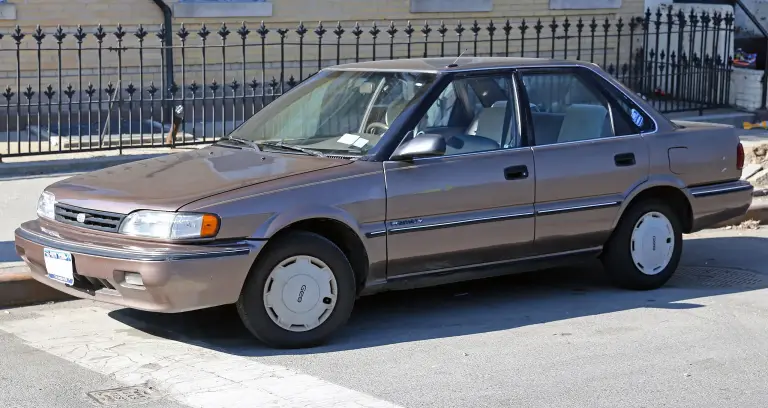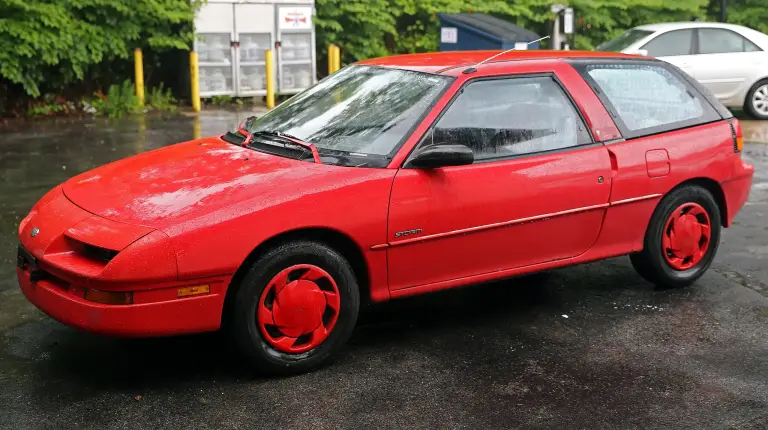
The Geo Metro was a North American variation of the Suzuki Cultus, sold from 1989 to 2001 as a joint effort of General Motors and Suzuki. In the United States it carried the Geo nameplate until 1997 and the Chevrolet nameplate from 1998, and it was offered as a three-door hatchback, four-door sedan, five-door hatchback and two-door convertible.
Geo Metro at a glance
| Maker | Geo (General Motors) with Suzuki |
|---|---|
| Production | 1989–2001 |
| Based on | Suzuki Cultus / Suzuki Swift |
| Built at | Hamamatsu, Japan, then CAMI Automotive, Ingersoll, Ontario |
| North American generations | two: 1989–1994 and 1995–2001 |
| Body styles | three-door hatchback, four-door sedan, five-door hatchback, two-door convertible |
| Engines | 1.0 L three-cylinder; 1.3 L four-cylinder |
| 1.3 L output | 70 hp (52 kW); 79 hp (59 kW) with the 16-valve head after 1997 |
| Nameplate | Geo to 1997, Chevrolet from 1998 |
| US sales, 1997 | 55,600, down from 88,700 in 1996 |
| Replaced by | Chevrolet Aveo (Daewoo Kalos), from 2004 |
Based on one source (English Wikipedia).
History of the Geo Metro
First generation (1989–1994)
Production of the first Geo Metro, equivalent to the second-generation Suzuki Cultus, began at Suzuki’s plant in Hamamatsu, Japan, in late 1988. The car debuted in 1989 and replaced the Chevrolet Sprint in the United States. Canadian buyers continued to get the Chevrolet Sprint and Pontiac Firefly nameplates, while the second-generation Suzuki Swift replaced the Forsa name, and the same generation was sold in the US as the Suzuki Swift. The Metro, Swift and Sprint line received a facelift and the Firefly was temporarily dropped. Some pre-production cars were handmade and had five-digit odometers.
Second generation (1995–2001)
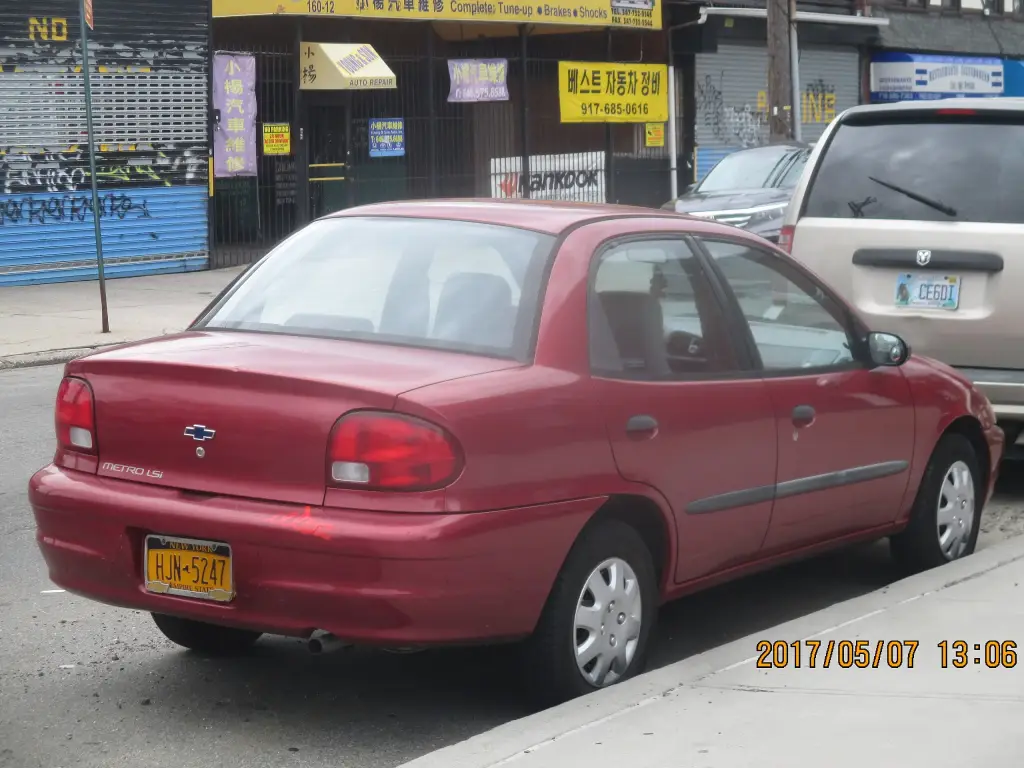
In 1995 a new Metro was introduced as a three-door hatchback and a four-door sedan, using a longer-wheelbase adaptation of the Cultus platform. It was designed at GM’s Design Center with styling cues from the larger Chevrolet Cavalier and was built on Suzuki’s M platform with Suzuki drivetrains. These cars were sold only in North America, as the Geo Metro (Chevrolet Metro from the 1998 model year), Pontiac Firefly and Suzuki Swift, and came only from CAMI Automotive. The three-cylinder 1.0-litre throttle-body-injected engine remained on base models, and it was the last engine sold in the United States to use throttle-body injection. The optional 1.3-litre four-cylinder produced 70 hp (52 kW), and LSi cars built after 1997 got a sixteen-valve head and 79 hp (59 kW). Production ended after the 2001 model year.
Design and features
- Economy first: a small Suzuki three-cylinder with throttle-body injection was the mainstay of the range.
- Safety cage: deformable front and rear crush zones, five structural crossbars, steel side-impact beams and dual frontal airbags.
- Daytime running lights: the second-generation Metro was the second GM car in the US to offer them, after the 1995 Chevrolet Corsica.
- Practical hatchback: the new hatchback had a liftover height three inches lower than the previous generation.
- Made in Canada: from 1990 North American cars came from CAMI, the 50–50 GM and Suzuki venture in Ingersoll, Ontario.
Geo Metro versions
- Three-door hatchback: the core economy version through both generations.
- Four-door sedan: added with the 1995 generation.
- Two-door convertible: one of the four body styles offered over the model’s life.
- LSi: the better-equipped trim, with the 1.3-litre engine and, after 1997, a sixteen-valve head.
- Chevrolet Metro (1998–2001): the same car after the Geo brand was folded into Chevrolet.
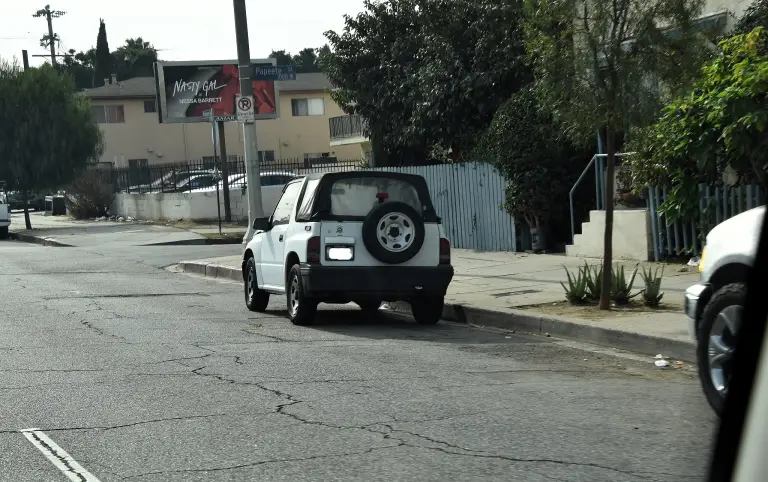
The Metro was the smallest car in the Geo range, below the Geo Prizm; the Geo Tracker was the brand’s mini SUV. More cars are in the Geo collection.
Sources
- Geo Metro, English Wikipedia: history, generations, engines, production