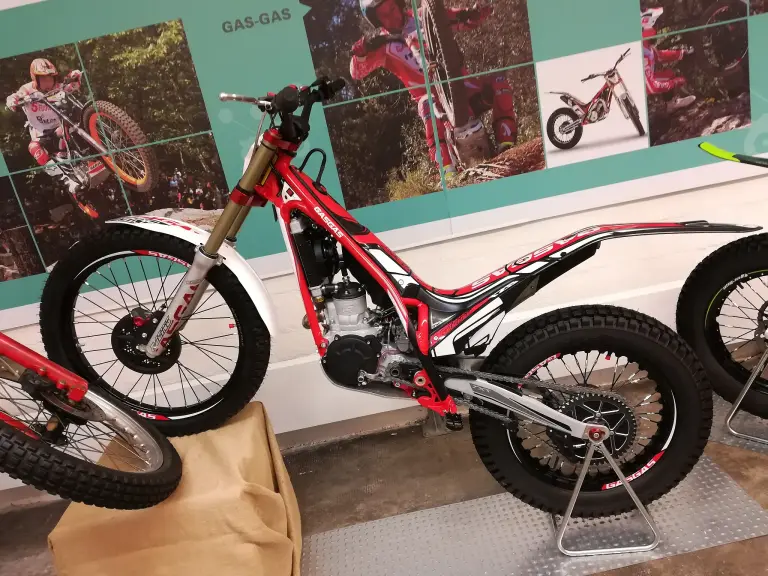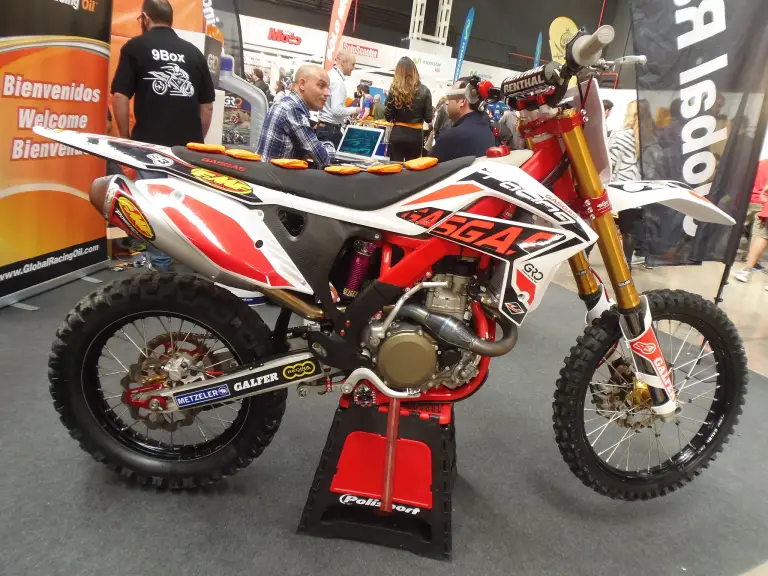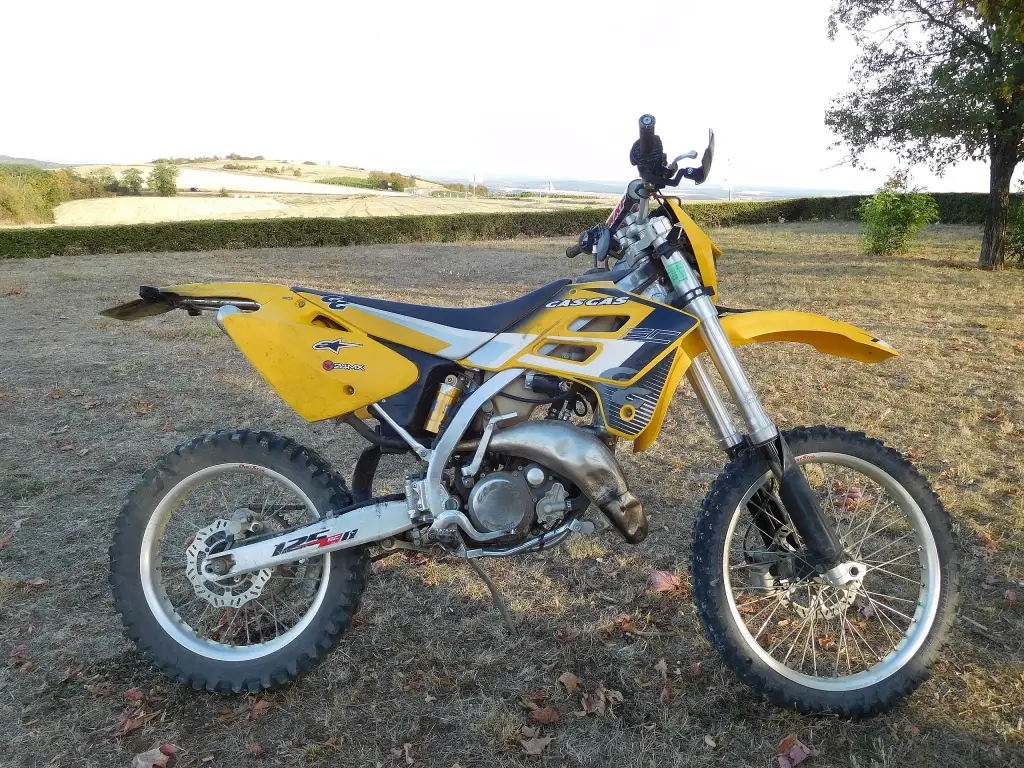
The Gas Gas EC is the Spanish firm’s long-running enduro family, sold since 1989 and known in some markets as the Enducross. It has always been a two-stroke line, offered from 80 to 300 cc, and from 2003 it was joined by the four-stroke EC F. For years the EC was one of the most successful bikes in world enduro.
Gas Gas EC at a glance
| Maker | Gas Gas, Salt, Girona, Spain |
|---|---|
| Also called | Enducross |
| Production | since 1989 |
| Type | enduro motorcycle |
| Engine | single-cylinder two-stroke, liquid-cooled |
| Capacities | 80, 125, 200, 250 and 300 cc (also 50 cc 2001–2006) |
| Frame and running gear | single-cylinder engine, liquid cooling, disc brakes, conventional fork and rear monoshock |
| Four-stroke sister | EC F / FSE / FSR, from 2003 |
| Motocross relative | Gas Gas MC, built 1992–2009 |
| World titles | Edmondson 1994 and 1996, Silván 1999, Pohjamo 2003 |
| Later production | Rieju took over the off-road platform in 2020; the EC 300 was built by KTM from 2021 |
Written from the English, Italian and Catalan Wikipedia articles on the EC and the English article on Gas Gas.
History of the Gas Gas EC
Origins and the Enducross name
The EC appeared in 1989, only a few years after Gas Gas was founded in Salt, Girona, in 1985 by Narcís Casas and Josep Pibernat, former Bultaco employees. The firm began with trials bikes such as the Halley and then expanded into enduro and motocross. The enduro model took the name EC, and in some markets it was marketed as the Enducross.
A two-stroke range
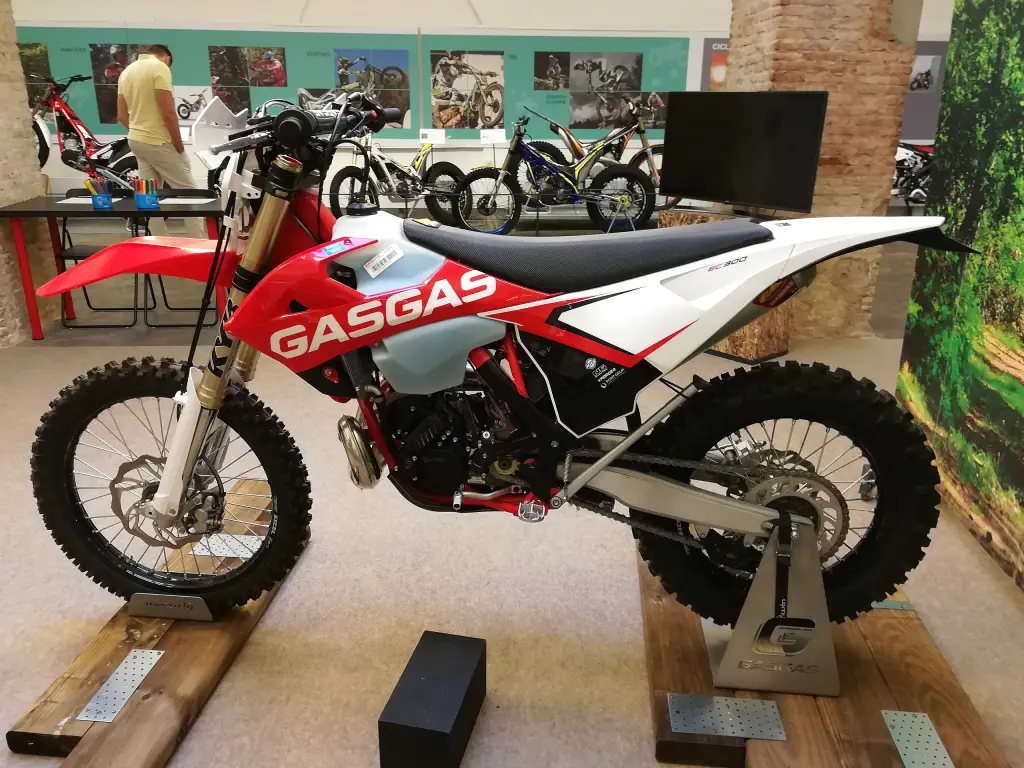
The EC was built around a liquid-cooled single-cylinder two-stroke engine, with a conventional fork in front, a monoshock at the rear and disc brakes at both ends. Capacities covered 80, 125, 200, 250 and 300 cc, while a 50 cc version was made from 2001 to 2006 in Rookie and Boy (minibike) forms; the 50 was the only EC without a 65 cc sister, since the motocross MC range used 65 cc but not 80, 200 or 300 cc. The 80 was built in 1993–1994, the 125 and 250 from 1989, and the 200 and 300 from 1999. All EC models shared the same general layout, which also served the four-stroke EC F and the MC motocross bike.
Four-stroke EC F
From 2003 the two-stroke EC was accompanied by the four-stroke EC FSE, later renamed FSR and then EC F, with capacities of 250, 400 and 450 cc. It looked much like the two-stroke EC but had its own engine, and from 2011 the only version was the 250 with a five-valve Yamaha engine.
Racing success
The EC became one of the most successful enduro bikes of its time. Paul Edmondson won the 125 cc world championship in 1994 and the 250 cc class in 1996, Petteri Silván took the 250 cc and outright titles in 1999, and Petri Pohjamo won the 125 cc class in 2003. Cristóbal Guerrero won the Enduro Junior class in 2005, Ludivine Puy the women’s championship in 2010 and 2011, and Laia Sanz the women’s title in 2012. Gas Gas also won trials world championships with Jordi Tarrés in 1993–1995 and Adam Raga in the 2000s.
After Gas Gas
Gas Gas ran into financial difficulties in the 2010s and became insolvent in 2015. KTM, part of Bajaj Auto, acquired a significant stake in 2019, and in 2020 Rieju bought the Gas Gas off-road platform and continued the enduro models as the Rieju MR. From 2021 the EC 300 was manufactured within the KTM group.
Design and features
- Long-lived two-stroke range: 80 to 300 cc over more than three decades, with a 50 cc minibike for young riders.
- Shared layout: liquid-cooled single, conventional fork, monoshock and disc brakes across the EC, EC F and MC families.
- Racing pedigree: world enduro titles with Edmondson, Silván and Pohjamo, and later women’s titles with Puy and Sanz.
- Four-stroke option: the EC F added 250, 400 and 450 cc four-stroke models from 2003.
Gas Gas EC versions
- EC 80: built 1993–1994.
- EC 50: 2001–2006, in Rookie and Boy versions.
- EC 125: in production since 1989.
- EC 200 and EC 300: added in 1999.
- EC 250: in production since 1989.
- EC F (FSE/FSR): four-stroke sister range from 2003, 250, 400 and 450 cc.
The trials side of the range is covered by the Gas Gas TXT, and the four-stroke enduro models have their own page on the Gas Gas EC F. More off-road machines are in the Gas Gas collection.
Video: Test Gas Gas 300 Racing 2014
Video on YouTube.
Sources
- GasGas EC, English Wikipedia: production since 1989, racing results
- Gas Gas EC, Italian Wikipedia: capacities and production years
- Gas Gas EC, Catalan Wikipedia: layout, world titles, MC relationship
- GasGas, English Wikipedia: company history, EC F and later ownership