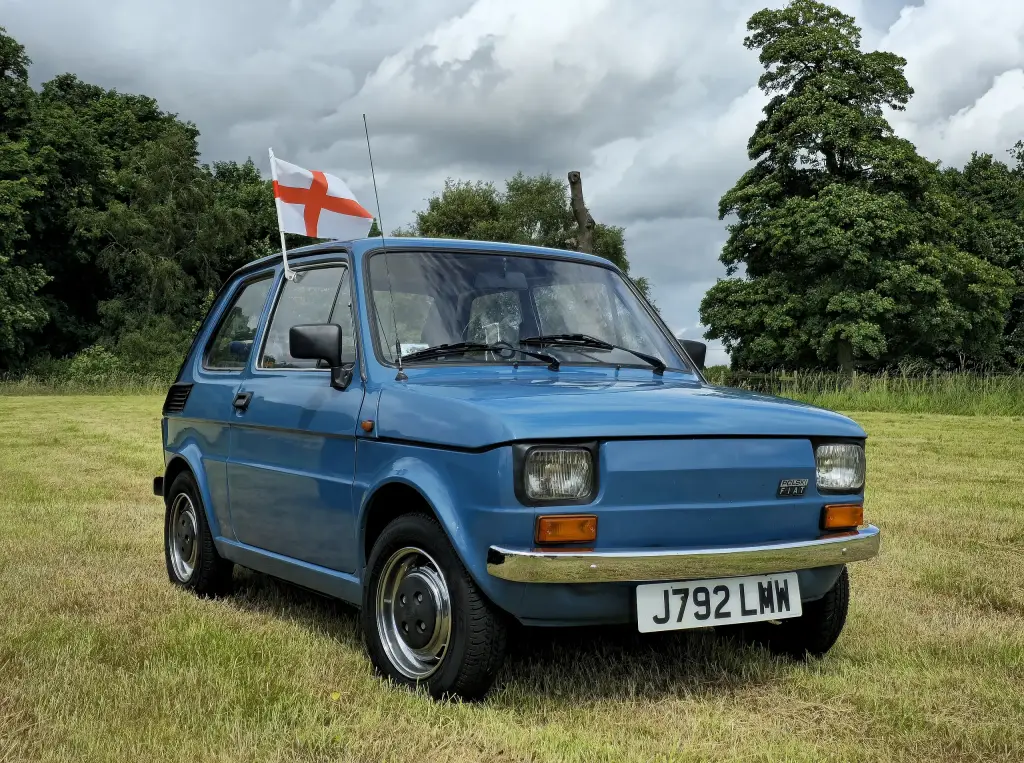
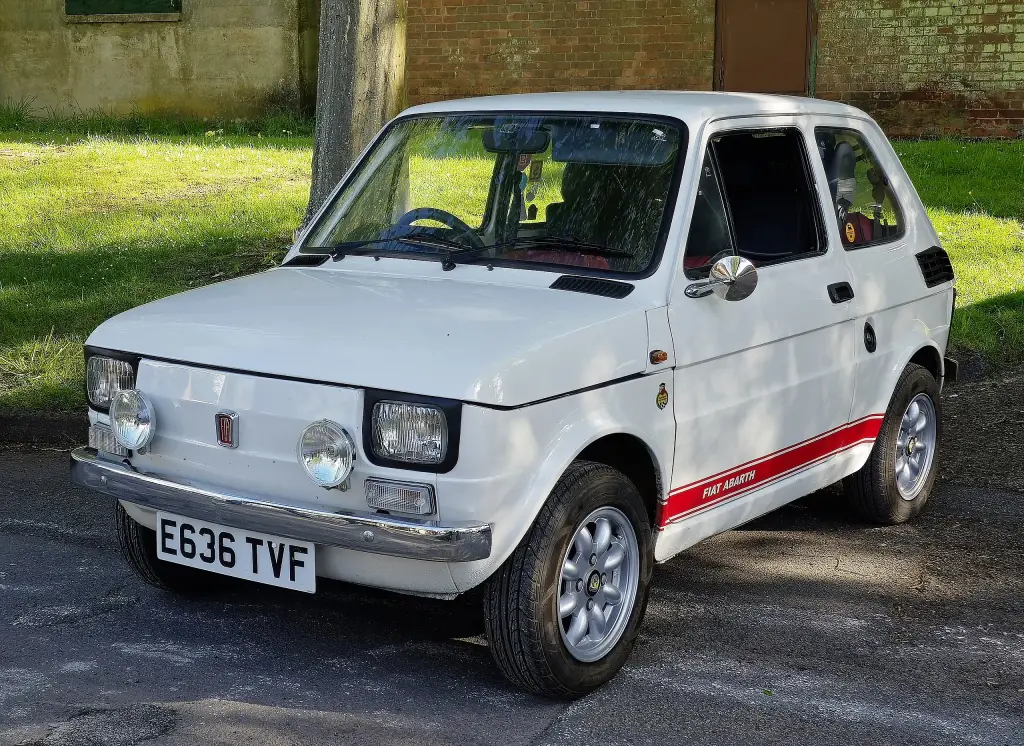
The Polski Fiat 126p was the Polish-built version of the Fiat 126, assembled by FSM at Bielsko-Biała and Tychy between 1973 and 2000. Cheap, simple and easy to repair, it became the most common car on Polish roads in the 1980s and earned the nickname by which the whole nation knew it: Maluch, “the little one”.
Polski Fiat 126p at a glance
| Maker | FSM, Bielsko-Biała and Tychy; Fiat Auto Poland from 1992 |
|---|---|
| Licence agreement | signed with Fiat on 29 October 1971 |
| Production | 6 June 1973 – 22 September 2000 |
| Layout | rear engine, rear-wheel drive, four-speed manual |
| Engine | 594 cm³ air-cooled twin, 23 hp; 652 cm³ from 1977 |
| Built in Poland | 3,318,674 (1,152,325 in Bielsko-Biała, 2,166,349 in Tychy) |
| Exported | 897,316 cars between 1975 and 1992 |
| Price in 1973 | 69,000 zł |
| Facelifts | 126p FL in 1984, 126 EL in 1994 |
| 126 BIS | 1987–1991, 704 cm³ water-cooled, 190,361 built |
| 126p Cabrio | 1991–1995, 507 built |
| Official name | Maluch, from 1997 |
The English article covers the Fiat 126 as a whole; the Polish one has the detailed figures for production in Poland, and this page follows the Polish-built car.
History of the Polski Fiat 126p
At the end of the 1960s Poland began looking for a licence to build a popular small car. Fiat offered two models, the front-wheel-drive 127 and the rear-engined 126; the Polish side chose the 126, partly because Fiat agreed to be paid in complete drivetrains and cars, and because the 127 would have cost 20 to 25 per cent more to produce. The foreign trade enterprise Pol-Mot signed the technical and licence agreement on 29 October 1971: it provided for payment with 820,000 drivetrains for cars built in Italy and 50,000 cars for Fiat’s dealer network. On 1 January 1972 the Wytwórnia Sprzętu Mechanicznego in Bielsko-Biała became Fabryka Samochodów Małolitrażowych, FSM.
From pre-payments to the first cars
On 5 February 1973 the PKO bank began taking pre-payments for the Polski Fiat 126p at a price of 69,000 zł, when the average wage in Poland was between 3,000 and 4,000 zł a month; the first owners were to receive their cars in 1977 or earlier by drawing lots. The first 126p, assembled from Italian parts, was built at FSM on 6 June 1973, and official production started on 22 July. The first cars reached Polish customers in the summer of 1973, and on the informal car markets prices rose to 110,000 zł.
The Maluch and its facelifts
At first the Polish car was almost identical to the Italian original: it had a higher chassis, a modified grille at the back and orange front indicator lenses instead of white ones, and the letter “p” was added to the name to tell it apart from the Fiat. Through the 1980s the 126p was modified continuously, receiving better brakes and new wheels from Fiat, hazard warning lights, and in 1984 a facelift with plastic bumpers on all versions and a new dashboard, sold as the 126p FL. In 1985 a rear fog light and a reversing light were built into the rear bumper, electronic ignition arrived and an alternator replaced the undersized generator around 1987. In 1994 came a second facelift, the 126 EL, with some parts from the Cinquecento; the 126 ELX added a catalytic converter.
The factory battery had a capacity of 35 amp-hours and, because of the small generator, was only fully charged after a long drive; fitting the 45 amp-hour battery of the Fiat 125p improved cold starting. Cheap and simple enough to be repaired at home, the 126p was also criticised for weak performance, poor brakes and very little usable space. It was exported to many Eastern Bloc countries and for years was one of the most popular cars in Poland and in Hungary, and between 1989 and 1992 it was sold in Australia as the FSM Niki.
The BIS, the Cabrio and the end
In 1987 FSM began building the 126 BIS, a three-door hatchback with a horizontally mounted, water-cooled 704 cm³ flat-twin of Polish construction and 19 kW, which opened up cargo space behind the rear seats; 190,361 were built in Tychy until 1991, while production of the original car continued for the Polish market. Between 1991 and 1995 a two-door 126p Cabrio was also made, 507 in all. The Maluch nickname became so popular that in 1997 the manufacturer adopted it as the official name of the car, with Maluch badges on the rear. Production ended on 22 September 2000, after 3,318,674 cars had been built in Poland out of a worldwide total of 4,671,586 Fiat 126s.
Design and features
- Rear-mounted air-cooled engine: a 594 cm³ twin of 23 hp, enlarged to 652 cm³ at the end of 1977.
- Simple construction: the car could be maintained and repaired by its owner, one reason for its popularity.
- Low price: at 69,000 zł in 1973 it was the cheapest car on the Polish market.
- Constant development: better brakes, hazard lights, plastic bumpers, electronic ignition and finally Cinquecento parts.
- Official nickname: from 1997 the car was sold as the Maluch, the name Poles had used for years.
Polski Fiat 126p versions
- 126p (1973–1984): the original car with the air-cooled engine and the first detail changes.
- 126p FL (1984–1994): plastic bumpers, new dashboard, rear fog and reversing lights, electronic ignition.
- 126 BIS (1987–1991): hatchback with a water-cooled 704 cm³ flat-twin, built in Tychy.
- 126p Cabrio (1991–1995): two-door convertible, 507 built.
- 126 EL / ELX (1994–2000): second facelift with Cinquecento parts, the ELX with a catalytic converter.
- FSM Niki (1989–1992): the Australian market version of the 126p.
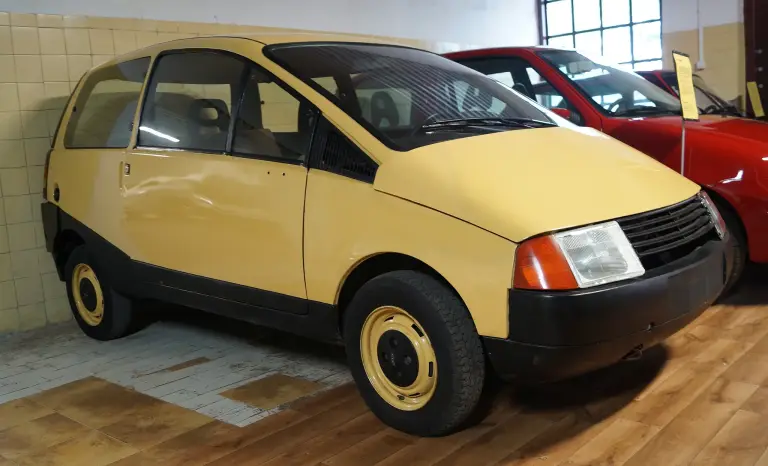
The 126p was the car FSM built instead of its own Beskid prototype, and it stayed in production until the Cinquecento took over. More Polish cars are in the FSM collection.
Sources
- Fiat 126, English Wikipedia: Polish production, facelifts, BIS, exports
- Fiat 126, Polish Wikipedia: licence talks, prices, production figures, versions