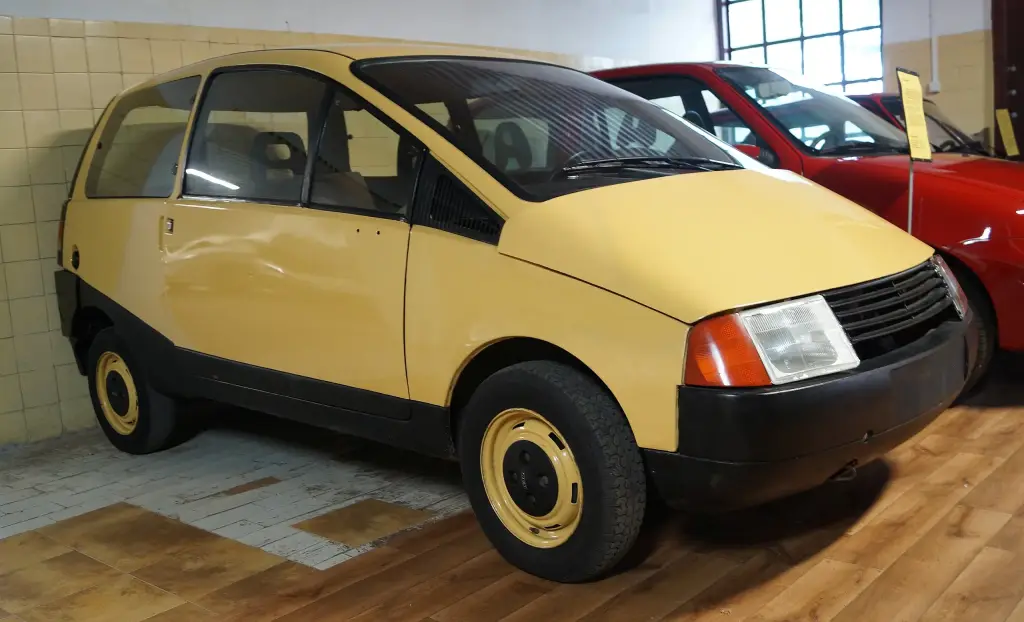
The FSM Beskid 106 was a small Polish hatchback that never reached the showroom. Designed at the BOSMAL research institute in Bielsko-Biała in the early 1980s, it achieved a drag coefficient of 0.29 and was ready for production on paper, but economic and political conditions kept it at the prototype stage.
FSM Beskid 106 at a glance
| Maker | BOSMAL research institute of FSM, Bielsko-Biała, Poland |
|---|---|
| Designed | 1981–1986 |
| Design team | led by Wiesław Wiatrak; body styling by Krzysztof Meisner |
| First prototype shown | 1983 |
| Body | one-box hatchback, front-wheel drive |
| Drag coefficient | Cx = 0.29 |
| Fuel consumption | 3.9 l/100 km at 90 km/h; 4.6 l/100 km at 120 km/h |
| Engine | 594 cm³, water-cooled, 20.6 kW at 5,500 rpm |
| 1987 version | 3.5 m long, Polish Fiat 126 Bis engine |
| Production mock-up | 1991, partly unified with the Cinquecento |
| Built | 7 prototypes; 6 survive |
Both the English and the Polish Wikipedia articles on the Beskid are short; this page uses them together.
History of the FSM Beskid 106
Work on the Beskid began in 1981, when a design team under engineer Wiesław Wiatrak started construction studies on what became the Beskid 106. The body was styled by Krzysztof Meisner of the Academy of Fine Arts in Warsaw, working with Janusz Piechna of Warsaw University of Technology, who was responsible for the aerodynamics. Their first one-box body study, named MePi after the two designers, was tested in the wind tunnel of the university’s Institute of Aeronautics and Applied Mechanics.
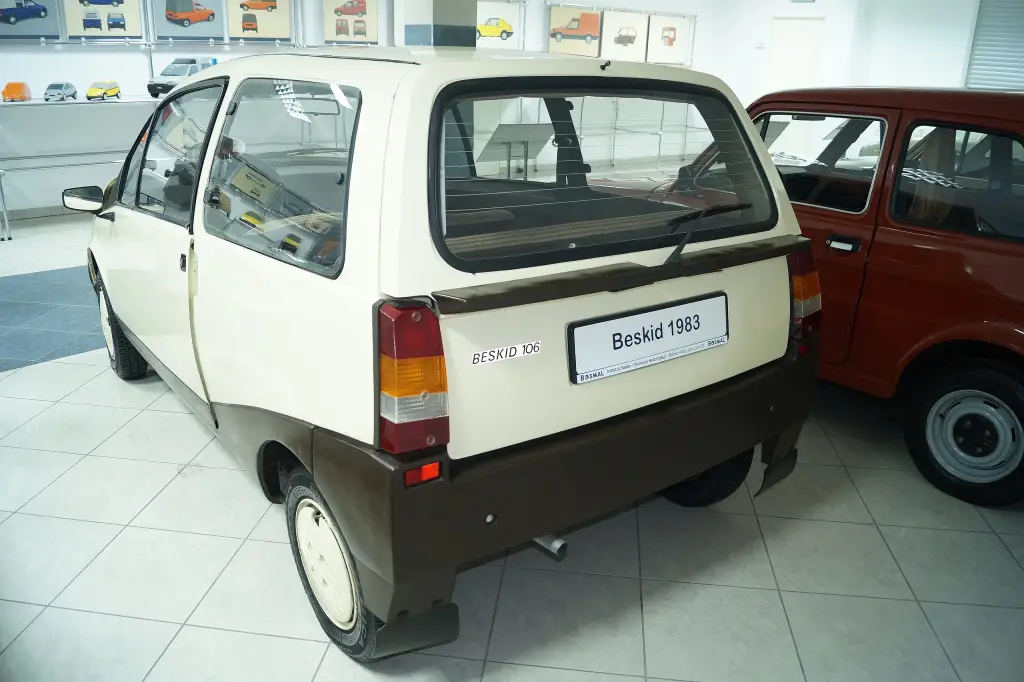
Construction drawings were ready in 1982 and the first prototype was built over ten months, being presented in 1983. The shape was unusually efficient for a small car of the period: a drag coefficient of 0.29 helped the Beskid to use 3.9 litres of fuel per 100 km at a steady 90 km/h and 4.6 litres at 120 km/h. Initially the car was fitted with a water-cooled 594 cm³ engine producing 20.6 kW at 5,500 rpm.
A second version and a production mock-up
In 1987 a further Beskid was built, 3.5 metres long and powered by the engine of the Polski Fiat 126 Bis. Four years later, in 1991, the team produced a mock-up of a theoretical production version, partly unified in its exterior with the Fiat Cinquecento; the work by the BOSMAL engineers and the artists of the Kraków Academy of Fine Arts concentrated mainly on the interior. In the 1980s there had also been cooperation with FSO, and the plan at one point was to use the platform and engines of the FSO Wars.
Why it was never built
Serial production was never started for economic and political reasons. It has also been suggested that the Beskid was in fact a back-up in case the licensing talks failed, and that in the end the Fiat Cinquecento was the car produced at FSM. Altogether seven prototypes were made: one was destroyed in a crash test and the other six went through road trials. After 1989 the authorities ordered the prototypes to be scrapped, but the engineers did not carry out the instruction, and the documentation, which had been destroyed earlier to make room for the licensed Cinquecento, is gone.
The body style was patented, but BOSMAL lacked the funds to extend the patent. The name of the car comes from the Beskid mountains. Six cars survive today: a yellow one in the Museum of Technology in Warsaw, a white and a green one in the Museum of Municipal Engineering in Kraków, a white one at Opole University of Technology, a green one in the Museum of Technology and Transport in Szczecin, and a cream car in the BOSMAL museum in Bielsko-Biała. Wiesław Wiatrak used a Beskid as his daily car for years before passing it to a museum in Kraków.
Design and features
- Aerodynamic body: a drag coefficient of 0.29, measured in the wind tunnel of Warsaw University of Technology.
- Low fuel consumption: 3.9 l/100 km at 90 km/h was remarkable for a Polish small car of the early 1980s.
- One-box layout: the whole body was shaped as a single volume, with the styling credited to Krzysztof Meisner.
- Water-cooled engine: the first cars used a 594 cm³ unit of 20.6 kW, later replaced by the 126 Bis engine.
- Patented shape: the body design was protected, though the institute could not afford to renew the patent.
FSM Beskid 106 versions
- MePi study: the first body model, named after its two designers and tested in the wind tunnel.
- Beskid 106 (1983): the first running prototype with the 594 cm³ water-cooled engine.
- Beskid 1987: a 3.5-metre car using the engine of the Polski Fiat 126 Bis.
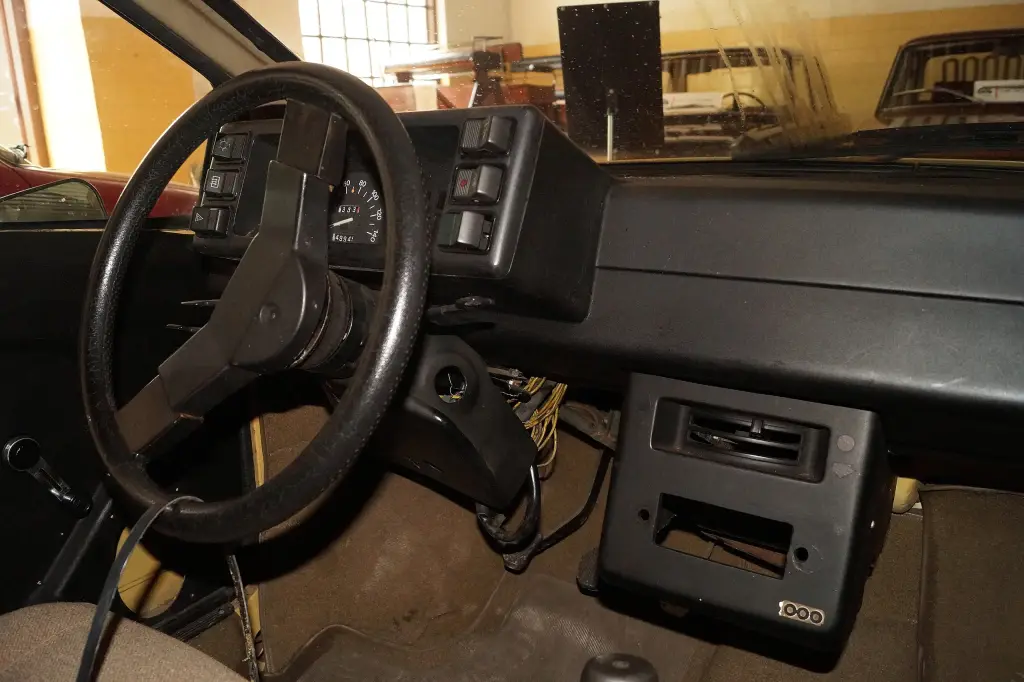
- Production mock-up (1991): a static study partly unified with the Cinquecento, focused on the interior.
The Beskid was meant to replace cars like the Polski Fiat 126p, the model FSM actually built in large numbers. More Polish cars are in the FSM collection.
Sources
- FSM Beskid, English Wikipedia: design dates, prototypes, surviving cars
- FSM Beskid, Polish Wikipedia: design team, aerodynamics, engines, history