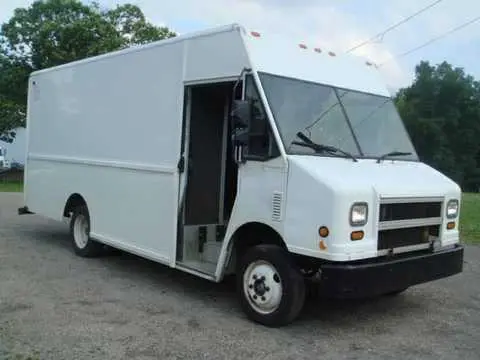
The Freightliner MT series, made up of the MT35, MT45 and MT55, belongs to the family of step vans: commercial vehicles designed to make many stops in a day, with the cargo in the rear easy to reach. Freightliner Trucks is one of the long-standing makers of the type, and its MT chassis are a common sight on parcel and bakery routes in North America.
Freightliner MT Series at a glance
| Type | multi-stop truck, also called step van or walk-in van |
|---|---|
| Models | MT35, MT45, MT55 |
| Layout | walk-in body on a commercial truck chassis |
| First walk-in truck | Pak-Age-Car, 1925, in production 1926 |
| Access | low load floor, exit on either side |
| Typical use | parcel delivery, bakery, mail, food trucks, utility |
| Makers today | Morgan Olson, Utilimaster, Workhorse, Freightliner, International, Ford, GM |
| Driveline trend | increasingly electric in the 21st century |
based on one source; the source page describes the step van class rather than the MT models individually
History of the Freightliner MT Series
What a step van is
A multi-stop truck, also called a step van, walk-in van, walk-thru van, delivery van or bread truck, is a commercial vehicle built to make multiple deliveries or stops with easy access to the cargo carried at the back. The type first appeared in the United States in the 1920s, and such trucks are normally run as fleet vehicles by businesses working in their own local area. Freightliner Trucks is listed among the former and current makers of multi-stop trucks, together with Morgan Olson, Utilimaster, Workhorse, International, Ford, General Motors, International Harvester, Flxible, Pak-Age-Car, Gerstenslager and Divco.
From mechanical horses to parcel fleets
The first walk-in truck is generally taken to be the Pak-Age-Car, which appeared in 1925 and went into production in 1926. Two Chicago men, Oldfield and Rollston, developed it as a direct replacement for the horse, and the Divco followed into production later the same year. Those early vehicles were low-powered, built for last-mile deliveries and often marketed as mechanical horses; White’s version was even called the White Horse. Ease of access was the point: load floors are low, the driver can step out on either side, and early versions were often designed to be driven standing up. Delivering bread was such a common job that the type is still nicknamed the bread truck.
How they are built
Step vans usually use commercial truck chassis with a body that is larger and taller than the cab, sometimes on a longer or shorter wheelbase. They were traditionally powered by internal combustion engines, but through the 21st century many have moved to electric truck platforms. Besides parcel delivery they serve as general utility vehicles, mail trucks, moving vans, aerial work platforms, food trucks, ice cream vans, milk floats, canteens and bookmobiles, and emergency services use them as mobile command centres, police vans and SWAT vehicles. The type is common in North America; in Europe and Asia panel vans, light commercial vehicles and box trucks usually do the same work.
Design and features
- Walk-in cab: the driver steps in and out on either side without a door sill in the way.
- Low load floor: designed for frequent stops with heavy parcels.
- Big body, small cab: a tall body on a commercial truck chassis carries far more than a panel van.
- Electric future: many new step vans use battery-electric platforms.
Freightliner MT Series versions
- MT35: the smallest of the Freightliner walk-in vans.
- MT45: the mid-range chassis, widely used by parcel fleets.
- MT55: the largest of the three.
- Body makers: bodies come from outside suppliers such as Utilimaster and Morgan Olson.
- Special bodies: food trucks, mobile command centres and utility bodies on the same chassis.
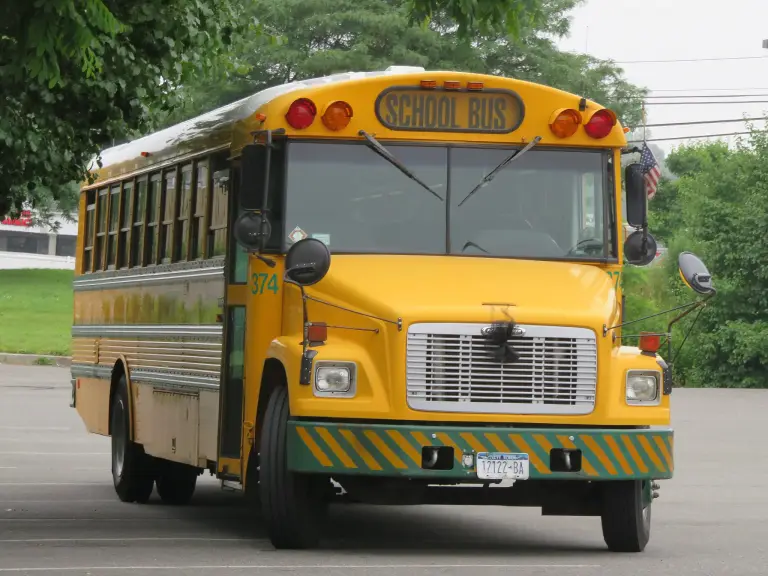
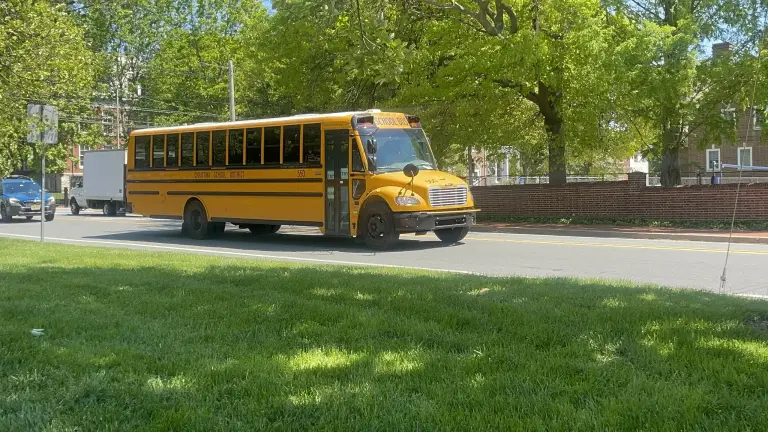
Freightliner also builds the Business Class M2 for medium-duty work and the FS-65 and C2 for school buses. More vehicles are in the Freightliner collection.
Sources
- Multi-stop truck, English Wikipedia: step van history, layout and makers