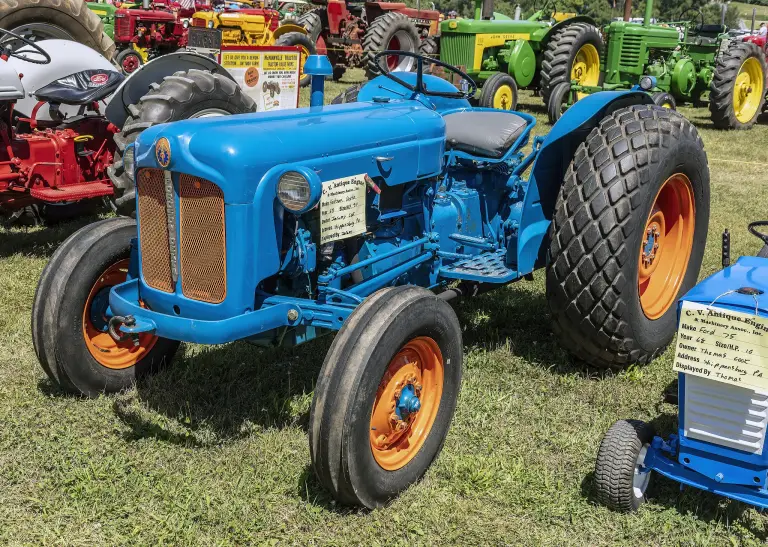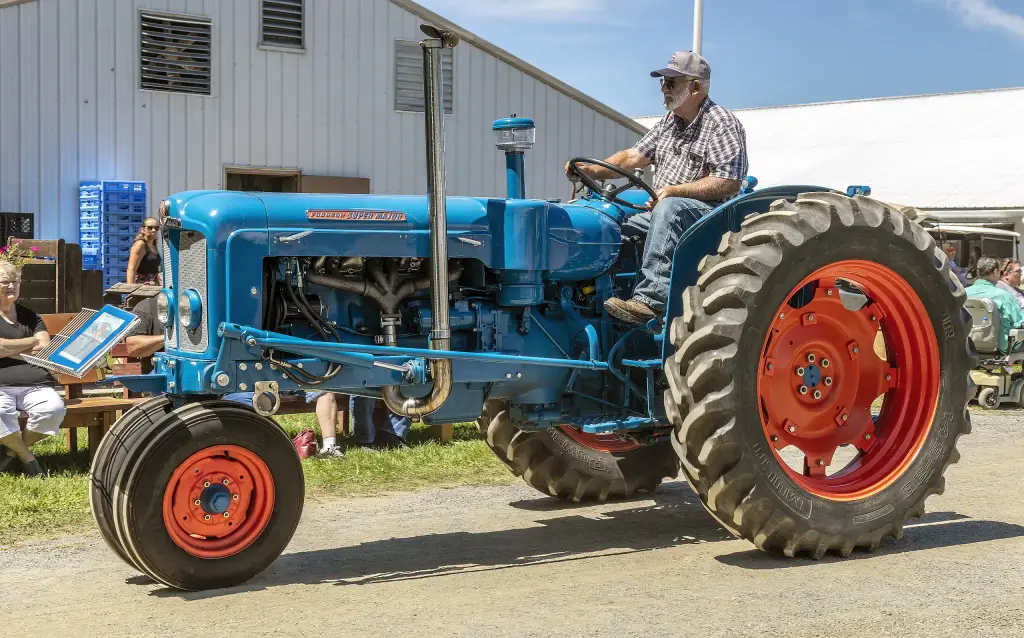
The Fordson Major, known as the New Major or E1A, replaced the E27N in 1952. It was the first Fordson with a new Ford engine range of its own, and it developed through the Power Major of 1958 into the Super Major of 1960, which stayed in production until 1964.
Fordson Major at a glance
| Maker | Ford Motor Company Ltd, Dagenham |
|---|---|
| Production | 1952–1964 |
| Model name | New Major, E1A |
| Engine | Ford 4D, diesel, petrol or petrol/kerosene |
| Engine production | designed and built in the UK at Dagenham |
| Transmission | six-speed, modified from the E27N |
| Driving position | lower than the E27N |
| Power Major | 1958, 51.8 hp |
| Power Major updates | improved transmission, live-drive hydraulics |
| Super Major | 1960, weight transfer system and differential lock |
| End of production | 1964 |
| Export | to the USA, badged as Ford |
The Major is covered in the E1A section of the English Wikipedia article on the Fordson brand; no separate article exists. This page is based on that single source.
History of the Fordson Major
Post-war shortages delayed an entirely new Fordson, so the E27N stayed in production while Ford developed its replacement. The New Major entered production in 1952 with a new Ford engine range. The 4D engine was designed and manufactured in the UK at Dagenham and could be had as a diesel, a petrol or a petrol/kerosene unit. The tractor used a six-speed modified version of the E27N transmission, and the driver sat significantly lower than before. That lower seat earned the older E27N the nickname “High Major”.
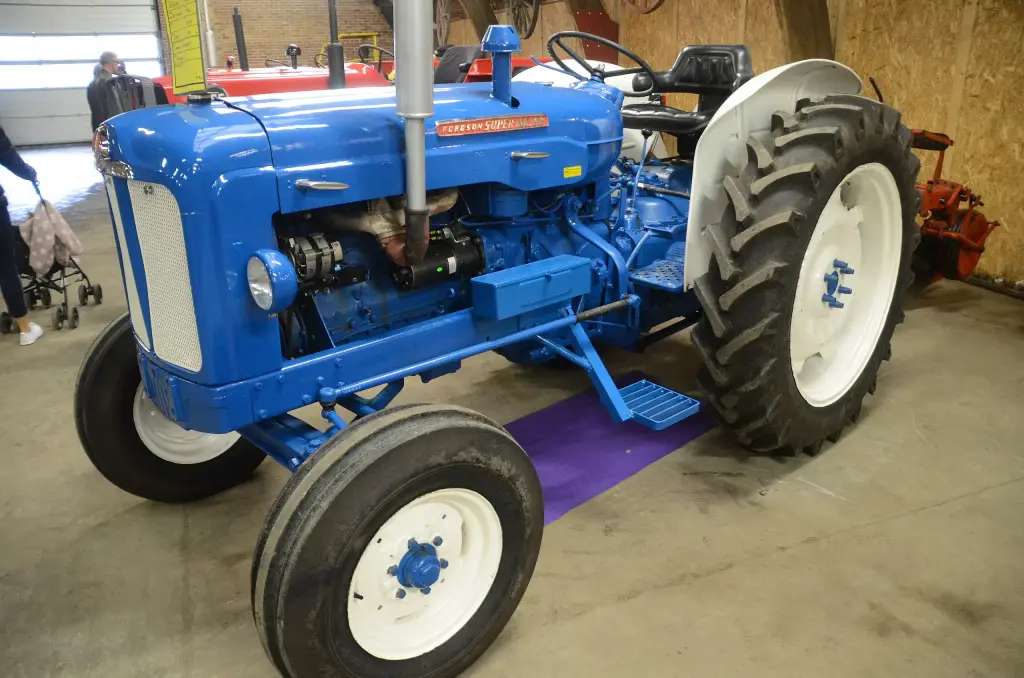
In 1958 Ford introduced the Power Major with 51.8 hp, an improved transmission and live-drive hydraulics, which let the linkage be operated while the tractor was moving. The final development, the Super Major, arrived in 1960 with a weight transfer system and a differential lock. It remained in production until 1964, when the Fordson name was dropped and Ford tractors were badged simply as Fords in both Britain and the United States.
A Ford engine at last
The New Major was significant because it no longer depended on the pre-war engine carried over from the Model N. The 4D was a modern Ford design built at Dagenham, and the choice of diesel, petrol or petrol/kerosene let dealers suit different markets. The six-speed gearbox was also a step up from the three-speed transmission of the early Fordsons, giving a wider spread of speeds for ploughing, cultivation and road work.
The Major was exported to the United States, the first British-built Fordsons sent there since 1939, and they were sold there under the Ford badge. The line ran from the New Major through the Power Major to the Super Major, with the same basic tractor underneath.
Design and features
- New Ford 4D engine: available as diesel, petrol or petrol/kerosene, designed and built at Dagenham.
- Six-speed gearbox: a modified E27N transmission with more speeds than the old three-speed.
- Lower driving position: a more comfortable layout than the E27N, which became the High Major.
- Live-drive hydraulics: introduced on the Power Major, allowing linkage work on the move.
- Super Major equipment: weight transfer and a differential lock for better traction.
Fordson Major versions
- New Major E1A (1952–1958): the original model with the Ford 4D engine.
- Power Major (1958–1960): 51.8 hp, improved transmission and live-drive hydraulics.
- Super Major (1960–1964): weight transfer system and differential lock.
- Petrol and petrol/kerosene versions: offered alongside the diesel.
- US-market tractors: exported and badged as Fords.
The Major replaced the Fordson E27N and was joined by the smaller Fordson Dexta . The earlier Fordson Model N is also covered. More Fordsons are in the Fordson collection.
Video: Fordson Power Major
Video on YouTube.
Sources
- Fordson, English Wikipedia: E1A section, engines, Power and Super Major, export