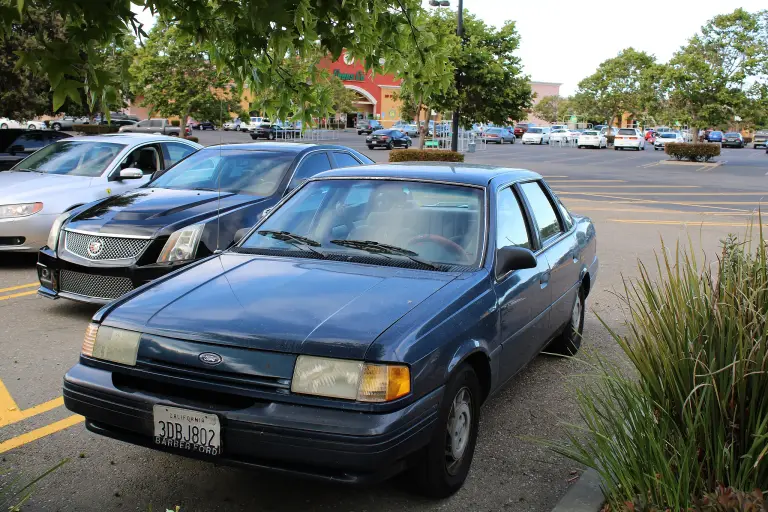
The Ford Taurus was an automobile manufactured and marketed by Ford in the United States from 1985 to 2019, with the Mercury Sable as its rebadged twin until 2009. The original car was a milestone as the first Ford designed and built using the statistical process control ideas Ford took from W. Edwards Deming.
Ford Taurus at a glance
| Maker | Ford Motor Company, Chicago Assembly |
|---|---|
| Production | 1985–2019 |
| Twin model | Mercury Sable, 1986–2009 |
| Quality method | statistical process control, after W. Edwards Deming |
| Performance version | Taurus SHO, 1988–1999 and 2009–2019 |
| Class | mid-size to 2007, then full-size |
| Platforms | DN5, DN101, D186, then the Volvo-based D3 |
| Bodies | four-door sedan, five-door estate to 2005 |
| Built | 7,519,919 cars to the 2007 withdrawal |
| Best seller | the best-selling car in the United States, 1992–1996 |
| Withdrawn | after the 2007 model year, production ended 27 October 2006 |
This page is based on English Wikipedia only.
History of the Ford Taurus
Deming and the quality culture
Between 1979 and 1982 Ford lost $3 billion, and in the spring of 1980 chairman Donald E. Peterson began a new team approach to design and manufacturing. Ford’s corporate quality director Larry Moore recruited the statistician W. Edwards Deming, who told Ford that management actions were responsible for 85 per cent of its problems in building better cars. Management took primary responsibility for quality and Ford adopted statistical process control across design and manufacture, and the Taurus was the first model to come out of that approach. Petersen wrote to Autoweek that the changes at Ford had their roots directly in Deming’s teachings.
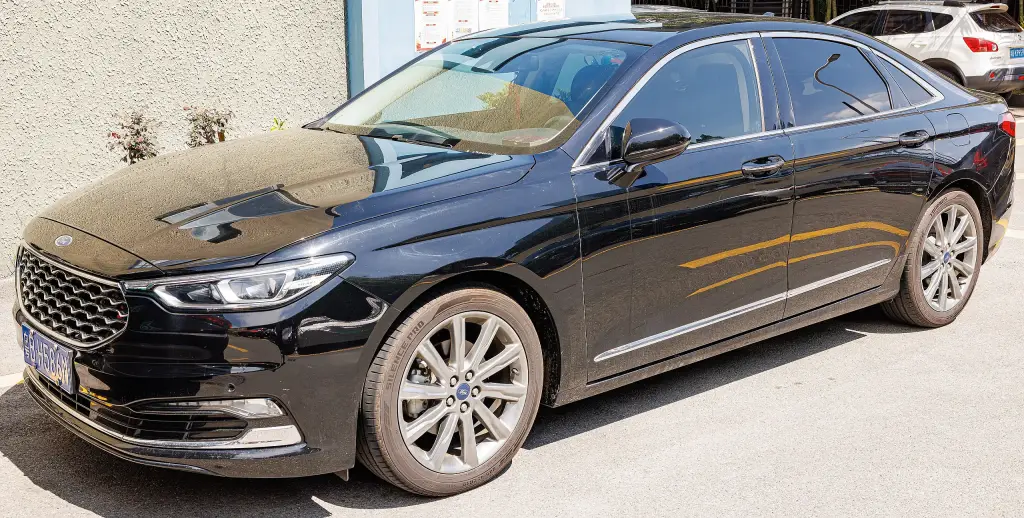
A design that mattered
The Taurus was a mid-size front-wheel-drive car with an influential design that introduced new features and innovations, and its high-performance version, the Taurus SHO, was built in four generations from 1988 to 1999 and from 2009 to 2019. It was sold as a four-door sedan throughout, with a five-door estate from 1986 to 2005, on the DN5 platform, renamed DN101 in 1995 and D186 in 1999. Between 1992 and 1996 the Taurus was the best-selling car nameplate in the United States, overtaken in 1997 by the Toyota Camry.
Withdrawal, revival and the end
In the late 1990s and early 2000s sales fell as Japanese mid-size sedans took market share and Ford moved resources to SUVs. The Taurus was withdrawn after the 2007 model year, production ending on 27 October 2006, when the Five Hundred and Fusion were to replace it and the Ford Freestyle replaced the wagon. At the 2007 Chicago Auto Show the Taurus and Sable names returned on 2008 revisions of the Five Hundred, and the Freestyle became the Taurus X. For 2010 Ford introduced the sixth-generation Taurus as a full-size car on the Volvo-derived D3 platform with front- or all-wheel drive, and in 2013 the Police Interceptor Sedan replaced the Crown Victoria in police service. All generations were built at Chicago Assembly, with Atlanta Assembly also producing them before its 2006 closure, and 7,519,919 were built from 1985 to the 2007 withdrawal.
Design and features
- Quality first: the first Ford built under Deming’s statistical methods.
- Influential design: a mid-size sedan that shaped American car styling.
- Taurus SHO: the high-performance version in four generations.
- Best seller: the top-selling car in America from 1992 to 1996.
Ford Taurus versions
- Taurus (1985): the original mid-size sedan and estate.
- Mercury Sable: the rebadged twin, sold until 2009.
- Taurus SHO (1988): the performance model.
- Five Hundred-based Taurus (2008): the revived nameplate.
- Taurus (2010): the sixth generation on the D3 platform.
- Police Interceptor Sedan (2013): the police version.
The Taurus replaced the LTD and later took over from the Five Hundred, sitting below the Crown Victoria in size. More Ford vehicles are in the Ford collection.
Sources
- Ford Taurus, English Wikipedia: quality programme, design, sales, withdrawal