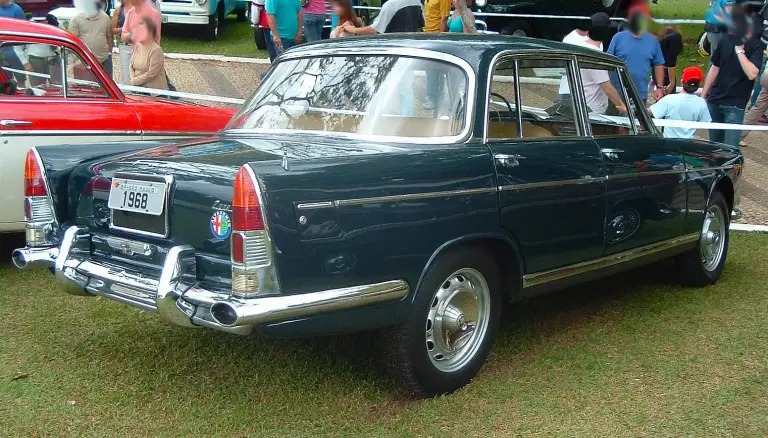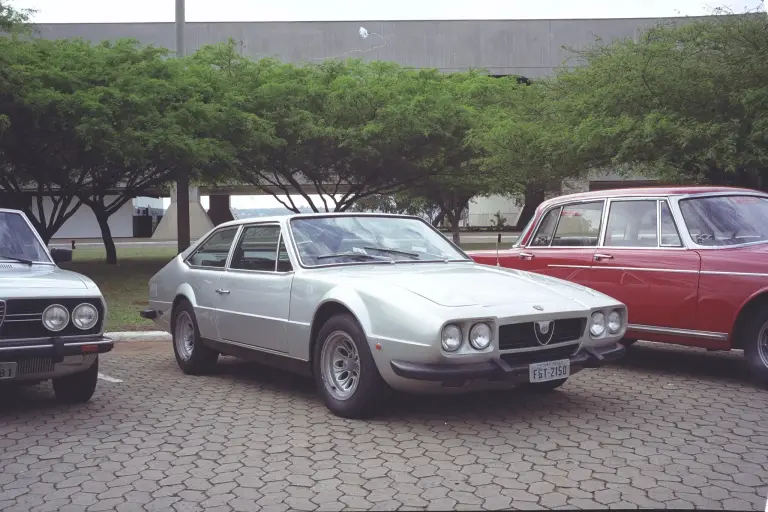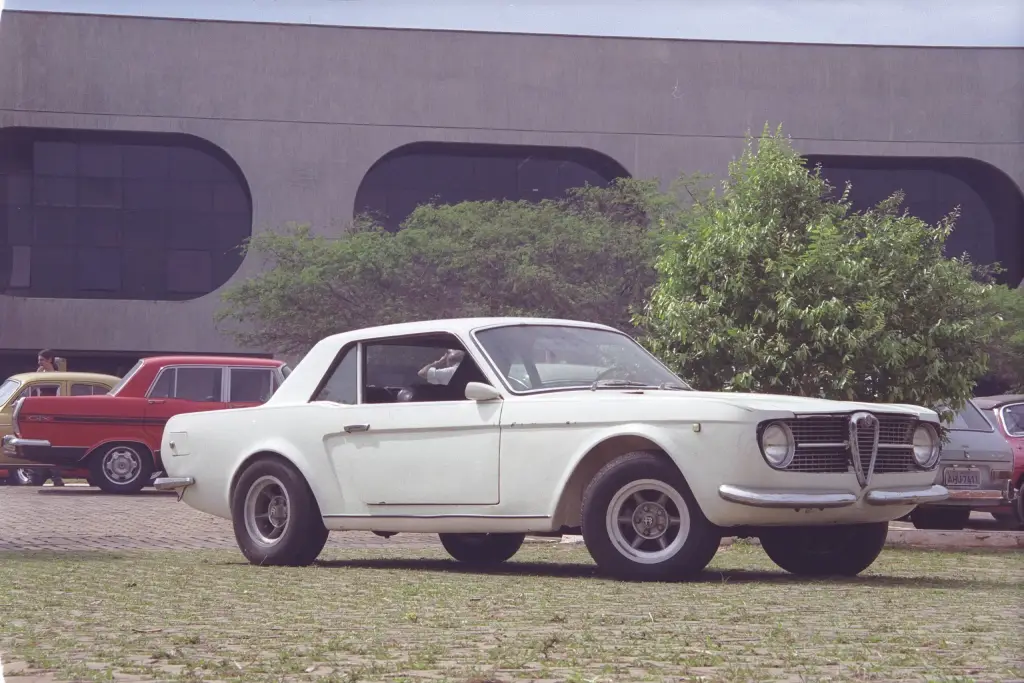
The FNM Onça (“Jaguar”) was the coupé version of the FNM 2000, offered from 1966. Unlike the saloon, which was a Brazilian-built Alfa Romeo 2000, the Onça did not follow the line of any Alfa Romeo design: its body was drawn in Brazil and unmistakably recalled the original Ford Mustang.
FNM Onça at a glance
| Maker | Fábrica Nacional de Motores (FNM), Xerém, Brazil |
|---|---|
| Production | from 1966 |
| Based on | FNM 2000 (Alfa Romeo Tipo 102 platform) |
| Body | two-door coupé |
| Engine | 1,975 cc twin-camshaft four, as in the FNM 2000 |
| Body design | locally designed, not an Alfa Romeo line |
| Styling | reminiscent of the original Ford Mustang |
| Name | onça, Portuguese for jaguar |
| Introduced with | FNM 2000 TiMB (1966) |
| Line replaced by | FNM 2150 (1969) |
based on one source: the Onça is described in a single paragraph of the English Wikipedia article on FNM, with a mention in the Portuguese article on the Alfa Romeo 2000.
History of the FNM Onça
A coupé for the 2000
The Onça arrived in 1966, six years after FNM had launched the 2000 saloon. In the same year the company also introduced the 2000 TiMB, the most powerful development of the four-door. Both were variations on the FNM 2000, itself a Brazilian version of the Alfa Romeo 2000.
Brazilian bodywork
The coupé was the one FNM car of the period that did not follow an Italian line. Its body was designed in Brazil, and the result was unmistakably reminiscent of the original Ford Mustang.
The end of the line
The Onça belonged to the FNM 2000 range that was replaced in 1969 by the FNM 2150, a restyled car with a larger 2,132 cc engine. FNM’s passenger cars ended in 1974 with the Alfa Romeo 2300; the company’s commercial vehicle business had already passed to Fiat’s industrial vehicle division in 1973.
Design and features
- Local design: the only FNM car of the period whose body did not follow an Alfa Romeo line.
- Mustang-inspired styling: a body unmistakably reminiscent of the original Ford Mustang.
- 2000 underpinnings: a coupé version of the FNM 2000 saloon.
- A jaguar’s name: onça is Portuguese for jaguar.
FNM Onça versions
- Onça coupé (1966): the standard two-door.
- FNM 2000 saloon: the four-door car it was based on.
- FNM 2000 TiMB (1966): the more powerful saloon introduced in the same year.
The saloon it was based on is described in the FNM 2000 article, and the later Bianco-designed coupé in FNM Fúria. More cars of the marque are in the FNM collection.
Sources
- Fábrica Nacional de Motores, English Wikipedia: the coupé, its design and place in the range
- Alfa Romeo 2000, Portuguese Wikipedia: 1966 introduction, later models
- Fábrica Nacional de Motores, Portuguese Wikipedia: company history