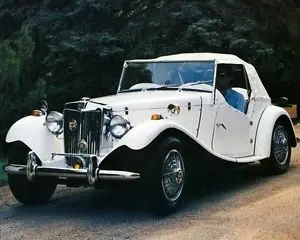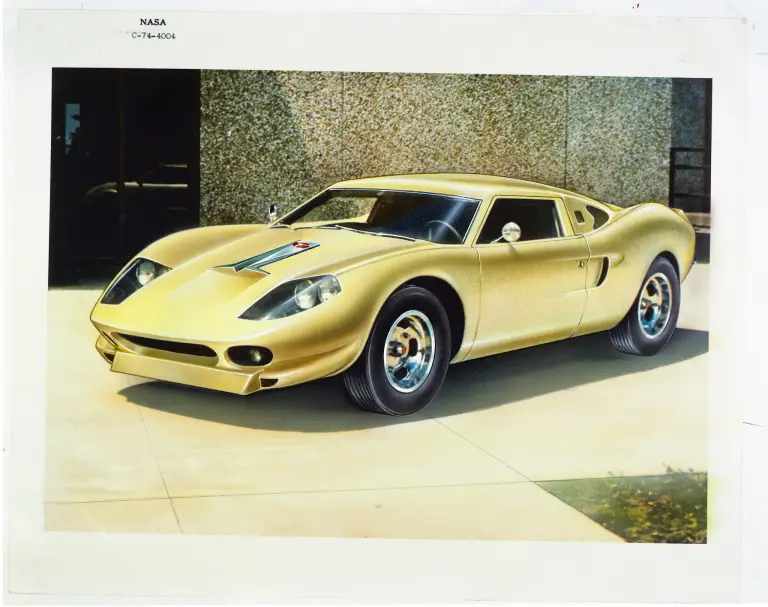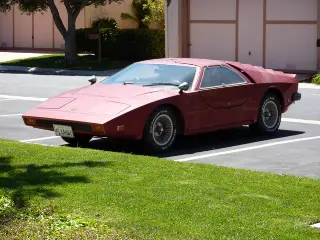
The Fiberfab Aztec was one of the complete glassfibre body kits that the Fiberfab Company launched within two years of its founding in Palo Alto in 1964. It had two single headlamps, and it was replaced in the range by the Avenger GT.
Fiberfab Aztec at a glance
| Maker | Fiberfab Company, Palo Alto, California |
|---|---|
| Company founded | 1964, by Bud Goodwin and John Hebler |
| Type | kit car: complete glassfibre body |
| Launched | within two years of 1964, with the Apache, Aztec II and Centurion |
| Headlamps | two single lamps |
| Second version | Aztec II |
| Successor | Avenger GT, called Aztec Avenger GT in some early documents |
| Company base later | Sunnyvale, then Fremont, California |
The Aztec has no article of its own and the English Wikipedia article on Fiberfab mentions it only in passing, so this page is short and based on one source.
History of the Fiberfab Aztec
Fiberfab was established in 1964 by Warren Harding “Bud” Goodwin and his partner John Hebler in Palo Alto, California. The company began with street-rod parts and body panels for Corvettes, Mustangs and Jaguars before moving on to complete bodies and kit cars. A Fiberfab employee who later became part owner, Noel Johnson, said that Goodwin had been impressed by the Devin body-kit concept but wanted a product that would be easier for an inexperienced home builder to assemble.
Within two years Fiberfab had launched several complete body kits, among them the Apache, the Aztec and Aztec II, and the Centurion. The Aztec was therefore part of the first generation of the company’s kits, at a time when the firm was still based in Palo Alto; in 1966 Fiberfab became a subsidiary of Velocidad Inc. and the works moved to Sunnyvale, where a new plant for the Valkyrie opened in Santa Clara in early January 1967.
The Aztec was eventually replaced by the Avenger GT, and the link between the two models survived in the paperwork: some of Fiberfab’s early documentation refers to the new car as the Aztec Avenger GT. The styling changed with the new model, most visibly at the front, where the Avenger GT carried quad headlamps instead of the two single lamps fitted to the Aztec. The name itself continued for a while in the Aztec II.
Fiberfab went through several owners after the 1960s, ending up as a division of the kit-car maker Classic Motor Carriages in 1983. In October 1978, under the ownership of A.T.R. Incorporated, the number of models was cut to three by dropping four product lines, the Avenger GT among them, which closed the chapter that had begun with the Aztec.
Design and features
- Twin headlamps: two single lamps, where the later Avenger GT had four.
- Complete body kit: one of the glassfibre bodies that took Fiberfab beyond parts and panels.
- Aimed at home builders: designed in the spirit of the Devin concept but easier for a first-time builder to assemble.
Fiberfab Aztec versions
- Aztec: the original body kit of the mid-1960s.
- Aztec II: the second version, listed alongside the Apache and Centurion.
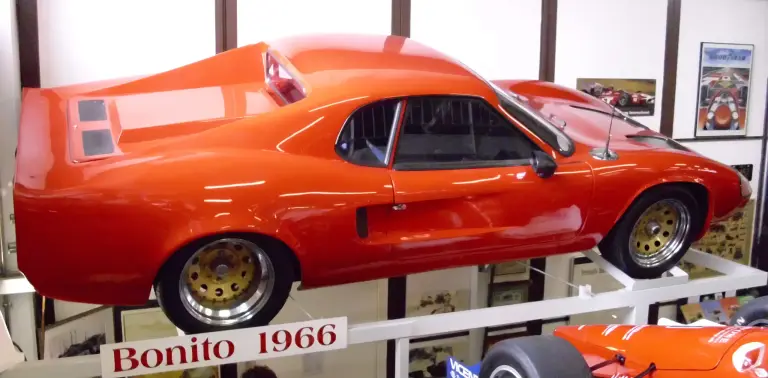
The model was replaced by the Fiberfab Avenger GT, and the Bonito was another Fiberfab kit of the same period. More cars from the maker are in the Fiberfab collection.
Sources
- Fiberfab, English Wikipedia: company history, first body kits, Aztec Avenger GT name, headlamps