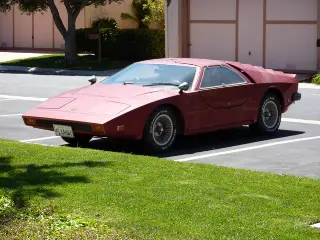
The Fiberfab Avenger GT was a glassfibre kit car shaped after the Ford GT40 and sold in the United States and Canada from late 1966 until 1978. A builder could mount the body on a Volkswagen Beetle floorpan as the GT-12 or on a custom chassis with Chevrolet Corvair running gear as the GT-15.
Fiberfab Avenger GT at a glance
| Maker | Fiberfab, Sunnyvale and Fremont, California |
|---|---|
| Production | late 1966–1978, twelve years |
| Type | kit car: glassfibre body for donor running gear |
| Body | two-door coupé in the style of the Ford GT40 Mk.I and Mk.III |
| Models | Avenger GT-12 and GT-15, later GT-12X and GT-15X |
| GT-12 chassis | Volkswagen Type 1 backbone, from a Beetle or Karmann Ghia |
| GT-12 engines | Volkswagen flat-four, or Porsche or Corvair units |
| GT-15 chassis | custom frame for Chevrolet Corvair components |
| GT-15 engine | rear-mounted Chevrolet Turbo-Air 6 |
| Windshield | second-generation Chevrolet Corvair, 1965–69 |
| Rear window | 1965 or 1966 Ford Mustang 2+2 Fastback |
| Weight of GT-12 | about 1,500 lb (680 kg) |
| Number built | in the thousands |
The Avenger GT has an article of its own in the English Wikipedia, which is the only text source used for this page.
History of the Fiberfab Avenger GT
The Avenger GT was designed in California and manufactured in the United States and Canada for twelve years, from late 1966 until 1978. In Fiberfab’s line-up it succeeded the Aztec, and some of the company’s early documentation calls it the Aztec Avenger GT. Its styling recalls the Ford GT40, the Mk.I and Mk.III cars in particular, without being an exact copy of the racing car. It was also the cheaper alternative to the Fiberfab Valkyrie, which looked like an Avenger GT with a short rear deck and used a custom chassis with room for a mid-mounted V8.
Fiberfab started producing Avenger GT kits in Sunnyvale, in Santa Clara County, California, in 1966, and moved to Fremont, California, in 1967. A facility in Bridgeville, Pennsylvania, supplied demand on the East Coast. A separate company, Fiberfab Canada Limited, was incorporated in Canada and after 1970 built long-door Avenger GT kits in Dauphin, Manitoba; the operation relocated to Winnipeg in 1971 and then to Ontario in 1974. Production of the Avenger GT ended in 1978, by which time the total number of kits made was in the thousands.
GT-12: the Volkswagen-based car
The GT-12 was designed to be built on a Volkswagen Type 1 backbone chassis from a Beetle or Karmann Ghia, adjusted for width where necessary. With the chassis came the donor car’s front suspension of upper and lower trailing arms, torsion leaf springs and telescopic shock absorbers, and a rear end with swing axles or semi-trailing arms, torsion bars and telescopic shocks. The original four-speed transaxle and four-cylinder air-cooled Volkswagen engine could be kept, but other options, including Porsche or Corvair engines, could be substituted. At roughly 1,500 lb (680 kg) the GT-12 weighed about 500 lb (227 kg) less than a standard Beetle.
GT-15: the Corvair-based car
The GT-15 was similar in appearance but sat on a custom chassis designed to accept suspension and drivetrain components from a Chevrolet Corvair. Installing a Corvair front sub-frame brought upper and lower A-arms with coil springs and telescopic shocks, with or without an anti-roll bar; at the rear was a semi-trailing arm suspension with coil springs and telescopic shocks. The standard rear-mounted Chevrolet Turbo-Air 6 engine drove through a three- or four-speed manual Chevrolet transaxle.
Body and detailing
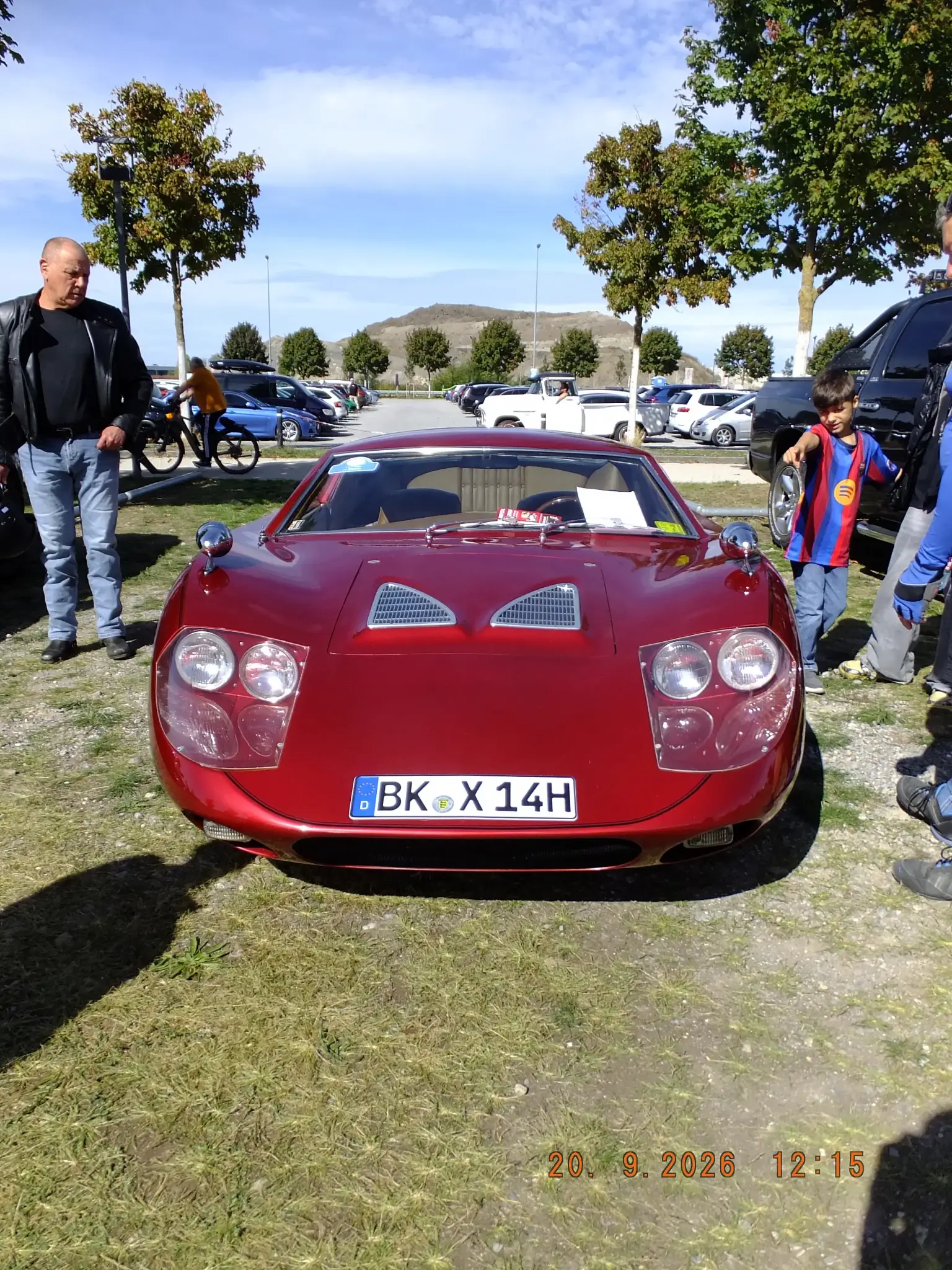
Instead of the two single lamps fitted to the Aztec, the Avenger GT had quad headlamps. Its tail section was longer than the Valkyrie’s so that it could cover the rear-mounted engine, which gave it an appearance closer to a GT40 Mk.III. The windshield is the standard unit from a second-generation (1965–69) Chevrolet Corvair, while the backlight comes from a 1965 or 1966 Ford Mustang 2+2 Fastback. For the side windows the original Fiberfab manuals described a wind-wing from a 1965 Mustang combined with door glass from a 1966 Ford LTD and a regulator from a Volkswagen Karmann Ghia; there was also a one-piece glass window supplied by Fiberfab, whose moulds have since been lost, and Plexiglas or Lexan windows were special-order items.
There are long-door and short-door cars. The short-door cars were built before 1970 and have a rocker panel below the door edge; the long door reaches all the way to the bottom of the body and is a little wider. The earliest models could be ordered with or without the GT40-style twin hood scoops, and the choice of taillamps was left to the builder, some of whom used early Mustang or Maverick units. Later cars were designated with an X and received minor body revisions, usually long-style doors, flared wheel arches and a front spoiler.
The NASA electric research car
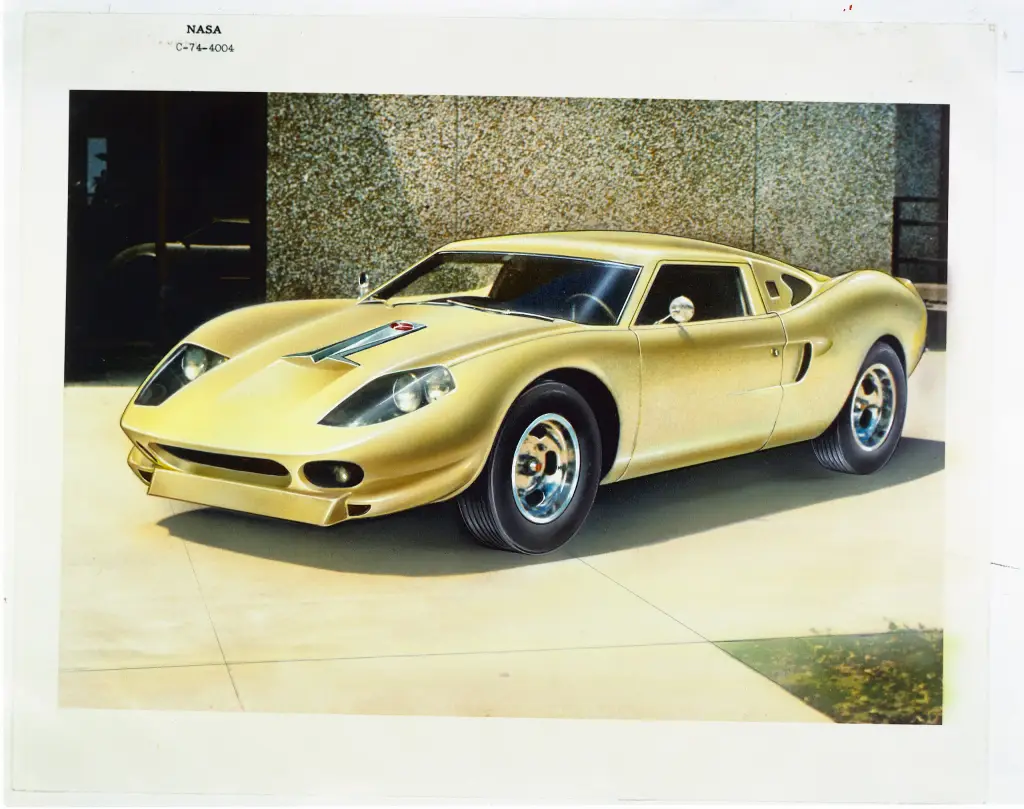
To test electric-vehicle propulsion systems on a special dynamometer called the Road Load Simulator, NASA commissioned a vehicle designed from the outset as an electric car. A custom ladder chassis with outriggers was built by the Electric Vehicle Engineering Co. of Boston, Massachusetts; the car was configured for front-wheel drive with running gear from Saab, and its body was a Fiberfab shell that appears to have been an Avenger GT.
Design and features
- GT40-inspired shape: a glassfibre coupé close in style to the Ford GT40 Mk.I and Mk.III, with a long tail covering a rear engine.
- Two ways to build it: the GT-12 on Volkswagen Beetle mechanicals, the GT-15 on a custom chassis for Chevrolet Corvair parts.
- Parts-bin engineering: a Corvair windshield, a Mustang fastback rear window and a mix of Mustang, Ford LTD and Karmann Ghia side-window parts.
- Light weight: about 1,500 lb for a GT-12, some 500 lb less than the Beetle it was based on.
- Builder’s choices: short or long doors, optional twin hood scoops and free choice of taillamps.
Fiberfab Avenger GT versions
- Avenger GT-12: Volkswagen Type 1 backbone chassis, Volkswagen, Porsche or Corvair engines.
- Avenger GT-15: custom chassis with Corvair front sub-frame and a rear Turbo-Air 6.
- GT-12X and GT-15X: later cars with long doors, flared arches and a front spoiler.
- Short-door cars (before 1970): a rocker panel below the door edge and a narrower door.
- NASA battery-electric vehicle: a one-off Fiberfab-bodied research car with front-wheel drive and Saab running gear.
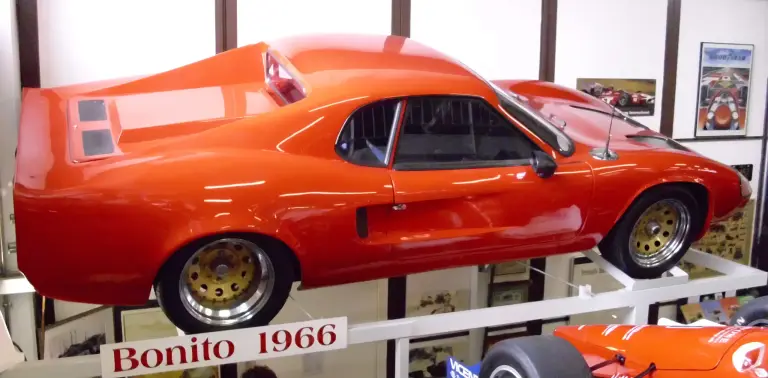
The Avenger GT replaced the Fiberfab Aztec, and the Bonito was another of the company’s glassfibre bodies. More cars from the same maker are in the Fiberfab collection.
Video: V8 Fiberfab Avenger project
Video on YouTube.
Sources
- Fiberfab Avenger GT, English Wikipedia: history, versions, body details, NASA car