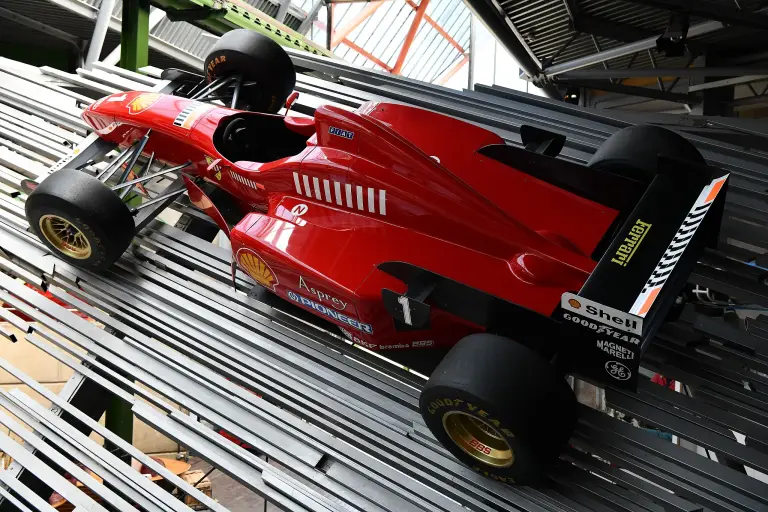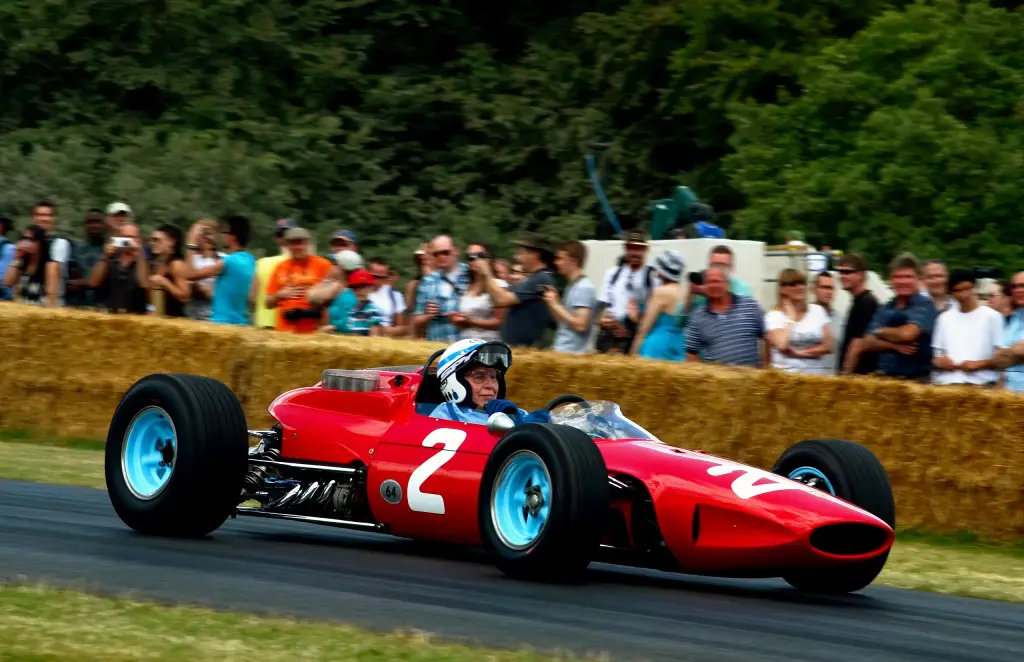
The Ferrari 158 was a Formula One racing car built by Ferrari in 1964 as the successor to the V6-powered Ferrari 156 F1. It was the first Ferrari Formula One car to use a monocoque chassis, and John Surtees drove it to his only Drivers’ World Championship.
Ferrari 158 at a glance
| Season | 1964 (also 1965) |
|---|---|
| Type | Formula One car |
| Engine | 1.5-litre V8 |
| Bore × stroke | 67.0 × 52.8 mm |
| Power, V8 | 210 PS (154 kW; 207 hp) at 11,000 rpm |
| Chassis | monocoque, a first for Ferrari in F1 |
| Predecessor | Ferrari 156 F1 (V6) |
| Flat-12 sister car | Ferrari 1512 / 512 F1 |
| 1512 engine | Tipo 207 flat-12, 1,489.63 cc |
| 1512 power | 220 PS (162 kW; 217 hp) at 12,000 rpm |
| 1512 chassis built | three (0007, 0008, 0009) |
| Title | 1964 Drivers’ Championship, John Surtees |
based on one source (English Wikipedia); the article is short because the source gives little more than the technical outline and the 1964 season.
History of the Ferrari 158
The 158 succeeded the V6-powered 156 F1 and was built around a 1.5-litre V8 with a bore and stroke of 67.0 by 52.8 mm, producing 210 PS at 11,000 rpm. Its most important novelty was structural: it was the first Ferrari Formula One car to use a monocoque chassis, following the British trend rather than the tubular frames Maranello had used before.
The 1964 title — and a white Ferrari
John Surtees drove the 158 to his only Formula One Drivers’ World Championship in 1964. Ferrari won that year’s championship competing in the last two races in cars painted not in the traditional Rosso corsa but in white and blue. The cars were entered by the factory-supported but unofficial NART team rather than by Scuderia Ferrari itself, as a protest over arguments between Ferrari and the Automobile Club d’Italia about the homologation of a new mid-engined Ferrari racing car.
The 1512 flat-12
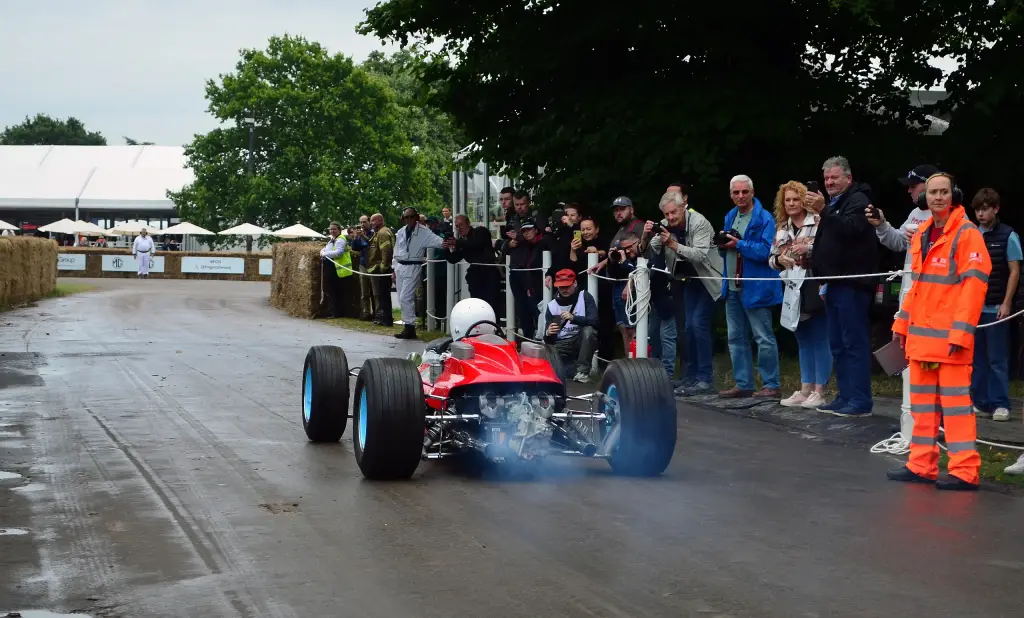
Ferrari also built a flat-12 powered Formula One car on the same chassis, designated Ferrari 1512 or Ferrari 512 F1. Its Tipo 207 engine, designed by Mauro Forghieri, displaced 1,489.63 cc with a bore and stroke of 56.0 by 50.4 mm and developed 220 PS at 12,000 rpm, against the 210 PS at 11,000 rpm of the 158’s V8. That made it one of the most powerful 1.5-litre Formula One engines, second only to Honda’s RA271 V12. A total of three 1512 chassis were produced, numbered 0007, 0008 and 0009.
The 1512, with its larger and more powerful engine, was intended to be competitive on the longest and fastest circuits of the season, such as Reims, Spa and Monza. There it complemented the lighter, nimbler V8-powered 158, which was more competitive on small, twisty tracks. The 1512 made its racing debut at the 1964 United States Grand Prix at Watkins Glen and raced alongside the 158 for the rest of 1964 and into 1965.
Design and features
- 1.5-litre V8: a compact eight-cylinder engine with a 67.0 by 52.8 mm bore and stroke, giving 210 PS at 11,000 rpm.
- Monocoque chassis: the first Ferrari Formula One car built this way, a break with the company’s tubular past.
- Two engines, one chassis: the same basic car could take either the V8 or the flat-12 used by the 1512.
- NART colours: the championship was clinched in white and blue rather than Ferrari red, as a political protest.
Ferrari 158 versions
- 158 (1964–1965): the V8 car, world champion with John Surtees in 1964.
- 1512 / 512 F1 (1964–1965): flat-12 version for fast circuits, three chassis built.
The 158 came after the V6-powered 156 F1 and shares its era with the 250 LM sports racer. More cars are in the Ferrari collection.
Video: 1964 John Surtees Ferrari 158
Video by Denis McCarthy on YouTube.
Sources
- Ferrari 158, English Wikipedia: engine, monocoque, 1964 title, 1512 details