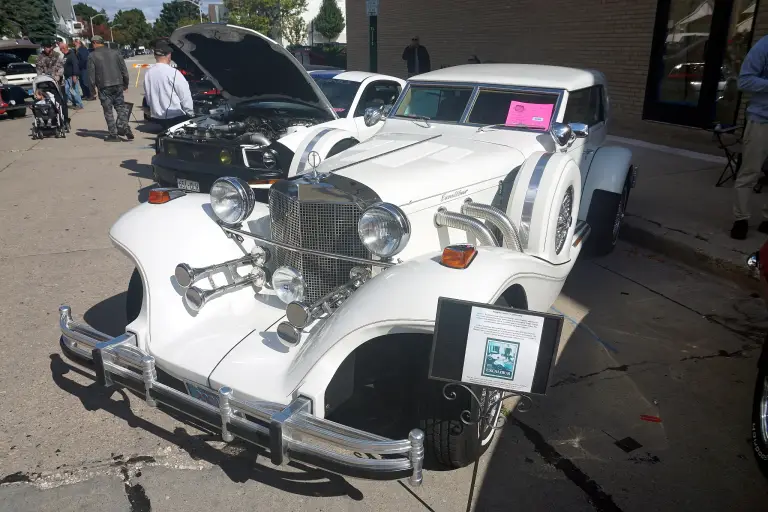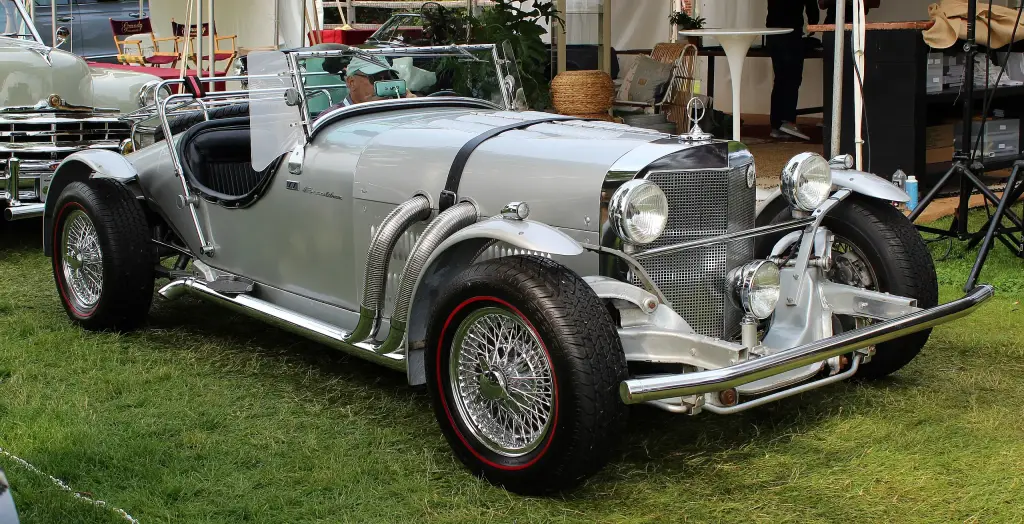
The Excalibur Series I was the production version of Brooks Stevens’ 1963 show car, a modern roadster in the style of the 1928 Mercedes-Benz SSK. Built from 1965 to 1969 and sold into 1970 from stock, it came as the Excalibur SS or the supercharged SSK, with a Chevrolet 327 V8 in Corvette tune.
Excalibur Series I at a glance
| Maker | Excalibur, Milwaukee, Wisconsin |
|---|---|
| Production | 1965–1969, sold into 1970 from stock |
| Designer | Brooks Stevens |
| Inspiration | 1928 Mercedes-Benz SSK |
| Bodies | SS roadster, supercharged SSK, four-seater Phaeton from 1966 |
| Chassis | Studebaker Lark, a batch of 400 cars |
| Engine | Chevrolet 327 V8, 300 hp (224 kW), Corvette tune |
| Weight | 2,100 lb (953 kg) |
| 0–60 mph | under six seconds |
| Top speed | 134 mph (216 km/h), projected |
| Rear axle | 3.31:1 |
| Total Excalibur production | over 3,500 cars, all built in Milwaukee |
Based on one source: the English Wikipedia article covers the whole Excalibur marque, and this page uses its Series I section.
History of the Excalibur Series I
1963: the prototype
The car began as a show prototype in 1963, mounted on a Studebaker Lark convertible chassis and powered by a 290 hp Studebaker 289 V8. Studebaker stopped building engines in December 1963 and moved all manufacturing to Hamilton, Ontario, which ended the supply of that engine. Brooks Stevens then obtained engines from General Motors through his friends at GM, Ed Cole and Semon “Bunkie” Knudsen.
1965: the Series I
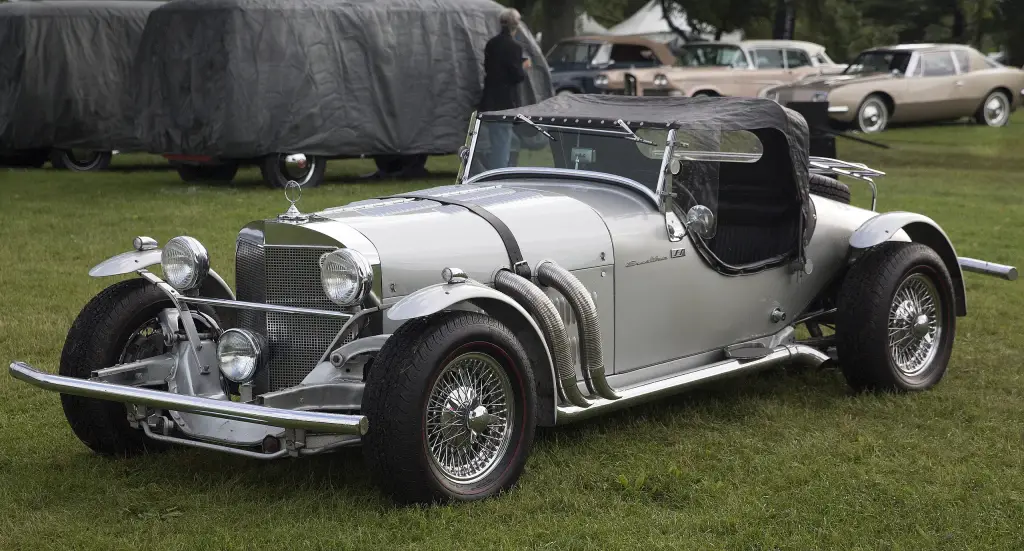
Series production began in 1965. The Series I used a batch of 400 Studebaker Lark chassis bought from the failing manufacturer, fitted with special bodywork. Power came from a Chevrolet 327 V8 in 300 hp Corvette tune. At 2,100 lb and with the standard 3.31:1 rear axle, the car reached 60 mph in less than six seconds, and the projected top speed was 134 mph.
Step-Over and Roadster
The first cars used the “Step-Over” design: no doors, and cycle fenders over the wheels. For 1966 Excalibur added a roadster with proper mudguards and running boards, and a four-seater Phaeton model. The Series I was part of the neoclassic wave of the 1960s–1990s, cars built in the style of the 1920s and 1930s; Zimmer and Tiffany were two other examples of the same idea.
After the Series I
The Series II that followed was longer and moved to Excalibur’s own ladder-frame chassis, but the idea stayed the same. Over 3,500 Excalibur cars were built, all in Milwaukee, Wisconsin, and the comedian Phyllis Diller owned four of them. The company failed in 1986 but was revived several times; series production continued until 1990 and the final Excalibur was built in 1997.
Design and features
- Neoclassic styling: a modern car dressed in the lines of the 1928 Mercedes-Benz SSK, the car that made the SSK name.
- Corvette power: the 327 V8 was rated at 300 hp in Corvette tune, enough for under six seconds to 60 mph.
- Light weight: at 2,100 lb the Series I was lighter than most American V8 cars of its day.
- Studebaker bones: the first cars were built on 400 Lark chassis bought from the failing Studebaker works.
- Open body: the early Step-Over had no doors and cycle fenders; the 1966 roadster added mudguards and running boards.
Excalibur Series I versions
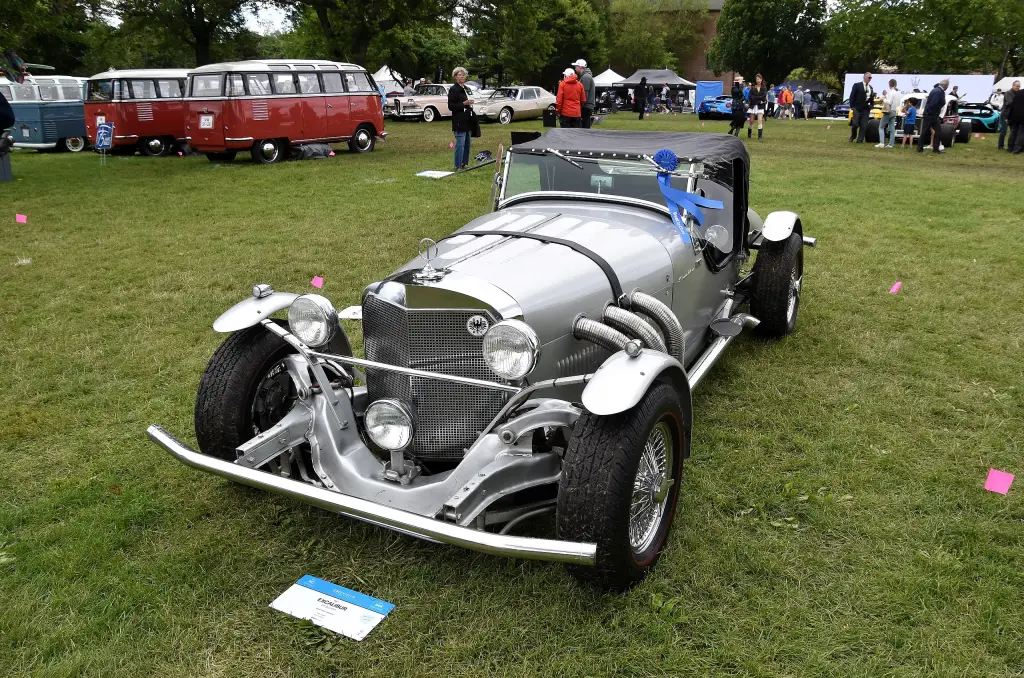
- Step-Over (1965): the first body, with no doors and cycle fenders.
- Excalibur SS: the standard Series I roadster with the 300 hp Chevrolet 327.
- Excalibur SSK: the supercharged version, the sportier of the two.
- Roadster (1966): proper mudguards and running boards instead of the Step-Over layout.
- Phaeton (1966): the four-seater body added to the range.
The four-door Excalibur Phaeton and Series III carried the same idea into the 1970s and 1980s. More cars are in the Excalibur collection.
Video: Excalibur Test Drive
Video on YouTube.
Sources
- Excalibur (automobile), English Wikipedia: Series I, engine, performance, production