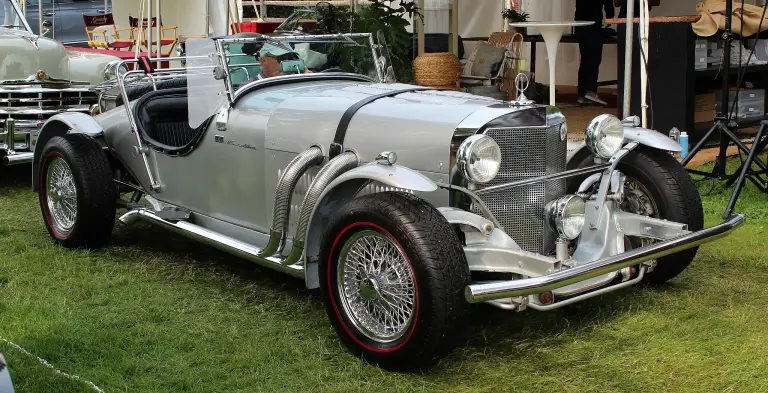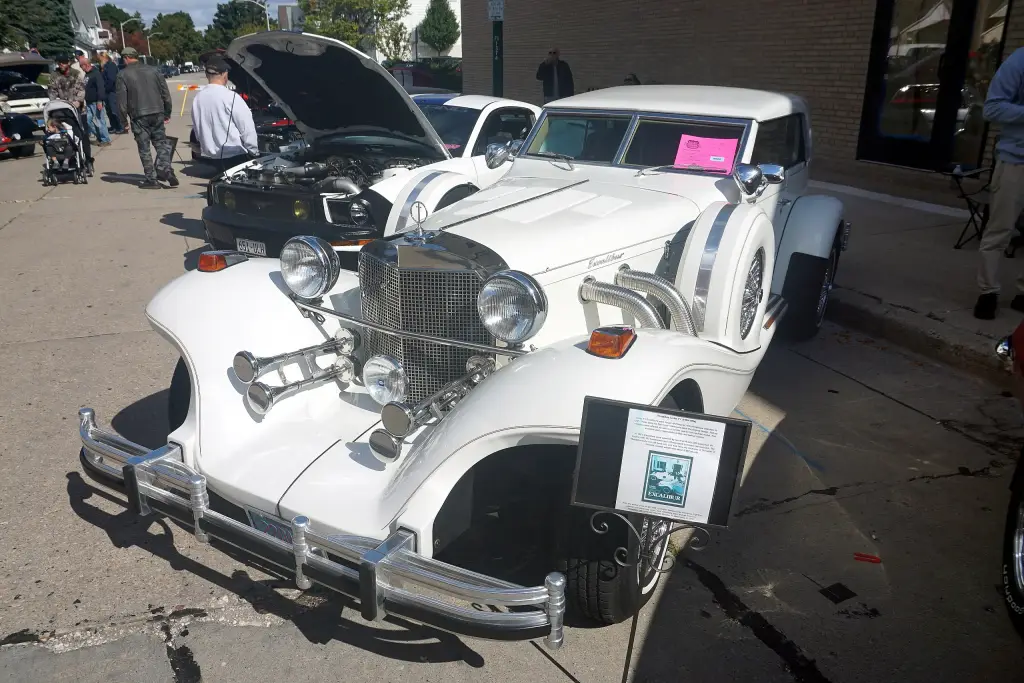
The Excalibur Phaeton was the four-seater version of the neoclassic Excalibur roadster, and from 1975 the Series III made it the company’s best-selling car. It kept the 1920s look but used a big-block Chevrolet V8 and parts borrowed from the Volkswagen Beetle.
Excalibur Phaeton at a glance
| Maker | Excalibur, Milwaukee, later West Allis, Wisconsin |
|---|---|
| Bodies | SS Phaeton, Limousine, SS and SSK Roadsters |
| Series II wheelbase | 111 in (2,819 mm), 112 in (2,845 mm) from 1972 |
| Series II chassis | own ladder frame, Corvette suspension and disc brakes |
| Engine, Series II | Chevrolet 350 V8, 300 hp (224 kW) |
| Engine from 1972 | Chevrolet 454, 330 hp gross, 270 hp net by 1974 |
| Engine, Series III | truck version of the 454, 215 hp SAE (160 kW) |
| Series III production | 1,141 cars, some sources 1,185; 76 Roadsters |
| Best year | 367 cars in 1979 |
| Limited Edition 100 | 23, possibly 27, built in the early 1990s |
| Final Excalibur | built in 1997 |
Based on one source: the English Wikipedia article covers the whole Excalibur marque, and this page uses its Series II, Series III and Limited Edition 100 sections.
History of the Excalibur Phaeton
Series II: the four-door
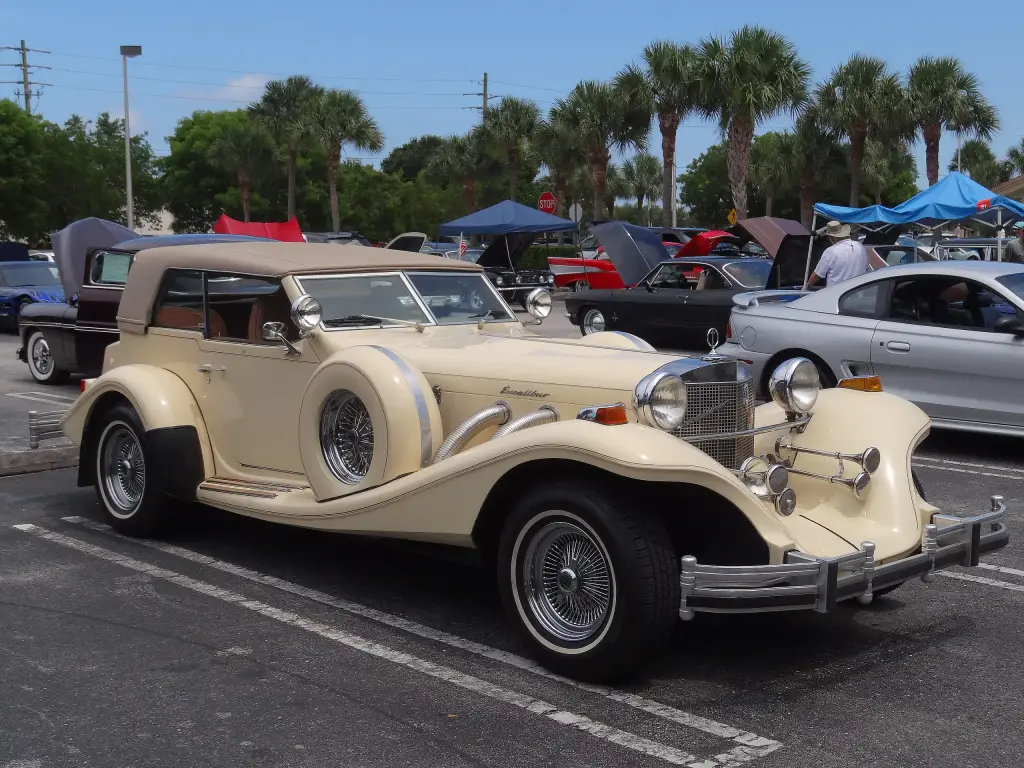
The four-seater Phaeton had joined the range in 1966, and the Series II of 1970 turned it into a proper production car. The Series II was about 2 inches longer than the Series I, on a 111-inch wheelbase, and was built on an assembly line with contracts from parts suppliers. The Studebaker chassis was gone: Excalibur developed its own ladder frame with Corvette suspension parts and four-wheel disc brakes. The engine was Chevrolet’s 350 V8, still at 300 hp, and bodies included the SS Roadster, SSK Roadster and SS Phaeton. The SSK, with cycle fenders and no running boards, was sold only in 1970. Sales fell sharply: 37 cars in 1970 and none in 1971.
1972: the big-block years
Excalibur redesigned the car for 1972 and sales recovered to 122 cars that year. The chassis now had a ladder-frame rear with central X-frame bracing and a front end from a Camaro, and the wheelbase grew to 112 inches. That made room for Chevrolet’s 454 cu in big-block V8, first with 330 hp gross; by 1974 the claimed figure was 270 hp net as ratings changed. Early cars had a windshield that folded forward, replaced by a fixed unit for 1973 to meet new safety standards. The Series II was the first Excalibur to use the Volkswagen Beetle’s fender-mounted front turn signals, and it also used the Beetle’s taillights, changed to the Super Beetle’s “Elephant Foot” lights around 1973.
Series III
The Series III arrived for the 1975 model year and sales took off, reaching 367 cars by 1979, although the higher production rate lowered quality. Total production was 1,141 cars, some sources say 1,185, and only 76 of them were Roadsters. The chassis was a modified version of the Series II frame. After the fuel crisis Detroit’s engines shrank, so Excalibur switched to the truck version of the 454, rated at 215 hp SAE. The fenders were no longer enveloping and the open sides of the Series I and II cars disappeared; new bumpers and other changes kept the car compliant with safety legislation.
Limited Edition 100
German investors Udo Geitlinger and Michael Timmer took over after the 1990 bankruptcy and reformed the company as the Excalibur Automobile Corporation. They found the plant missing many tools and plans and revived the Series III in modernised form as the Excalibur Limited Edition 100, with an enclosed rear end, more enveloping fenders and small rectangular taillights. The new works were in West Allis, outside Milwaukee, and the company also built an AC Cobra replica, the Excalibur JAC Cobra. They planned 100 cars; only 23, possibly 27, were built in the early 1990s.
The end of the line
Over 3,500 Excalibur cars were built in all. The company failed in 1986 and was revived several times, series production continued until 1990, and the final Excalibur was built in 1997. The comedian Phyllis Diller, who owned four Excaliburs, was the marque’s best-known enthusiast.
Design and features
- Four seats: the Phaeton body made the neoclassic Excalibur a family car rather than a toy.
- Corvette underneath: the Series II used Corvette suspension parts and four-wheel disc brakes on Excalibur’s own ladder frame.
- Beetle details: fender-mounted front turn signals and Super Beetle “Elephant Foot” taillights kept the parts bill simple.
- Big-block power: from 1972 the Chevrolet 454 gave the car the performance its looks promised.
- Safety updates: a fixed windshield from 1973 and new bumpers for the Series III kept the design legal.
Excalibur Phaeton versions
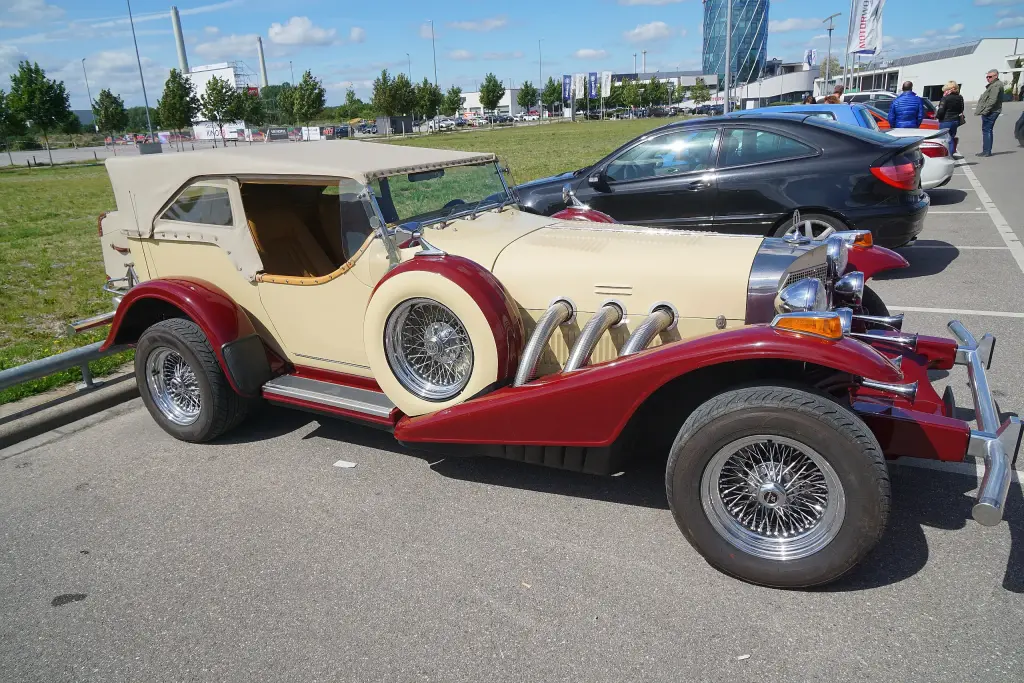
- SS Phaeton: the four-door open body of the Series II.
- SSK Roadster (1970): the sporty version with cycle fenders, sold for one year only.
- Series III (from 1975): the best seller, 1,141 cars and just 76 Roadsters.
- Limited Edition 100 (early 1990s): the modernised Series III, 23 or 27 built.
The two-seat roadster that started it all is described in the Excalibur Series I article. More cars are in the Excalibur collection.
Video: Excalibur Phaeton 4 first ride in Switzerland after the import from USA
Video on YouTube.
Sources
- Excalibur (automobile), English Wikipedia: Series II and III, engines, production, Limited Edition 100