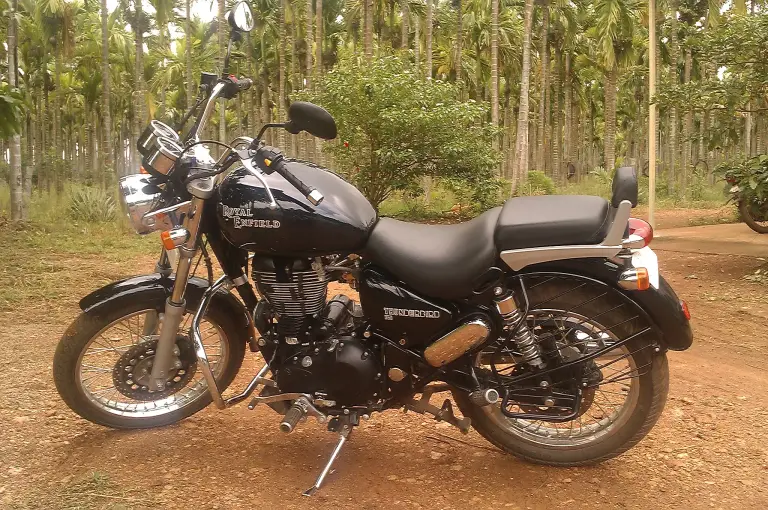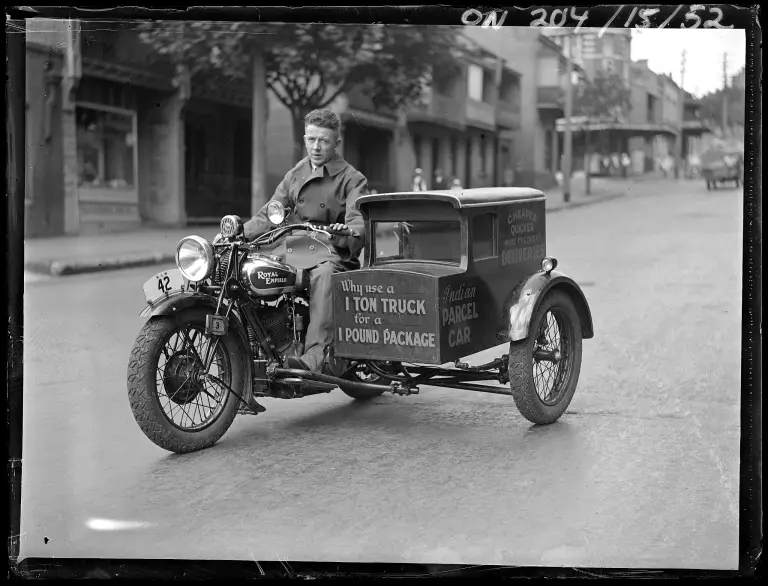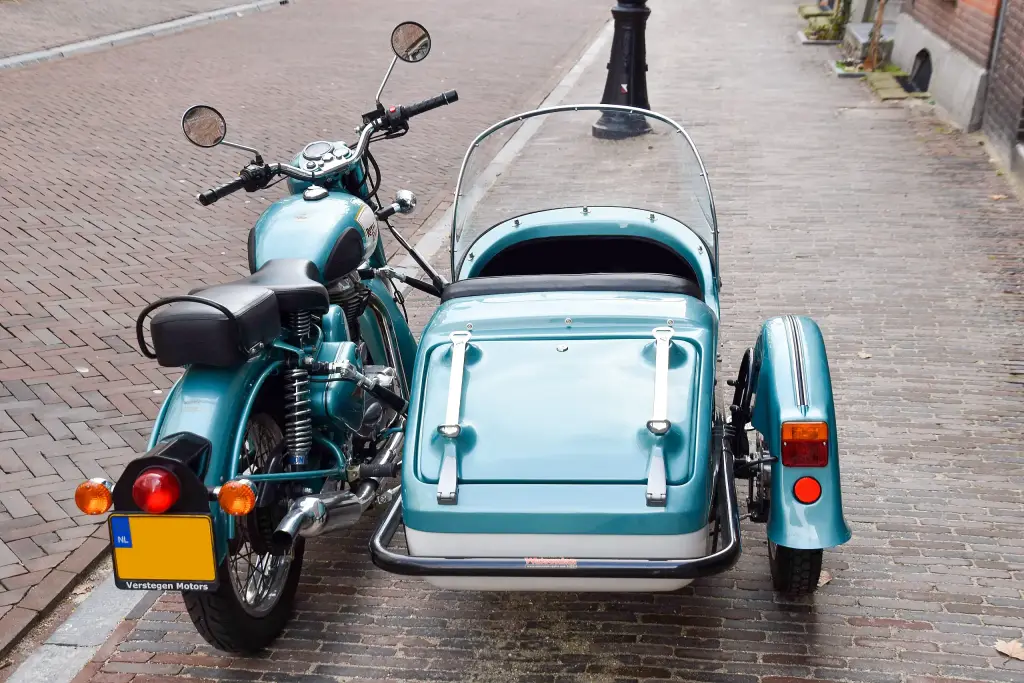
The Royal Enfield Bullet is an overhead-valve, single-cylinder, four-stroke motorcycle first made by Royal Enfield in Redditch, Worcestershire, and now built in Chennai, Tamil Nadu. It has the longest unchanged production run of any motorcycle, having stayed continuously in production since 1932.
Royal Enfield Bullet at a glance
| Introduced | 1932, Royal Enfield, Redditch |
|---|---|
| Engine | overhead-valve single, 250, 350 and 500 cc |
| Early chassis | centre-spring girder forks, rigid rear end |
| Post-war chassis | telescopic fork, swing-arm rear suspension |
| Gearbox | four-speed Albion with neutral-finder lever |
| Military use | 350 cc bought by the British Army, 3,000 to the RAF |
| Indian production | from 1955, Enfield India Ltd. in Madras |
| Indian output | over 20,000 Bullets a year at Madras |
| British line ends | Bullet discontinued 1962, Redditch closed 1967 |
| Indian line | continued without the British retooling of 1955 |
Based on one source, the English Wikipedia article on the Bullet.
History of the Royal Enfield Bullet
1932–1939: the first Bullet
The Bullet name appeared in 1932 on a four-stroke single with an inclined engine and exposed valve gear, four valves per cylinder, offered in 350 and 500 cc; a 250 cc version joined the range in 1933. It had centre-spring girder front forks, a saddle-type fuel tank and, like most motorcycles of the period, a rigid rear end with a sprung seat for the rider. After competition success the 350 cc Bullet was bought by the British Army for dispatch riders, and 3,000 were supplied to the RAF during the Second World War.
1939–1956: forks, swing arm and the move to India
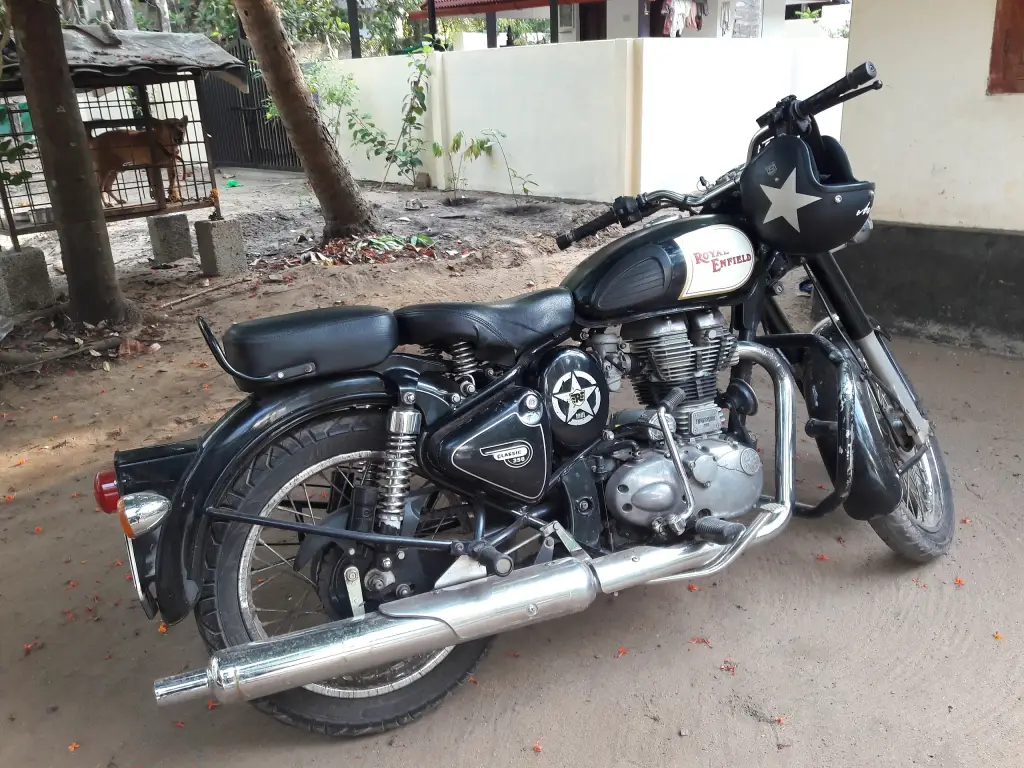
The 1939 model brought two rocker boxes and higher volumetric efficiency. Post-war Bullets gained a hydraulic front fork and one of the first fully incorporated swing-arm rear suspensions among British bikes, and the engine received an aluminium cylinder head. From 1949 the engine stood vertical with an alloy head and higher compression, the frame was fully sprung and the front used a telescopic fork of Royal Enfield’s own design, which allowed a simple foam dual seat. The four-speed Albion gearbox kept its neutral-finder lever, and the headlight, speedometer and ammeter were enclosed in a nacelle that also carried the bars and front suspension. A 499 cc version appeared in 1953.
Racing and the Indian factory
The Bullet won its class at the 1948 International Six Days Trial, Johnny Brittain won the Scottish Six Days Trial on one in 1952 and the ISDT in 1953 without losing a point. In 1949 the Indian Army ordered Bullets for border patrol and the company decided to open a factory in Madras; from 1955, 350 cc Bullets went out from Redditch in kit form for assembly in India, and Enfield India Ltd. soon built complete motorcycles under licence. That 1955 model stayed almost unchanged for years, and Madras produced more than 20,000 Bullets a year.
1956–1970: two lines that never met again
Royal Enfield retooled the Bullet at Redditch in 1955 and changed gear ratios in 1959, but the Indian arm did not take up those changes because of its commitment to the army, so the British and Indian lines diverged. The British Bullet of 1956–1960 came as a 350 cc Trials works replica, a 350 cc Clipper and, in 1958, the Airflow with a large fibreglass fairing and panniers. Alternator charging arrived in 1956 and coil ignition in 1960; the 500 cc model was dropped in 1961, the Bullet itself in 1962, Redditch closed in 1967 and Royal Enfield shut down in 1970. Between 1963 and 1965 the factory also built about 250 unit-construction machines known as New Bullets, essentially a 350 Crusader with a built-up crank and traditional Bullet bore and stroke.
Design and features
- Continuous production: the same basic design has been built since 1932, the longest run of any motorcycle.
- Overhead-valve single: from exposed valve gear to an all-alloy unit-construction engine with fuel injection.
- Military pedigree: dispatch-riders’ mount in Britain, border-patrol machine in India.
- Neutral-finder lever: the Albion gearbox let the rider press straight to neutral from any gear but first.
- Nacelle headlamp: light, instruments and bars in one casting from the 1949 redesign.
Royal Enfield Bullet versions
- 1932–1939: inclined engine, four valves, girder forks, rigid frame.
- 1949–1956: vertical engine, telescopic fork, swing-arm frame, 350 and 499 cc.
- Clipper and Airflow (1956–1960): British touring versions, the Airflow with a full fairing and panniers.
- New Bullet (1963–1965): about 250 unit-construction 350s built at Redditch.
- Indian Bullet: the 1955 design, built in Madras in large numbers and later sold as the Electra and the 500.
The Bullet is the ancestor of the cruiser-styled Royal Enfield Thunderbird, and its maker is described in the article on Royal Enfield in India. More motorcycles are in the Enfield collection.
Video: Royal Enfield 1995 Bullet Bobber Starting
Video on YouTube.
Sources
- Royal Enfield Bullet, English Wikipedia: history, engine, chassis, production