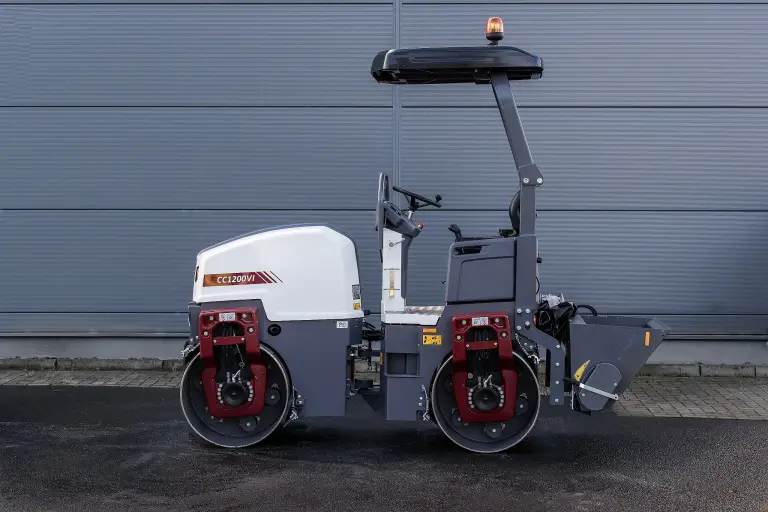
The Dynapac CC900 is a compact double-drum roller from the CC line of Dynapac, the Swedish construction-equipment maker based in Karlskrona. It belongs to the same family as the larger CC1200VI and the tamping and pneumatic rollers that make up the company’s compaction range. A 2005 machine appears in the video below.
Dynapac CC900 at a glance
| Maker | Dynapac, Karlskrona, Sweden |
|---|---|
| Family | CC double-drum rollers |
| Machine in the video | CC900 of 2005 |
| Company founded | 1934 in Stockholm, as AB Vibro-Betong |
| First vibratory road roller | 1953 |
| Karlskrona plant | opened 1960 |
| Company renamed Dynapac | 1973, as Dynapac Maskin AB |
| Owner | Atlas Copco from 2007, Fayat Group since October 2017 |
| Colours | red, white and grey since 2017 |
No Wikipedia page exists for the CC900 and no free photograph of it was found, so this short page is based on the articles about the company and keeps the earlier picture of the record.
History of the Dynapac CC900
The company behind the CC900
Dynapac started life in Stockholm in 1934 as AB Vibro-Betong. The engineer Hilding Svenson developed its vibratory compactor in 1936; the firm became AB Vibro-Verken in 1940 and launched its first vibratory plate compactor, the 1.5-tonne machine nicknamed the frog, in 1947. The first vibratory road roller followed in 1953, the research laboratory opened in 1948 and the Karlskrona works, which made the heavy rollers and housed the technical centre, opened in 1960.
The CC line
In 1973 the company took the name Dynapac Maskin AB and expanded its range quickly. English Wikipedia describes the compaction products as single-drum and double-drum vibratory rollers, combi rollers, steel-drum rollers, pneumatic rollers, tamping compactors, trench rollers and duplex rollers. The double-drum machines are the CC rollers, and the CC900 is the compact end of that line, suited to smaller jobs where a full-size tandem roller is too big.
Ownership and colours
Altor bought the company in 2004, Atlas Copco took it over in 2007 and the French Fayat Group acquired it in October 2017, after which the machines were painted red, white and grey. Production today is spread between Karlskrona in Sweden, Wardenburg in Germany, Tianjin in China, Pune in India and Sorocaba in Brazil.
Design and features
- Compact tandem roller: a double-drum machine of the CC line, the smaller relation of the CC1200VI.
- Vibratory compaction: the line descends from Dynapac’s 1936 compactor and the first vibratory road roller of 1953.
- Karlskrona engineering: the same Swedish works that has built the company’s heavy rollers since 1960.
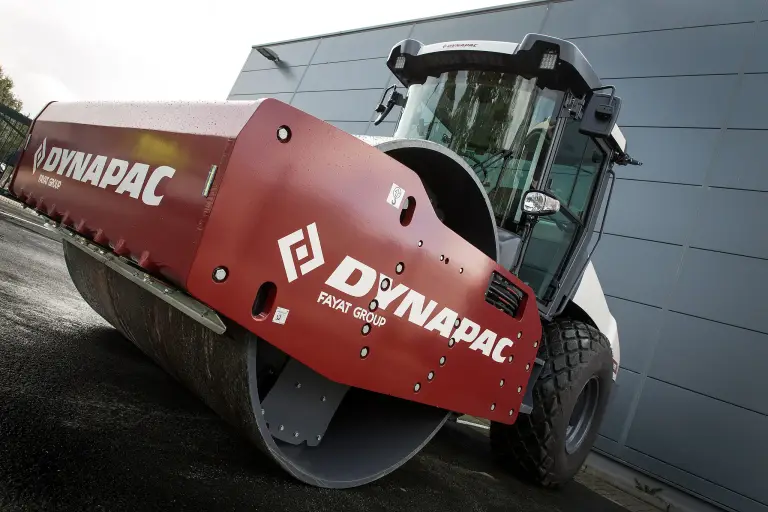
- Distinctive livery: red, white and grey since the 2017 Fayat takeover.
Dynapac CC900 versions
- CC900 (2005): the machine shown in the video.
- CC1200VI: a larger double-drum roller of the same line, photographed on Commons.
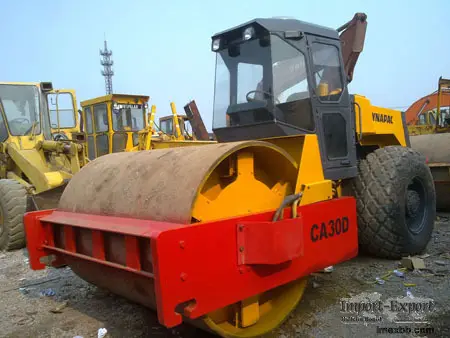
The CC900 is the small member of the CC line; the bigger Dynapac CC rollers and the heavy CA compaction rollers come from the same Swedish factory. More machines are in the Dynapac collection.
Video: Dynapac CC900 of 2005
Video on YouTube.
Sources
- Dynapac, English Wikipedia: company history, product range, ownership
- Dynapac, German Wikipedia: history, production sites
- Dynapac, Swedish Wikipedia: road rollers and compaction machines, owners