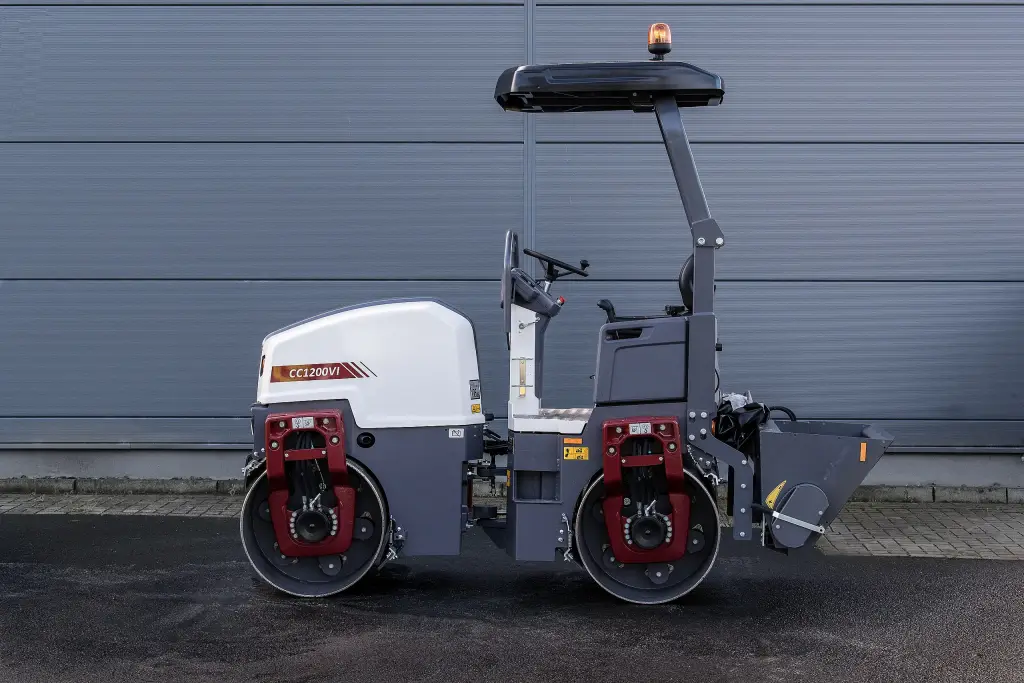
The Dynapac CC is Dynapac’s line of double-drum, or tandem, vibratory rollers — the machines used to roll asphalt. The line sits inside the compaction range of the Swedish company, whose factory in Karlskrona has built heavy rollers since 1960. A CC1200VI, described as a double-drum vibratory roller, is photographed on Wikimedia Commons.
Dynapac CC at a glance
| Maker | Dynapac, Karlskrona, Sweden |
|---|---|
| Family | CC double-drum rollers |
| Machine in the photograph | CC1200VI, a double-drum vibratory roller |
| Compaction range | single- and double-drum, combi, steel-drum, pneumatic, trench and duplex rollers |
| Company founded | 1934 in Stockholm, as AB Vibro-Betong |
| First vibratory road roller | 1953 |
| Karlskrona plant | opened 1960 |
| Company renamed Dynapac | 1973, as Dynapac Maskin AB |
| Owner | Atlas Copco from 2007, Fayat Group since October 2017 |
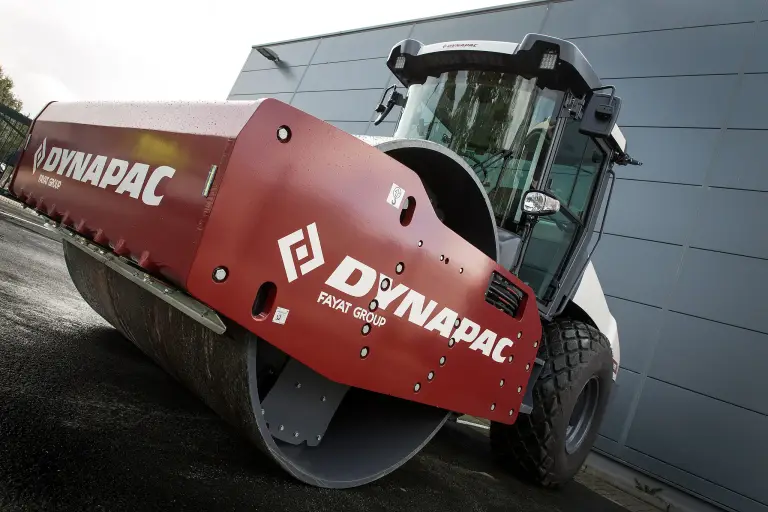
| Colours | red, white and grey since 2017 |
| Production sites | Karlskrona, Wardenburg, Tianjin, Pune and Sorocaba |
No Wikipedia page exists for the CC line; this page is based on the articles about the company. Photograph: CC1200VI by Aevaii, CC BY-SA 4.0.
History of the Dynapac CC
Where the CC line comes from
Dynapac was founded in Stockholm in 1934 as AB Vibro-Betong. Its first vibrating machine was a compactor developed in 1936 by the engineer Hilding Svenson; the company took the name AB Vibro-Verken in 1940, brought out its first vibratory plate compactor in 1947 (a 1.5-tonne machine nicknamed the frog), opened a research laboratory in 1948 and built its first vibratory road roller in 1953. Compaction has remained the core of the business, and the tandem rollers of the CC line belong to that part of the range.
Karlskrona and the expansion
The works at Karlskrona opened in 1960 and was given the heavy rollers and the technical centre. In 1973 the firm became Dynapac Maskin AB and expanded its product range quickly, adding pavers, mobile feeders and planers alongside the rollers. English Wikipedia lists the compaction products as single-drum and double-drum vibratory rollers, combi rollers, steel-drum rollers, pneumatic rollers, tamping compactors, trench rollers and duplex rollers; the double-drum machines are the CC rollers.
Owners and colours
The company was sold to the venture-capital firm Altor in 2004, joined Atlas Copco in 2007 and became part of the French Fayat Group in October 2017. With that takeover the machines changed to a red, white and grey colour scheme, as seen on recently built rollers. The Swedish article notes that the firm also makes asphalt machines and small hand-guided compaction equipment for soil, gravel, crushed stone and asphalt, so a CC roller is usually part of a wider compaction train.
Machines of the line are still working: the photograph on this page shows a CC1200VI, while the video below shows a row of Dynapac CC rollers at work.
Design and features
- Double-drum layout: the CC rollers are tandem machines with two steel drums, the type used to compact asphalt surfaces.
- Vibratory compaction: the whole line descends from Dynapac’s vibratory tradition, from the 1936 compactor to the first vibratory road roller of 1953.
- Built in Karlskrona: the Swedish works that opened in 1960 has made the company’s heavy rollers ever since.
- Modern colour scheme: red, white and grey since the Fayat takeover in 2017.
Dynapac CC versions
- CC1200VI: a double-drum vibratory roller, the machine shown in the photograph.
- CC rollers in general: the line covers tandem rollers of different sizes; the video below shows several at work.
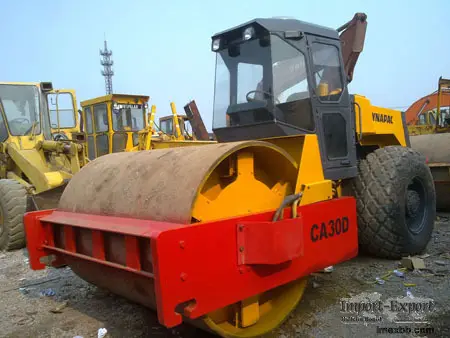
The CC rollers are the tandem partners of the heavier Dynapac CA compaction rollers, and the smaller CC900 is a compact member of the same CC line. More machines are in the Dynapac collection.
Video: Dynapac CC rollers
Video on YouTube.
Sources
- Dynapac, English Wikipedia: company history, product range, ownership
- Dynapac, German Wikipedia: history, sites, Fayat takeover
- Dynapac, Swedish Wikipedia: road rollers and compaction machines, owners