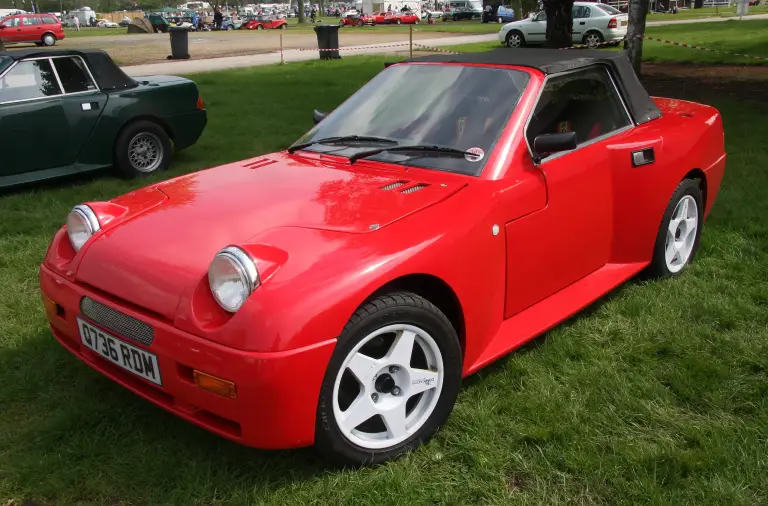
The Dutton Melos was built by Dutton Cars of Worthing from 1981 to 1989. It kept the chassis of the Phaeton but wore a new glass-fibre body with more rounded styling and 2+2 seating, and it remained in the range until the company sold its designs.
Dutton Melos at a glance
| Maker | Dutton Cars, Worthing, Sussex, England |
|---|---|
| Production | 1981–1989 |
| Chassis | Phaeton ladder-frame chassis in steel |
| Body | glass-fibre, more rounded than the Phaeton |
| Seating | 2+2 |
| Donor car | Ford Escort Mk 1 or Mk 2 for most Dutton kits |
| Engine and gearbox | taken from the donor car |
| Sold as | kit for the owner to assemble |
| Company founded | by Tim Dutton-Woolley |
| Company scale | 80 employees across four factories by 1984 |
| Model range | one of Dutton’s last sports models |
| End of production | 1989, when the designs were sold |
Based on one source: the English Wikipedia article on Dutton Cars, where the Melos is covered in the list of models.
History of the Dutton Melos
Dutton Cars was founded by Tim Dutton-Woolley and built kit cars between 1970 and 1989; by the number of kits produced it was the largest kit-car manufacturer in the world. It began with a series of cars named P1, and in October 1971 the B-Type appeared with a more or less standard specification based on Triumph Herald components. The company then moved to a larger factory in Tangmere, Chichester, and later back to Worthing.
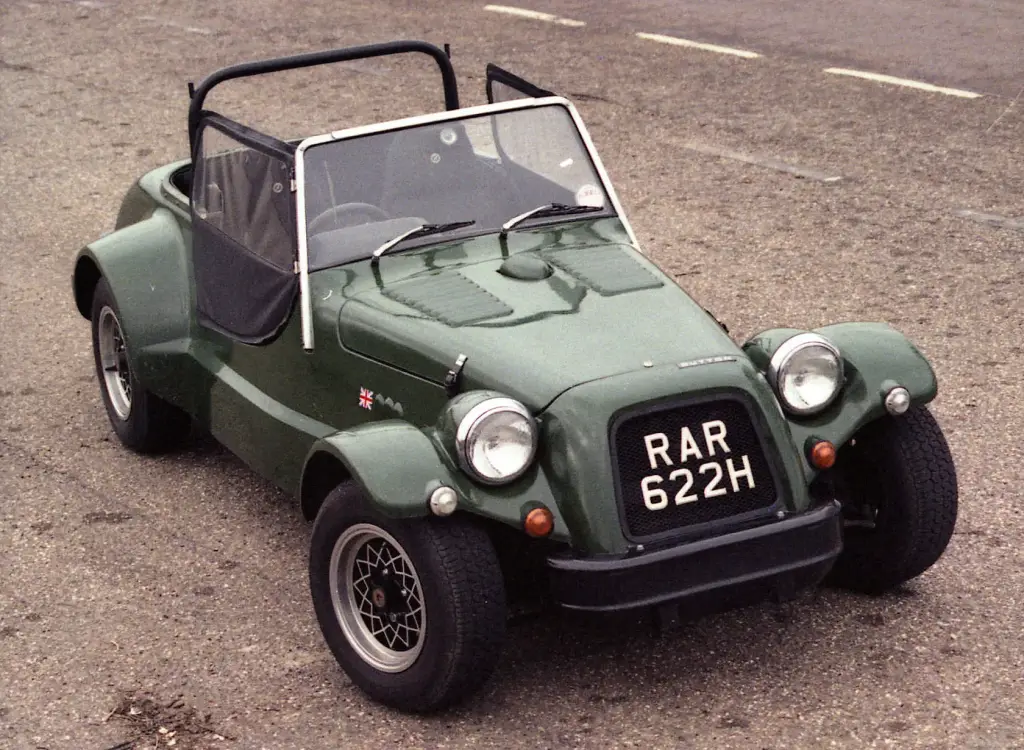
A new body on a familiar chassis
The Melos arrived in 1981. It used the Phaeton chassis and was given a new body with more rounded styling and a 2+2 seating configuration, which made it roomier than the two-seat roadsters that had come before. Most Duttons depended on a ladder-frame chassis built from steel profiles, which held the parts taken from the donor car, and after the early Triumph Herald-based cars most Dutton kits used Ford Escort Mk 1 or Mk 2 components. A buyer of a Melos kit therefore needed a donor car to supply the engine, gearbox and many other essential parts, and Fords were the most common donors.
The company at its peak
The Melos was built during Dutton’s busiest years. A move to larger premises back in Worthing was made in 1982, with glass-fibre body making at a separate works in Lancing. By 1984, 80 people were employed across four factories and a large showroom in Worthing, and production topped 1,000 cars a year. The range at the time included the Phaeton, the Sierra estate and, from 1984, the Rico saloon, with the Melos as the rounded 2+2 sports car.
The end of Dutton Cars
By 1989 Tim Dutton had become bored with the kit-car scene and all the designs were sold. The Melos went out of production with the rest of the range. Early Dutton kits are now hard to obtain: most cars have already been assembled and are only available second-hand, usually in need of some restoration.
Design and features
- Phaeton chassis: the proven steel ladder frame of Dutton’s best-known model.
- Rounded glass-fibre body: a softer shape than the angular Phaeton, made in Dutton’s own works.
- 2+2 seating: room for two occasional passengers, unusual among small kit sports cars.
- Escort mechanicals: Ford Escort Mk 1 or Mk 2 parts, as on most Dutton kits of the period.
- Owner assembly: sold as a kit, with the engine and gearbox coming from the donor car.
Dutton Melos versions
- Melos (1981–1989): the model as listed by Dutton, with the rounded 2+2 body.
- Phaeton-chassis cars: the Melos shared its chassis with the Phaeton range.
- Escort-based kits: most cars of this period used Ford Escort Mk 1 or Mk 2 components.
The Melos used the chassis of the Dutton Phaeton and was joined at the end of the range by the Legerra. Dutton later returned with the amphibious Mariner. More cars are in the Dutton collection.
Video: Dutton Melos build 1983
Video on YouTube.
Sources
- Dutton Cars, English Wikipedia: company history and the Melos entry in the list of models