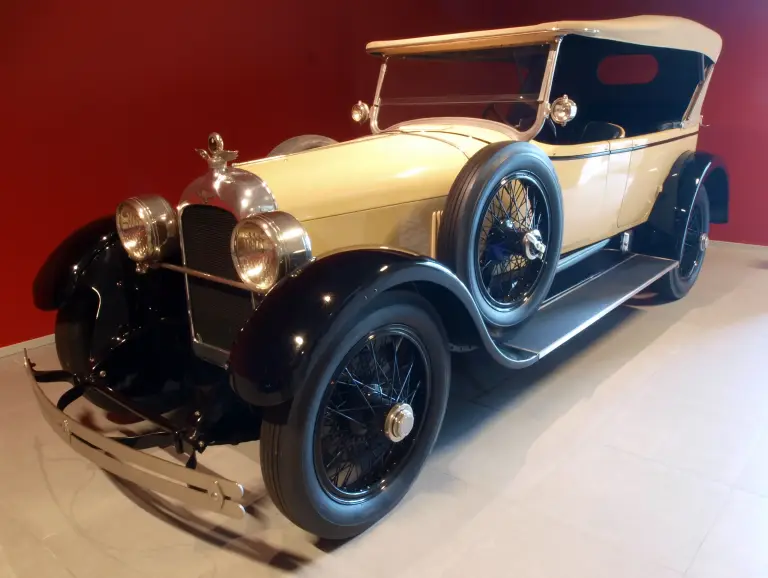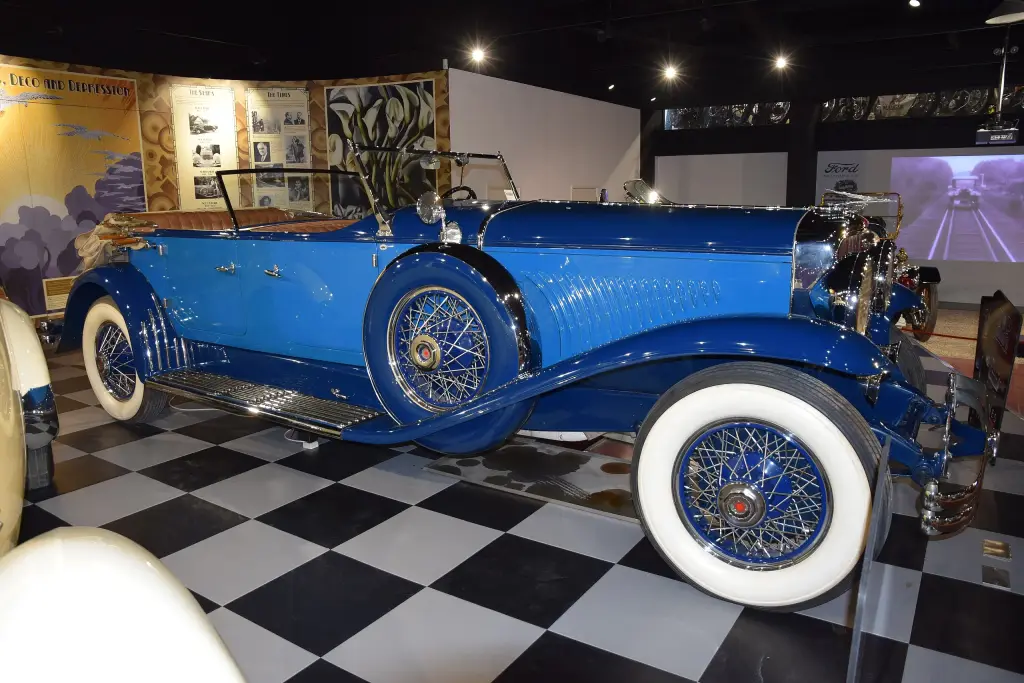
The Duesenberg Model J was a luxury automobile that debuted at the New York car show on 1 December 1928 and remained on offer for ten years. It was intended to rival the most luxurious and powerful cars in the world, and its 6.9-litre straight eight was the fastest and most expensive American car of its time.
Duesenberg Model J at a glance
| Production | 1928-1937 |
|---|---|
| Debut | New York car show, 1 December 1928 |
| Engine | 420 cu in (6,900 cc) straight eight, twin overhead camshafts, four valves per cylinder |
| Power | 265 hp (198 kW) |
| Top speed | 116 mph (187 km/h) |
| Wheelbase | 142.5 in (3.62 m) or 153.5 in (3.90 m) |
| Chassis price | $8,500, $9,500 after 1932 |
| Complete car | mostly $13,000 to $19,000 |
| Coachbuilders | LeBaron, Derham, Murphy, Rollston, Judkins, Saoutchik and others |
| Supercharged SJ | 320 hp, introduced May 1932 |
| Built by October 1929 | about 200, with 100 more orders filled in 1930 |
Based on one source, the English Wikipedia article on the Model J.
History of the Duesenberg Model J
Background
E. L. Cord, owner of the Auburn Automobile Company and other transport firms, bought the Duesenberg Motor Corporation on 26 October 1926 for the brothers’ engineering skill and brand name. He intended to produce a car to rival the size, power and luxury of Hispano-Suiza and Rolls-Royce, and the company was renamed Duesenberg, Inc. Fred Duesenberg became vice president in charge of engineering and experimental work, while his brother August, who had helped develop the Model A and the rare Model X, had no part in the initial design of the J.
Debut
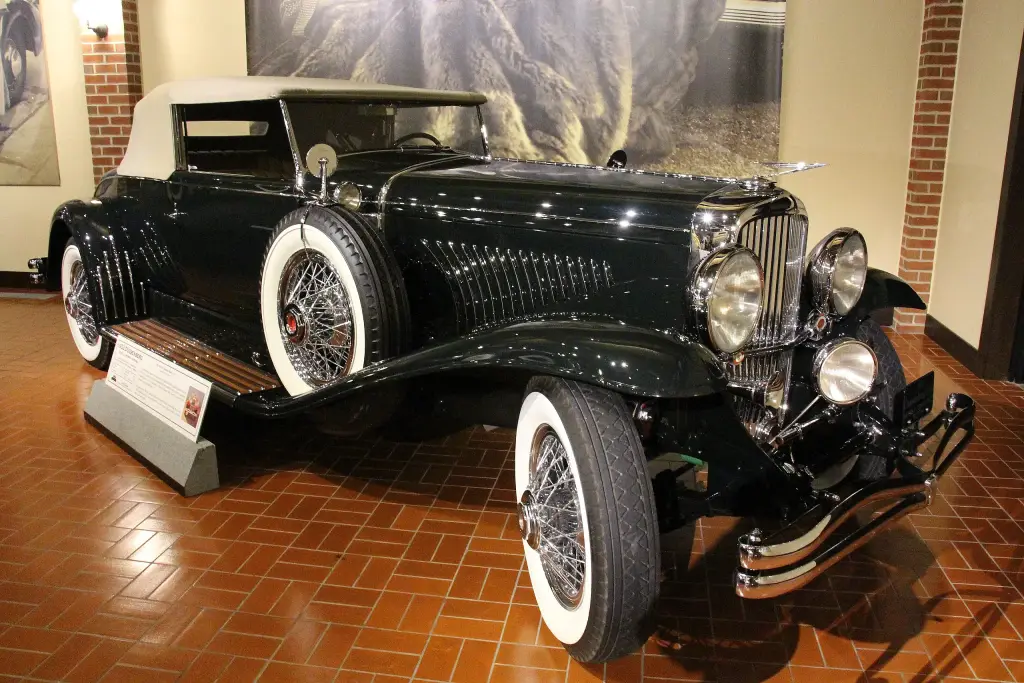
The Model J made its debut at the New York car show of 1928 and was launched in Europe at the Paris salon of 1929. The first example, J-101, was a LeBaron sweep panel dual cowl phaeton finished in silver and black. By the time the Depression hit in October 1929 Duesenberg had built some 200 cars, and a further 100 orders were filled in 1930, well short of the original goal of 500 cars a year. Most engines and chassis were made in 1929 and 1930 but were bodied and sold over the following years.
Engine and chassis
The 420 cu in (6,900 cc) straight eight was based on the company’s racing engines of the 1920s and, though designed by Duesenberg, was manufactured by Lycoming, another Cord company. With twin overhead camshafts and four valves per cylinder it produced 265 horsepower, giving a top speed of 116 mph and 89 mph in second gear. As was usual among luxury makers, only the chassis and engine were displayed; the body and interior were made to the owner’s order by a coachbuilder. About half the Model Js carried coachwork devised by Gordon Buehrig and built under the La Grande name, the rest by independent firms in America and Europe.
Supercharged SJ
A Duesenberg slogan claimed that the only car that could pass a Duesenberg was another Duesenberg. The supercharged SJ model, developed by Fred Duesenberg on the short 142.5-inch wheelbase and introduced in May 1932, produced 320 hp. It was credited with a top speed of around 130 mph, a 0-60 mph time of about eight seconds and 0-100 mph in 17 seconds, despite its unsynchronised gearbox.
Design and features
- Twin-cam straight eight: 6.9 litres, four valves per cylinder and 265 hp, more than any rival American engine.
- Custom coachwork: chassis and engine were sold separately, so no two Model Js were alike.
- Two wheelbases: 142.5 inches as standard, 153.5 inches for long bodies.
- La Grande catalogue: from 1930 Duesenberg offered factory-approved bodies designed by Gordon Buehrig.
- Supercharged SJ: 320 hp from 1932, with a claimed 130 mph top speed.
Duesenberg Model J versions
- Model J (1928-1937): the standard 265 hp car on short or long chassis.
- La Grande bodies: catalogue coachwork by Gordon Buehrig, built by company branches and dealers.
- Independent coachwork: LeBaron, Derham, Murphy, Rollston, Judkins, Weymann and European firms.
- Model SJ (1932): supercharged 320 hp version on the short wheelbase.
- SSJ: two short-wheelbase specials of 125 inches.
The Model J is the best-known product of Duesenberg; other luxury cars of the period are in the Classic Cars collection.
Sources
- Duesenberg Model J, English Wikipedia: history, engine, chassis, SJ