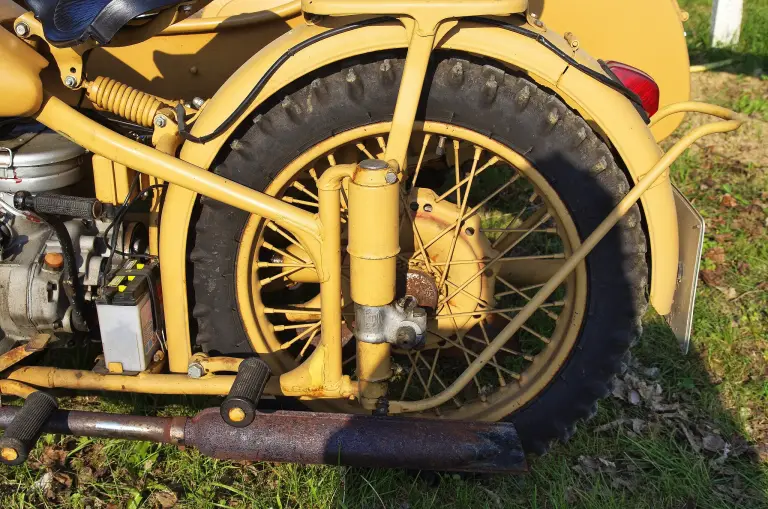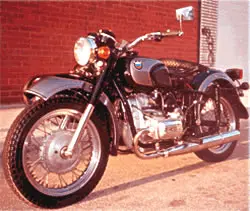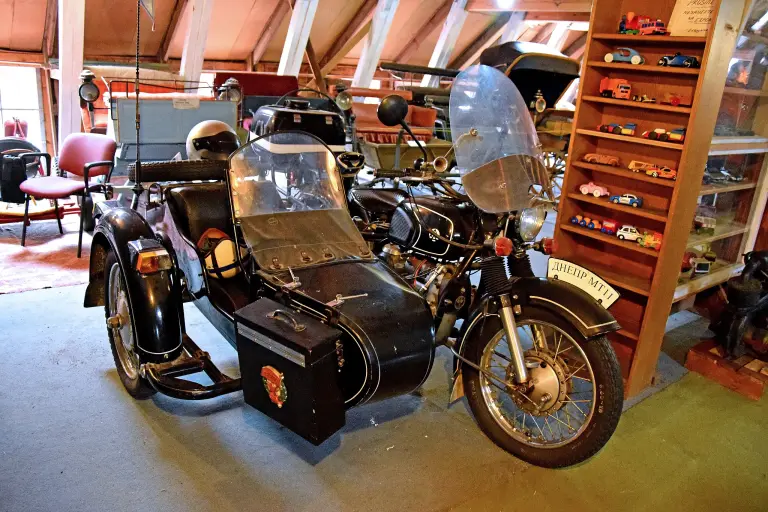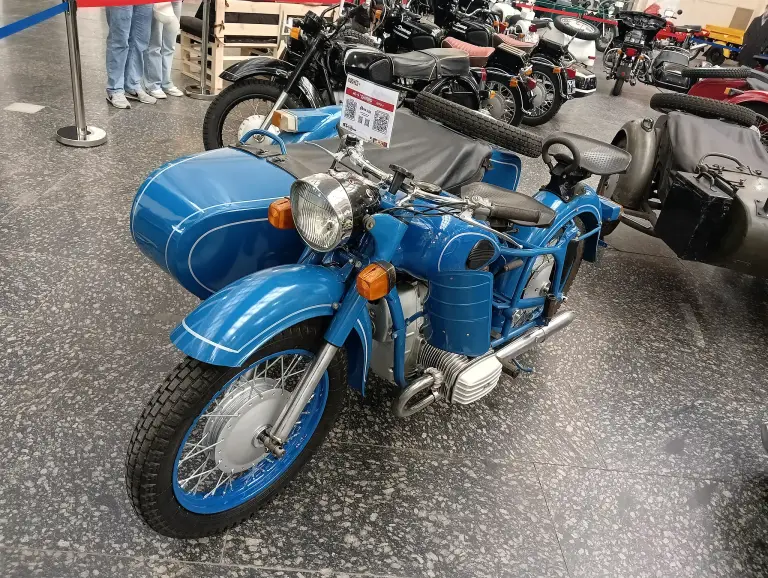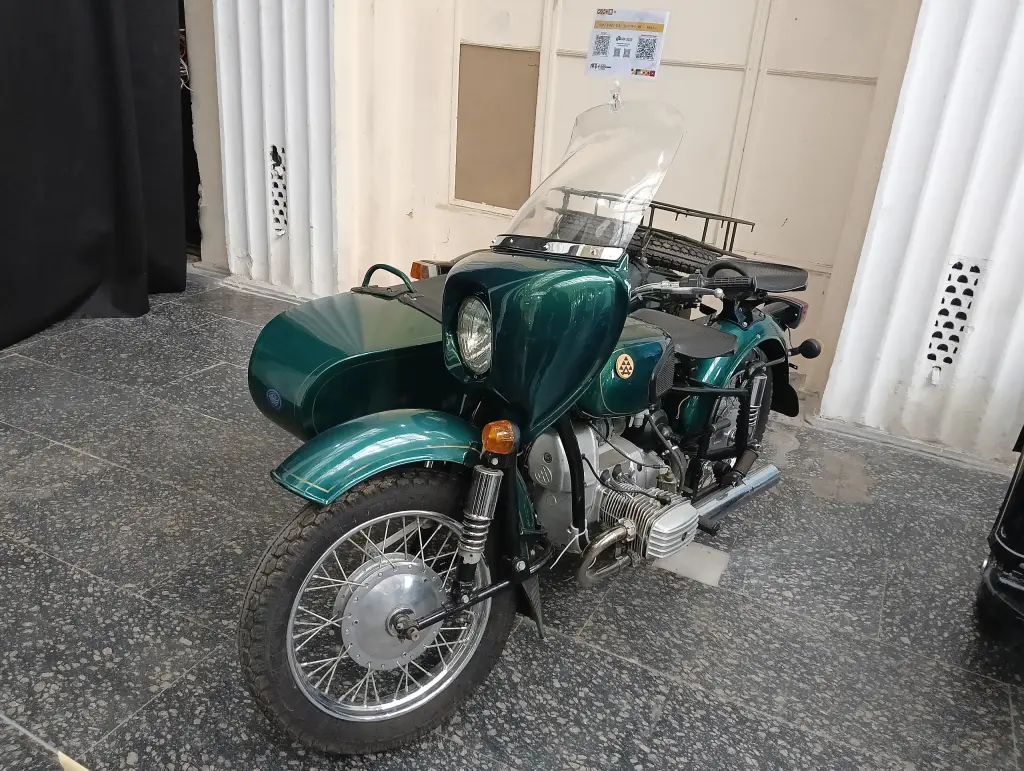
The MT-16 appeared in 1986 as the sidecar counterpart of the MT-11. It kept the 650 cc flat twin but drove the sidecar wheel as well, added a brake there and carried the equipment expected of a working outfit, including mounts for a shovel and a fuel canister.
Dnepr MT-16 at a glance
| Maker | KMZ, Kyiv |
|---|---|
| Production | from 1986 |
| Mass with sidecar | 350 kg |
| Engine | 650 cc OHV flat twin |
| Power | 32 hp |
| Torque | 4.8 kgf·m |
| Electrics | 12 V |
| Gearbox | MT804, with reverse |
| Fuel tank | 19 litres |
| Fuel | A-76, AI-93 |
| Top speed | 95 km/h |
| Drive | sidecar wheel drive, with a sidecar brake |
The MT-16 is described in the Russian history of the Dnepr marque; this page uses that section and the English overview of the range.
History of the Dnepr MT-16
A sidecar outfit for work
The MT-16 was introduced in 1986 as a development of the MT-11 aimed at sidecar users. Its complete weight was 350 kg, and the 650 cc engine produced 32 hp and 4.8 kgf·m. The sidecar wheel was driven and braked, which made the outfit more capable on poor roads and in winter. The motorcycle kept the MT804 gearbox with reverse and the twelve-volt electrical system, and its maximum speed was 95 km/h. Early machines carried mounts for a BSL-110 sapper’s shovel and a ten-litre canister; after 1991 the shovel mount was dropped, while the canister mount stayed.
Changes of the early 1990s
Like the MT-11, the MT-16 was updated gradually. A modification designated 021, introduced after 1991, replaced the solid seat with separate rider and passenger seats. From 1993 some machines received a spring-and-lever front fork. The camshaft was modernised, the carburettor changed from the K63T to the K65T after 1992, and the ignition lock was redesigned. A parking brake was mounted on the frame. These were running changes rather than a new model, and they kept the MT-16 on sale while the factory’s circumstances changed around it.
Beyond the road
The MT-16’s chassis was also used for specialised machines. The Kyiv plant built a fire motorcycle on the Dnepr-16 basis, equipped with fire-fighting equipment including an AGS-5 aerosol generator developed with the Institute of Fire Safety. Its compact size allowed it to reach fires through traffic, and the factory claimed it could put out a fire of 100 square metres within forty seconds. Such conversions show how long the basic sidecar design remained useful in Soviet service.
Design and features
- Driven sidecar wheel: extra traction for a heavy outfit on poor roads.
- Sidecar brake: added to the motorcycle’s own braking system.
- Working equipment: mounts for a canister and, until 1991, a sapper’s shovel.
- 1990s updates: separate seats, a spring-and-lever fork on later machines and the K65T carburettor.
Dnepr MT-16 versions
- MT-16 (1986): the original model with a solid seat.
- MT-16-021 (after 1991): separate rider and passenger seats.
- Late MT-16 (after 1993): some machines with a spring-and-lever front fork.
- Fire motorcycle: a specialised conversion on the Dnepr-16 basis.
The MT-16 was developed from the MT-11 and shared its military ancestry with the MV-750. More models are in the Dnepr collection.
Video: Dnepr MT 16
Video by RFTler on YouTube.
Sources
- Днепр (мотоцикл), Russian Wikipedia: specifications, updates, fire conversion
- Dnepr (motorcycle), English Wikipedia: sidecar drive and off-road ability