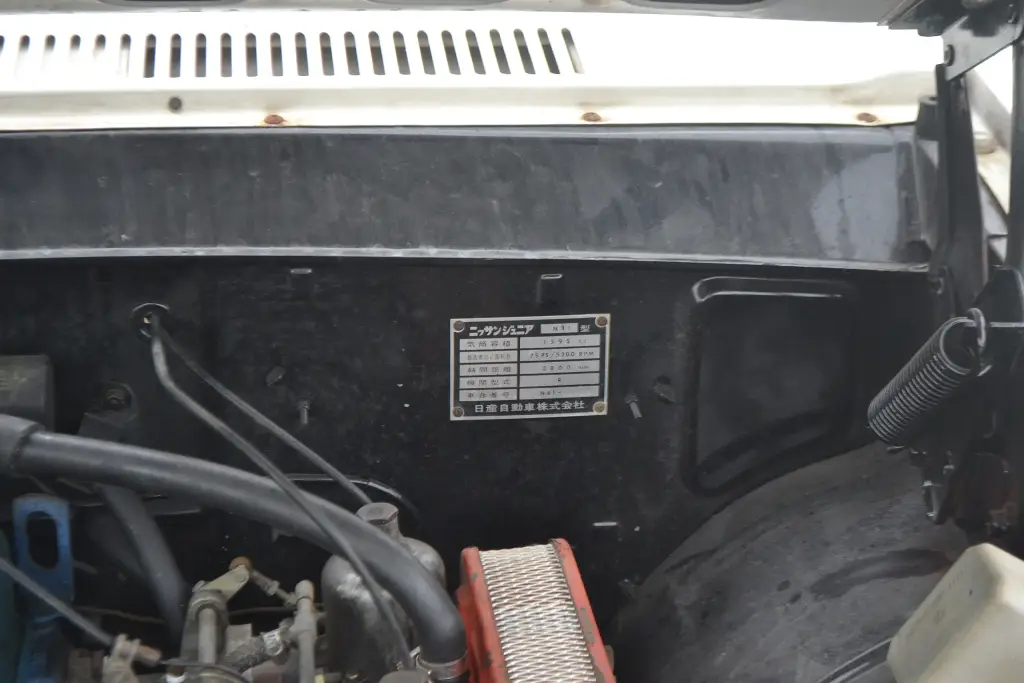
The Datsun Junior was a range of medium-size pickup trucks that Nissan built from 1956 to 1982. It sat between the small, Bluebird-based Datsun truck and the company’s heavier lorries, and it was sold for decades in Iran, where it became the Zamyad Z24.
Datsun Junior at a glance
| Maker | Nissan (Datsun), Japan |
|---|---|
| Production | October 1956 – 1982 |
| First model | B40, 1.75-tonne payload, three passengers |
| First engine | 1.5 L 1H four, 50 PS (37 kW) |
| B42 (1958) | the same engine with 57 PS (42 kW) |
| B140 (1960) | 1,488 cc G-series four, 71 PS (52 kW) |
| 40 series (1962) | independent front suspension, 2,800 mm wheelbase |
| 40-series engines | 1.5 L G, 1.9 L H of 85 PS, 2.2 L SD22 diesel |
| Payload | two tonnes with the 1.9-litre engine |
| 41 series (1966) | 2.0 L H20, 92 PS, 120 km/h |
| Built in Iran as | Nissan Zamyad, later SAIPA 24 and Zamyad Z24 |
History of the Datsun Junior
The B40 Junior was launched in October 1956 as a medium-size truck able to carry a 1.75-tonne load and three people on a 2,500 mm wheelbase. Its bonneted layout was less space-efficient than a cab-over design but gave a much better ride. Power came from Nissan’s 1.5-litre 1H four with 50 PS at 4,400 rpm, enough for 90 km/h. In December 1957 a cab-over version appeared as the Junior Caball, with the chassis code C40, sold through Nissan Store dealerships.
In August 1958 the B42 series arrived with 57 PS, and the Caball became the C42. Nissan offered a wide range of special bodies on the first Juniors, among them a panel van, a glazed van, a tank truck and a vacuum car. The B140 of April 1960 kept the B40’s looks with a changed grille but gained the new G-series engine of 1,488 cc and 71 PS, shared with the Cedric, on a wheelbase stretched to 2,610 mm; top speed rose to 95 km/h. There were 1.75 and 1.25-tonne versions, and the Junior Caball soon dropped the Junior from its name.
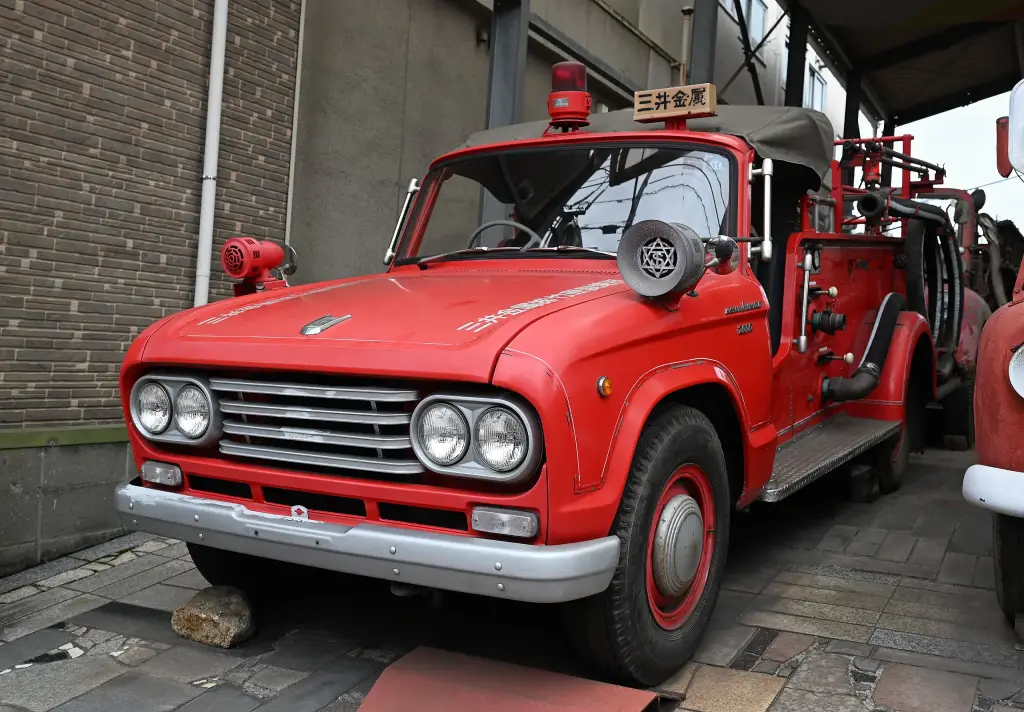
The second generation arrived in January 1962 as the 40 series, much more modern, with four headlamps, more integrated wings and independent front suspension on a 2,800 mm wheelbase. The entry model kept the 71 PS 1.5, but a new 1.9-litre four of 85 PS, shared with the Cedric, gave 110 km/h and made this the first medium-size truck able to carry two tonnes. Nissan also built a fire engine on the 40-series chassis, and a 2.2-litre SD22 diesel version, the Q40, appeared later with 70 hp.
In 1966 the range became the 41 series with the 2.0-litre H20 of 92 PS and a top speed of 120 km/h; the 1.5-litre version was dropped, while the diesel continued as the Q41. After the merger with Prince the Junior and the Prince Miler were combined, with the Junior sold at Nissan Bluebird Store and the Miler at Nissan Prince Store until 1970. The Junior was always outsold by the Toyota Stout, perhaps because it carried an unfamiliar Nissan name. From 1970 Zamyad assembled it in Iran as the Nissan Zamyad; SAIPA took over in 1986 and the truck survived there as the Zamyad Z24.
Design and features
- Medium weight class: 1.75 tonnes at first, two tonnes from 1962.
- Bonneted layout: a better ride than a cab-over, at the cost of space.
- Cedric engines: the 1.5 and 1.9-litre fours shared with Nissan’s saloon.
- Fire engines and diesels: special bodies and the SD22 diesel from the late 1960s.
- Long life abroad: still built in Iran as the Zamyad Z24.
Datsun Junior versions
- B40 and B42 (1956–1960): the first Juniors, with the 1H engine.
- Junior Caball C40/C42: the cab-over version from December 1957.
- B140 (1960–1962): the G-series engine and a longer wheelbase.
- 40 and 41 series (1962–1970): four headlamps and up to two tonnes.
The Junior was larger than the Datsun truck and shared its engines with the Datsun Cedric. More models are in the Datsun collection.
Sources
- Nissan Junior, English Wikipedia: generations, engines, payloads, Iran
- Nissan Junior, German Wikipedia: model history