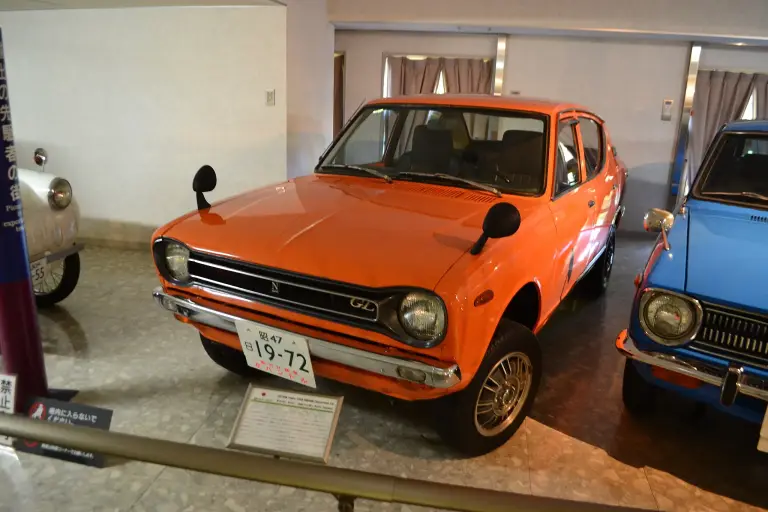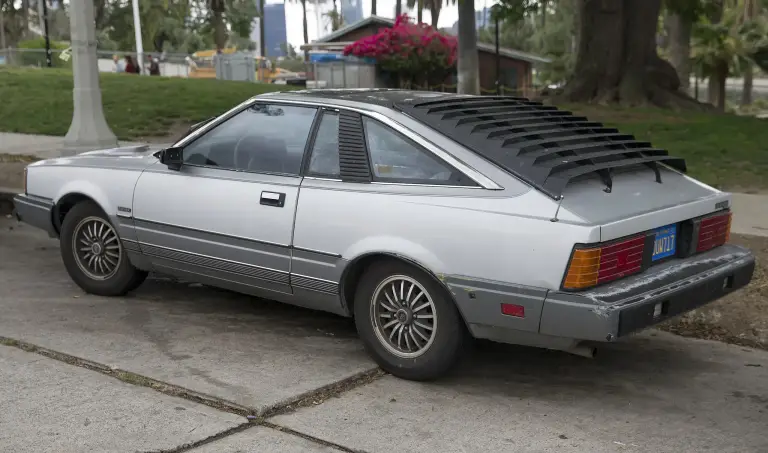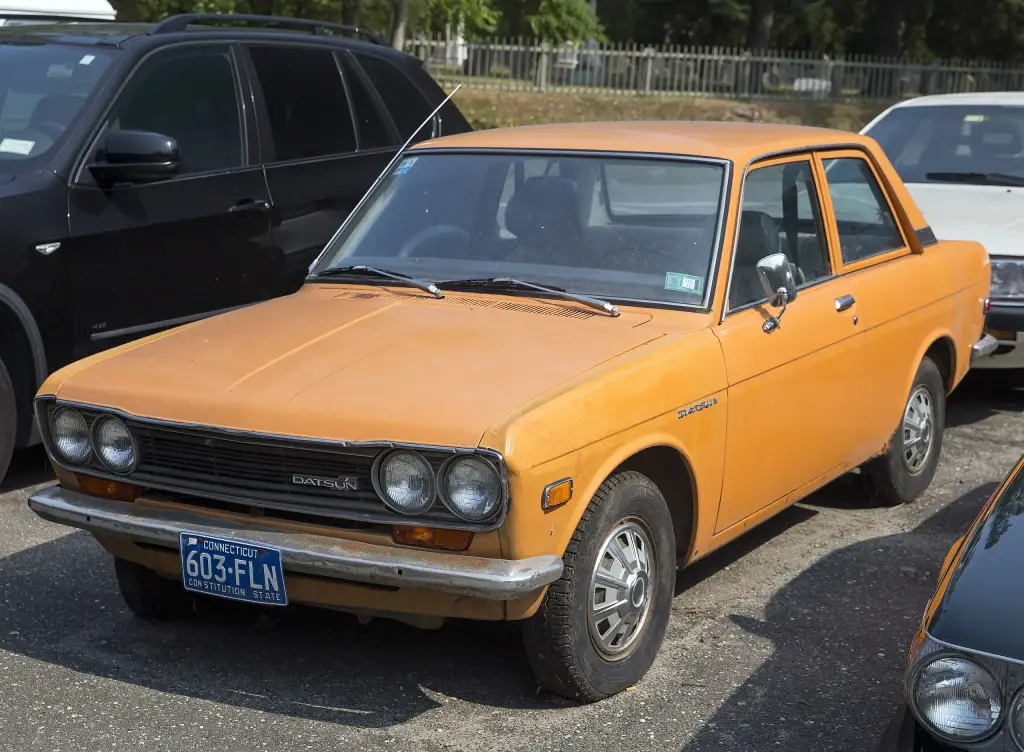
The Datsun 510 was the third generation of the Datsun Bluebird, sold from 1968 to 1973. “510” was Nissan’s internal model code, but it also became the car’s name in the United States, where it gave Datsun its reputation for cheap, tough, quick saloons.
Datsun 510 at a glance
| Maker | Nissan (Datsun), Japan |
|---|---|
| Production | 1968–1973 |
| Launch | Japan 15 August 1967; United States October 1967 |
| Bodies | four-door sedan, two-door sedan, two-door coupé, five-door estate |
| Engines | OHC L-series, 1.3 to 1.8 litres |
| Front suspension | MacPherson struts |
| Rear suspension | semi-trailing arms |
| Gearbox | four-speed manual, optional three-speed automatic |
| Model codes | P510 (right-hand drive), PL510 (left-hand drive), KP510T coupé, W estate |
| Export names | Datsun 1300, 1400, 1500, 1600, 1800 |
| Top trim | SSS, with better instruments and trim |
| Replaced by | Bluebird 610, from 1971 in Japan |
History of the Datsun 510
The 510-series Bluebird’s engineering was inspired by European sedans of the mid-1960s, above all the 1966 BMW 1600-2: an overhead-camshaft engine and independent suspension at all four corners, with MacPherson struts in front and semi-trailing arms at the rear. The styling is credited to Datsun’s in-house designer Teruo Uchino. The project had its origins at Prince, which merged with Nissan in 1966, and Nissan’s American boss Yutaka Katayama pushed hard for the larger overhead-cam engine.
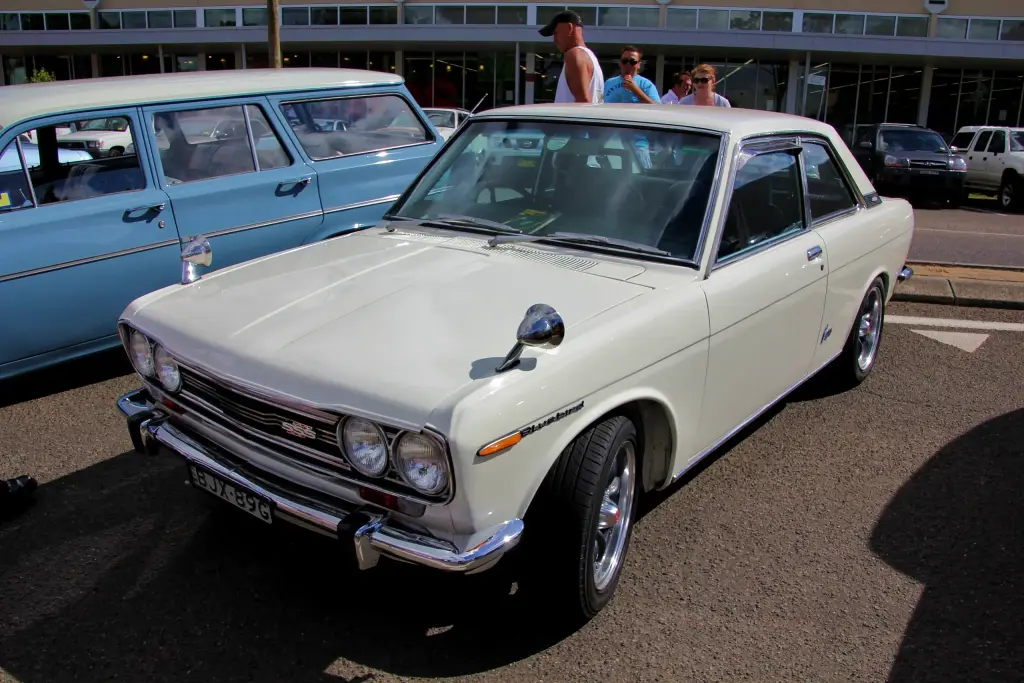
The car was released in Japan on 15 August 1967. In the United States the Datsun 510 arrived in October 1967 as a four-door sedan, followed by a two-door sedan in June 1968 and, in November 1968, a five-door estate and a two-door coupé. In Canada it was sold as the Datsun 1600. Gearboxes were a four-speed manual or an optional three-speed automatic, and in some markets the engines used twin Hitachi side-draft carburettors, smaller versions of the SU design used by Jaguar and MG.
The SSS models, not offered in North America, added better instrumentation, interior trim and exterior badges. Body codes tell the cars apart: the P510 and PL510 were the right- and left-hand-drive saloons most export markets received, the K prefix marked the coupé with its swept roofline, and estates carried a W. In markets such as South America, Asia outside Japan and Africa the cars used a leaf-sprung solid rear axle and simpler pushrod J-series engines of 1.3 or 1.5 litres.
Japan started with a 1.3-litre overhead-cam engine of 72 PS, and from October 1968 the 1600 became available there as well. When the larger Bluebird 610 appeared in September 1971, the 510 stayed in the range as a cheaper, more compact car with a light facelift. Its reputation outlived it: in North America Nissan later revived the 510 name for the unrelated A10-series Violet, an effort reviewers judged a failure.
Design and features
- European-inspired chassis: overhead-cam engine and independent suspension all round.
- Simple mechanics: engines, gearboxes and suspension parts swap between cars, which keeps them running today.
- SSS trim: extra instruments and badges on the sporting version.
- Body styles for every market: saloons, a coupé and an estate.
- Rally success: the range became famous for Nissan’s results outside Japan.
Datsun 510 versions
- P510 and PL510: the right- and left-hand-drive saloons.
- KP510T coupé: the two-door with a swept roofline, mostly for Japan.
- SSS: the sporting trim, not sold in North America.
- J-series cars: pushrod 1.3 and 1.5-litre versions for developing markets.
The 510 was part of the Datsun Bluebird line and was later echoed by the Datsun 200SX. More models are in the Datsun collection.
Video: 1971 Datsun 510 – Jay Leno’s Garage
Video by Jay Leno’s Garage on YouTube.
Sources
- Datsun 510, English Wikipedia: launch dates, engineering, body codes, markets
- Nissan Bluebird, German Wikipedia: place in the Bluebird line