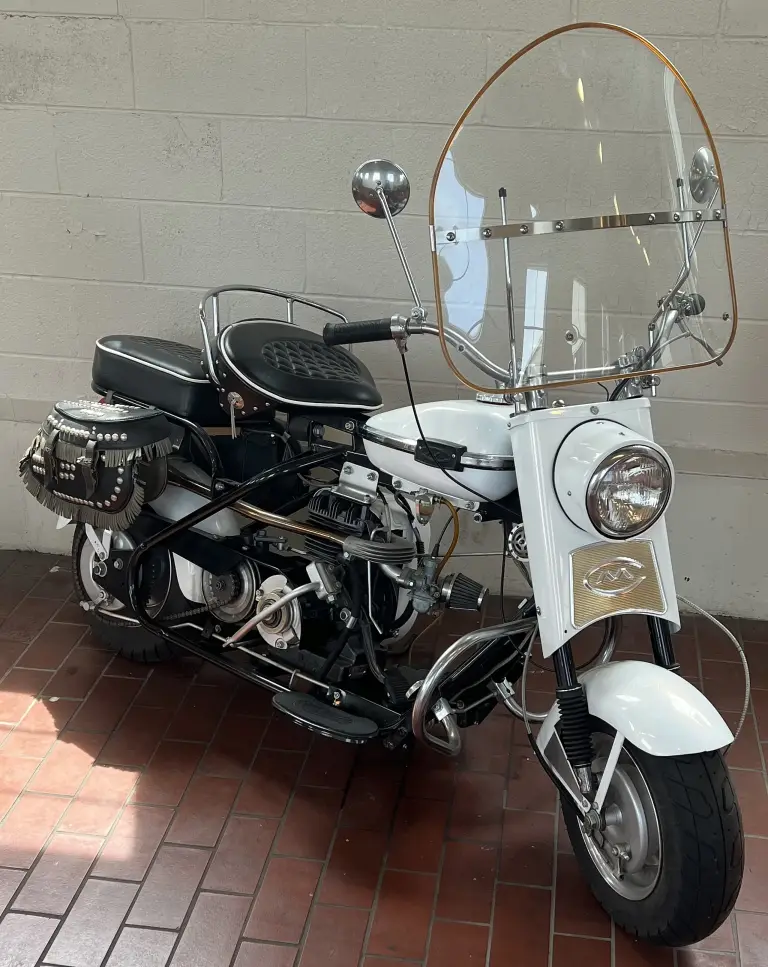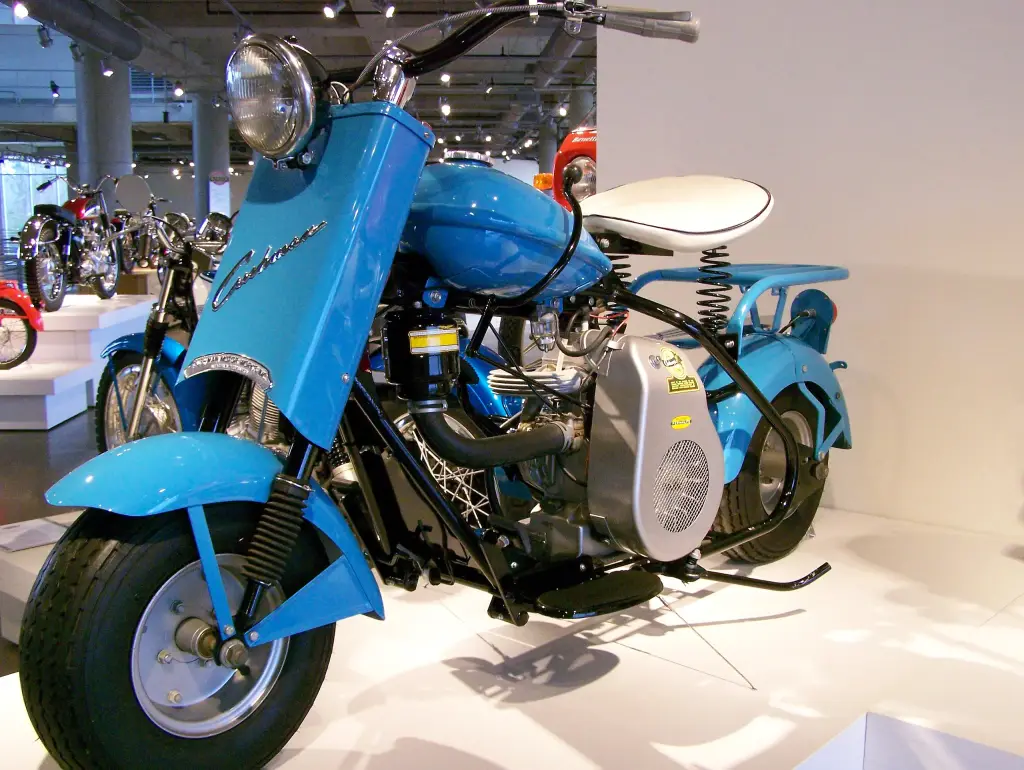
The Cushman Highlander was the economy scooter of the Cushman range, offered from 1949 until 1964 alongside the more expensive Eagle. Unlike the motorcycle-styled Eagle it kept the step-through frame familiar from earlier scooters, a layout that made it easy to mount and popular with men and women alike.
Cushman Highlander at a glance
| Maker | Cushman Motor Works, Lincoln, Nebraska |
|---|---|
| Production | 1949–1964 |
| Type | step-through motor scooter |
| First model | 710 Highlander, model 61 (1949) |
| Engine | single-cylinder, 4.8 bhp as standard |
| Optional engine | 7.95 bhp |
| Clutch | automatic |
| Wheels | steel disc wheels |
| Tyres | Cushman 200, developed for Cushman scooters |
| Running cost | less than one cent per mile, maker’s claim |
| Accessories | windscreen, mirrors, extra seat, saddlebags, chrome trim |
The Highlander has no article of its own on Wikipedia; this page is based on the Cushman company article in English and the Cushman brand article in German.
History of the Cushman Highlander
The economy model
The Highlander was Cushman’s economy scooter of the post-war years. Where the Eagle of 1949 copied the look of a motorcycle with an exposed engine and a tank on top of the frame, the Highlander kept the step-through design that had been common for scooters since the pre-war Auto-Glides: the rider stepped through the frame rather than over it, and the bodywork enclosed more of the mechanical parts. That made the scooter easy to mount and to operate, and it appealed to men and women alike.
Model numbers
The Highlander was sold under a series of model numbers rather than a single designation. The 710 Highlander, model 61, arrived in 1949. It was followed by the 711 Highlander, built from 1950 to 1957, and the 714 Highlander of 1952 to 1957. In 1953 the 715 Deluxe joined the range and stayed until 1957. The last of the line was the 721 Highlander, listed for 1958 and then again for 1959 to 1964.
Under Outboard Marine
When the Outboard Marine Corporation took over Cushman at the start of the 1960s the scooter range was reduced to three versions: the Silver Eagle with an OMC aluminium engine of 9 bhp, the simpler Highlander and the Trailster off-road model. By then the Highlander used a 4.8 bhp engine as standard, or 7.95 bhp as an option, and came with an automatic clutch. Cushman advertised running costs of less than one cent per mile. All the scooters had steel disc wheels, and for the Silver Eagle and Highlander the company developed its own tyre, the Cushman 200. A windscreen, mirrors, an extra seat, saddlebags and chrome trim were available from the accessory list.
Design and features
- Step-through frame: easy to mount, in the scooter tradition rather than the motorcycle style of the Eagle.
- Economy engine: a 4.8 bhp single as standard, with 7.95 bhp available as an option.
- Automatic clutch: no hand lever to work in traffic.
- Steel disc wheels: shod with Cushman’s own 200 tyre.
- Long accessory list: windscreen, mirrors, extra seat, saddlebags and chrome trim.
Cushman Highlander versions
- 710 Highlander (1949): model 61, the first of the line.
- 711 Highlander (1950–1957): the second series.
- 714 Highlander (1952–1957): built alongside the 711.
- 715 Deluxe (1953–1957): the more generously equipped version.
- 721 Highlander (1958–1964): the final series.
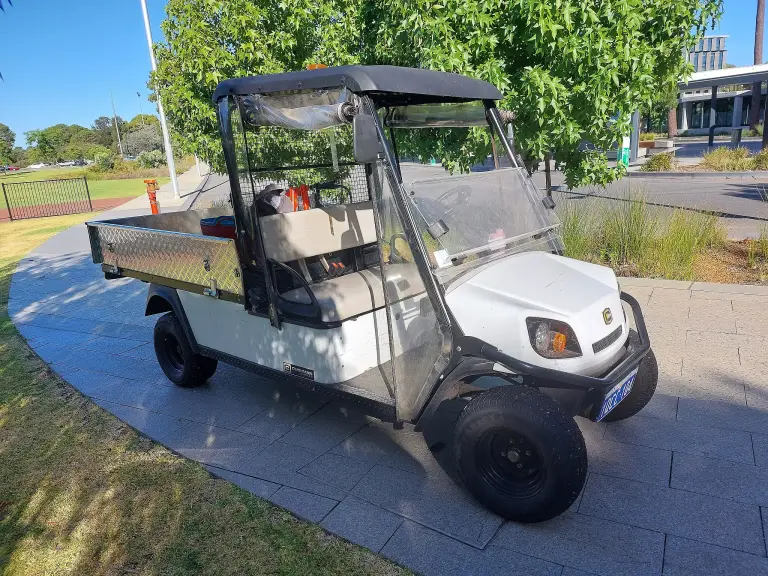
The Highlander was the cheaper stablemate of the Eagle, and the Cushman name later returned on utility vehicles such as the Shuttle. More are in the Cushman collection.
Video: Cushman highlander 58
Video on YouTube.
Sources
- Cushman (company), English Wikipedia: step-through design, model list
- Cushman (Marke), German Wikipedia: engines, clutch, tyres, accessories