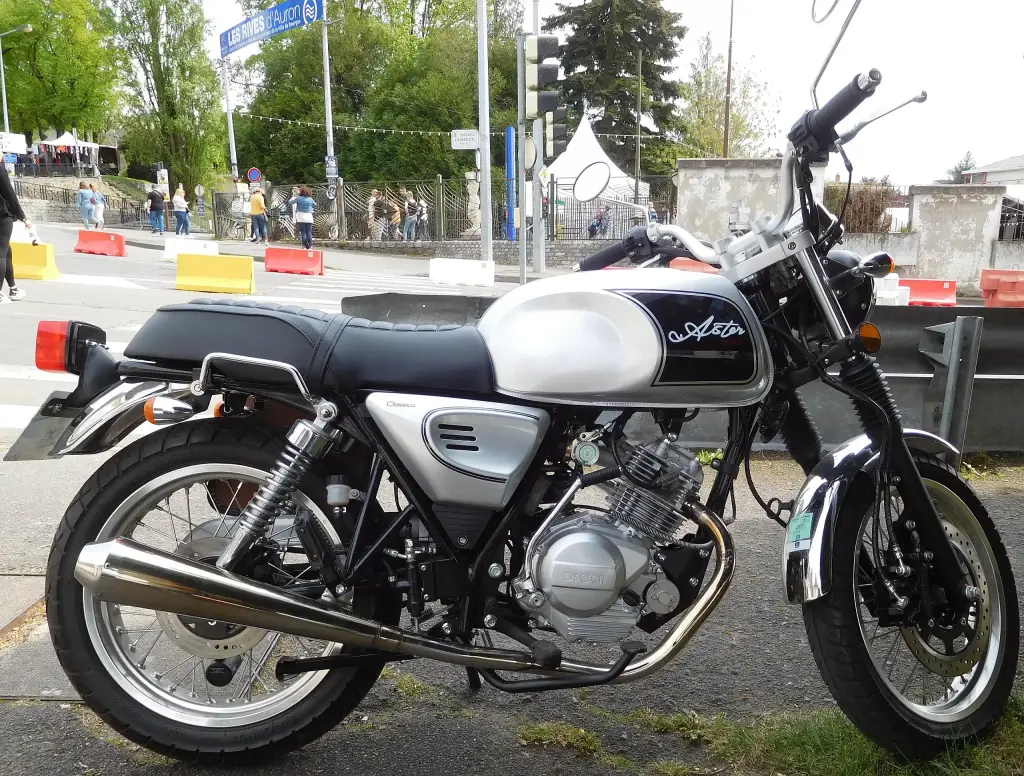
The Astor 125 is the neo-retro roadster that came out of CPI’s cooperation with the French importer DIP. Powered by a 125 cm³ single derived from the Yamaha YBR, it was built in China and has become the model the French brand Orcal is known for, with more than twenty thousand sold in Europe since its launch.
CPI Astor 125 at a glance
| Developed with | DIP, CPI’s French importer from 2011 to 2013 |
|---|---|
| Brand | Orcal, created by DIP in 2013 |
| Built in | China, at the Senke Motor plant in Heshan |
| Class | neo-retro roadster, 125 cm³ |
| Engine | 125 cm³ single from the Yamaha YBR, with a balance shaft |
| Tank and exhaust | bi-tone lacquered tank, stainless steel blunderbuss exhaust |
| Wheels and stands | aluminium spoked wheels, centre and side stands with a cut-off switch |
| 2017 update | Mikuni injection and combined braking operated by the pedal |
| Astor III (2025) | Euro 5+, 18-inch front wheel, block tyres, upside-down fork, 820 mm seat, LED lights, digital dash, USB socket, 14.5 litre tank |
| Sold | more than twenty thousand in Europe since the launch |
| Café Racer study | shown at EICMA 2015 in cream, not put into production |
The 125 in this group is the Astor 125 developed by CPI’s French importer DIP and sold as the Orcal Astor 125; the article is based on the French Wikipedia articles on the model and on CPI Motor Company.
History of the CPI Astor 125
Origin
Orcal was created in 2013 as a motorcycle and scooter brand of the French importer and designer DIP, a company founded in 1969. The Astor 125 was the first motorcycle DIP launched, and it is built in China at the Senke Motor factory in Heshan. The link with CPI is direct: DIP held CPI’s import licence in France from 2011 to 2013 and, according to the French Wikipedia article on CPI Motor Company, helped to develop the retro-styled Astor for the French market.
What kind of machine it is
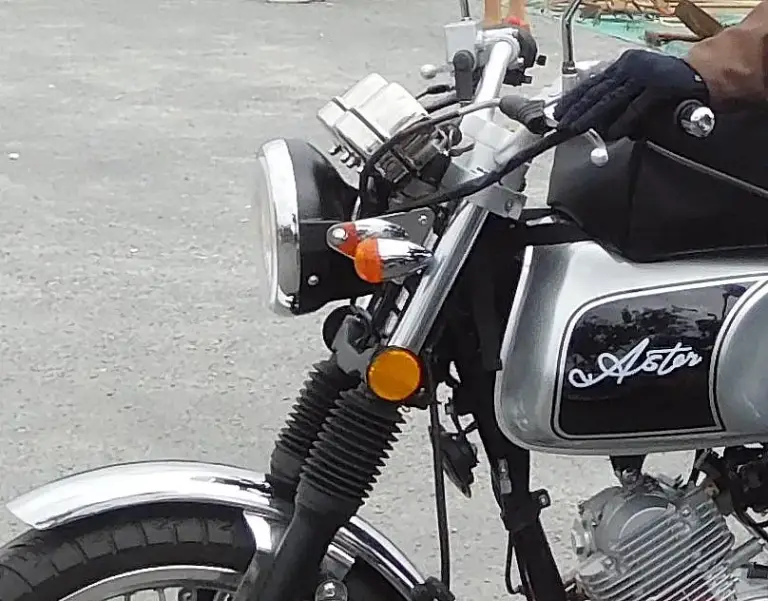
The Astor is a neo-retro roadster powered by a 125 cm³ single taken from the Yamaha YBR, with a balance shaft. Its equipment includes a bi-tone lacquered tank, a stainless steel blunderbuss exhaust, aluminium spoked wheels, centre and side stands with a cut-off switch and, in the words of the article, a careful finish.
Evolution and sales
Mikuni injection and combined braking operated by the pedal arrived in 2017. The third version of the Astor appeared in 2025 with Euro 5+ homologation, an 18-inch front wheel, block-pattern tyres, an upside-down fork, an 820 mm seat height, LED lighting, a digital instrument display, a USB socket and a 14.5 litre tank. More than twenty thousand Orcal Astors have been sold in Europe since the model came out, and a café racer version in cream with an upside-down fork was shown at the EICMA show in 2015 but never went on sale.
Design and features
- Yamaha-derived engine: a 125 cm³ single from the YBR, with a balance shaft.
- Neo-retro equipment: bi-tone lacquered tank, stainless steel blunderbuss exhaust and aluminium spoked wheels.
- 2017 upgrade: Mikuni injection and combined braking operated by the pedal.
- Astor III: Euro 5+ engine, upside-down fork, 18-inch front wheel, LED lights and a digital dash.
CPI Astor 125 versions
- Astor 125: the original neo-retro roadster, on sale from the launch of the Orcal brand.
- 2017 model: Mikuni injection and combined braking.
- Astor III (2025): Euro 5+, 18-inch front wheel, block tyres, upside-down fork, 820 mm seat, LED lighting, digital display, USB and a 14.5 litre tank.
- Café Racer study: a cream café racer with an upside-down fork shown at EICMA 2015, never produced.
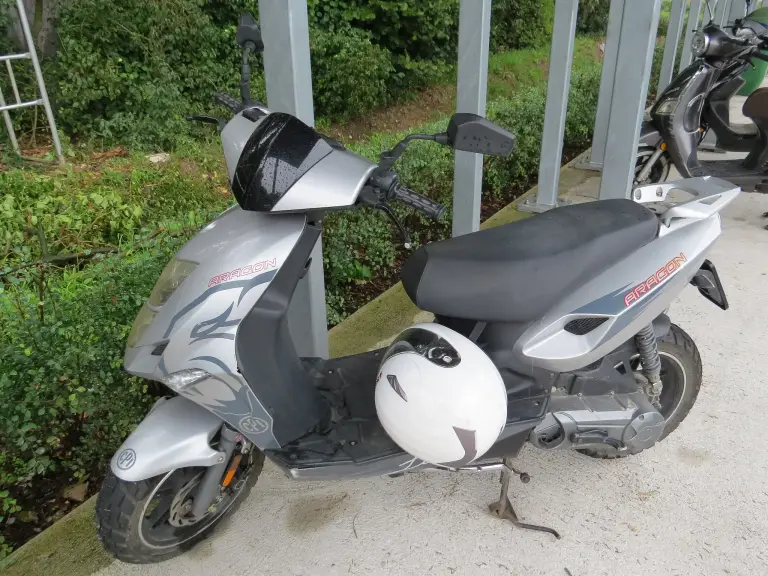
CPI’s own scooters, such as the Aragon and the GTR, were the machines DIP imported before the Astor; the marque is gathered in the CPI collection.
Video: essai CPI Astor 125
Video by motor-infos on YouTube.
Sources
- Orcal Astor 125, French Wikipedia: origin, engine, equipment, updates, sales
- CPI Motor Company, French Wikipedia: DIP as CPI importer, development of the Astor
- CPI Motor Company, German Wikipedia: company background